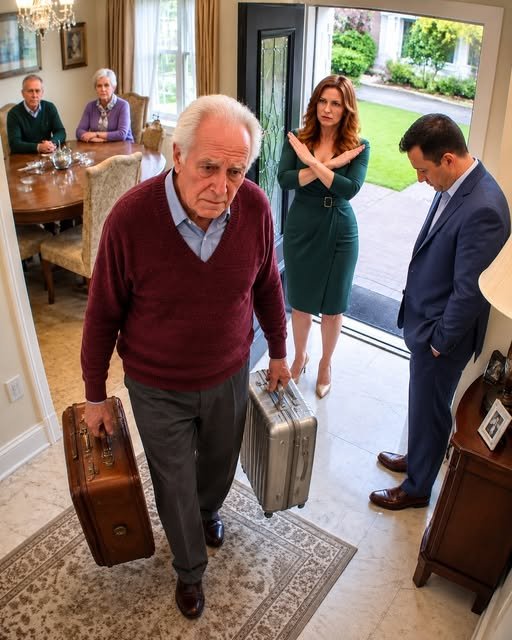
My Son Let His Wife Push Me Out—Then Three Envelopes Exposed Who Had Really Been Keeping Them Afloat
My son had no idea I had quietly built up $800,000 over the years. Then one evening, his wife looked at him and said, “He needs to leave this house.”
I had never told Logan about the money I had saved in silence. I lived modestly, kept my finances private, and let everyone assume I was just an old retired man getting by on a small pension. Then one night, my daughter-in-law decided she no longer wanted me in her home. My son said nothing. So I smiled, packed my bags, and left without a single argument. Three weeks later, I removed my name from every account, loan, and agreement I had been quietly supporting behind the scenes. That was when the desperate calls began.
In my son’s house in Dallas, everyone saw me as harmless. Just an elderly man who repaired things, cooked when needed, and tried not to become a burden. But I lived simply by choice, not because I was broke.
My name is Albert Higgins. I am sixty-eight years old, retired after thirty-five years as a senior accountant. I have always trusted paperwork, signatures, and timing. People, however, were much harder to read.
I kept my savings private not because I enjoyed secrets, but because discretion gave me freedom. My plan had always been simple: one day, I would quietly leave everything to my son, no strings attached.
Six years earlier, after my wife died, Logan asked me to move in with him and Chelsea. Their house near Thunderbird Road had a spare bedroom, a wide kitchen, and warm desert light that made grief feel a little less heavy. I agreed because my old apartment had become unbearably silent.
At first, Chelsea seemed kind.
Then the little requests began.
“Could you eat in the kitchen tonight? We’re having guests.”
Later, it became,
“Would you mind staying in your room tonight? It’s more of a couples’ dinner.”
One Thanksgiving, they placed me alone at a small side table while everyone else laughed behind closed doors. I ate quietly, listening through the wall, telling myself I was being reasonable.
Months later, Chelsea started treating the house like it had two entrances: one for the family, and one for me.
“We have guests,” she said with a polished smile. “Could you use the back door? It’ll be easier.”
So I walked around the house like a man whose welcome had quietly expired.
The kitchen counters were always covered with bills, furniture invoices, takeout receipts, and documents for their new SUV. I noticed everything automatically. Years in accounting train the eye. I never scolded them. I only observed how recklessly money moved when people believed it would never run out.
Still, I helped.
I cooked. I mowed the lawn. I fixed leaks. I folded towels the way my late wife used to like them—sharp corners, neat stacks, perfect lines.
I stayed quiet because Logan always looked relieved when the house was peaceful. For a while, I told myself that was enough.
Then everything changed during a Monday night dinner party.
Logan’s coworkers filled the living room with loud laughter and clinking glasses. Chelsea moved through the house in an expensive dress, looking untouched by ordinary life. I had spent the afternoon making stuffed mushrooms the way Logan loved them as a child—extra garlic, slow-cooked, careful.
Chelsea came over with a tight smile.
“Albert, could you stop hovering? People are trying to talk.”
So I stepped back.
A few minutes later, she returned. This time, she did not even pretend to be polite.
“Why don’t you stay in your room tonight?” she said quietly. “It’ll be easier for everyone.”
I looked at Logan. He stared into his glass as though the answer might be floating in it.
Then Chelsea raised her voice just enough for the nearby guests to hear.
“Logan, are you going to handle this?”
The room went still.
Everyone looked at us.
My son looked embarrassed, guilty, trapped. Then he made a choice without having the courage to name it.
“Dad,” he said softly, “maybe you could just… give us some space.”
I nodded once because I understood exactly what had happened.
He was not choosing me.
He was letting someone else choose for him.
“I won’t be in the way,” I said calmly.
Later that night, I sat on the edge of my bed while the party continued downstairs without me. What I felt was not rage. It was clarity—the kind that arrives when every number finally adds up.
Before sunrise, I packed two suitcases. I took my documents, a few photographs, my laptop, and the cardigan that still faintly smelled like home. I left my key on the kitchen counter without a note.
There was nothing left worth writing.
I did not leave because I was angry.
I left because I had finally understood.
In the garage, inside storage boxes labeled with my name, were the papers I had always kept for emergencies: co-signing forms, a notarized loan agreement, receipts, and signed documents Logan and Chelsea had never bothered to read carefully.
I had not kept those papers as weapons.
I kept them because accountants document reality.
The next morning, I took the bus downtown and met with a contract attorney named Fiona Cartwright. She did not offer empty sympathy. She simply opened a legal pad and asked,
“What exactly do you want?”
“I want to separate my finances cleanly,” I told her. “And I want to leave with dignity.”
She reviewed every document carefully, checking signatures and dates before tapping her pen against the desk.
“Then we’ll do this properly,” she said. “Three notices. Same week. Same morning.”
Over the next few days, I quietly rebuilt my life. I rented a small room, redirected my mail, and began removing my name from everything that tied them to me.
Three weeks later, peace finally settled inside my chest.
That morning, I parked down the street from their house just after sunrise. The Texas heat was already rising.
At exactly 8:30, a delivery truck stopped in front of their driveway.
The driver placed three plain envelopes at the front door, rang the bell, and left.
A few minutes later, Chelsea came outside in a robe, still holding her coffee.
She opened the first envelope casually.
Then her expression shifted.
She tore open the second one.
Her shoulders went rigid.
And by the time her hand reached for the third envelope…
that was when the real story began.
Her fingers stopped against the paper.
For one long second, Chelsea simply stared at the three envelopes as though refusing to open the last one might somehow prevent the first two from being real.
Then Logan appeared behind her.
He was barefoot, wearing the gray T-shirt he had slept in, his hair flattened on one side.
“What is it?”
Chelsea did not answer.
He reached for the first letter.
She pulled it away.
“Nothing.”
The word came too fast.
I had heard that tone from clients for thirty-five years.
Nothing usually meant something had already gone very wrong.
Logan’s face tightened.
“Chelsea.”
She folded the page in half.
I could not hear every word from where I sat in the car, but I did not need to.
I knew what the first notice said.
The automatic transfer from my account that had quietly covered the shortfall on their mortgage escrow for nearly four years would stop at the end of the current billing cycle.
I knew what the second said too.
The private loan agreement I had signed when Logan’s business nearly failed two years earlier had reached the point where my continuing guarantee could legally be withdrawn under the conditions they themselves had signed.
The third envelope was simpler.
It informed them that I had removed myself as guarantor from the SUV refinancing arrangement Chelsea had insisted was “temporary.”
None of those notices demanded immediate repayment.
None threatened them.
None punished them.
They simply returned responsibility to the people whose names were on the bills.
Logan read the first page.
Then the second.
Then he looked toward the street.
Even from a distance, I saw the exact moment recognition reached him.
His head lifted slowly.
His eyes scanned the parked cars.
Then they found mine.
Chelsea turned too.
The coffee cup slipped slightly in her hand.
I did not wave.
I did not smile.
I simply sat there.
Visible.
That seemed to frighten her more than anger would have.
Logan stepped off the porch.
“Dad!”
I lowered the window.
He hurried across the lawn.
Chelsea followed several steps behind him, still gripping the letters.
“Dad, what is this?”
“Paperwork.”
“I can see that.”
His voice cracked around the edges.
“What does it mean?”
“It means my name is no longer attached to your obligations.”
Chelsea arrived beside him.
“You can’t just do that.”
I looked at her.
“I already did.”
Her mouth opened.
Closed.
The morning sun flashed against the windows of the house behind them.
A sprinkler clicked somewhere down the block.
For the first time in years, Chelsea had no polished smile ready.
“You knew,” she said.
“Knew what?”
“That this would hurt us.”
I rested one hand on the steering wheel.
“I knew removing myself would require you to pay your own bills.”
“That’s the same thing.”
“No.”
My voice stayed quiet.
“It isn’t.”
Logan looked between us.
“Dad, I didn’t know you were paying the escrow.”
“I know.”
“And the business loan?”
“You knew I signed something.”
“I thought it was a formality.”
“You didn’t read it.”
His eyes dropped.
That was answer enough.
Chelsea folded her arms.
“So this is revenge.”
I studied her face.
“No.”
“Then what do you call showing up to watch?”
“Closure.”
That landed harder than I expected.
Logan flinched.
Chelsea did not.
She stepped closer to the car.
“You lived in our house for six years.”
“Yes.”
“We fed you.”
I looked at her.
A tiny muscle moved beside her mouth.
“You want to compare ledgers?”
She went silent.
Logan shut his eyes.
“Dad.”
I looked at him.
His face had changed.
There was no embarrassment now.
No audience to impress.
Just fear.
“Can we talk inside?”
I glanced at the house.
At the front door I had once entered freely.
At the side path Chelsea had trained me to use when company came.
“No.”
“Please.”
“No, Logan.”
His jaw trembled.
I had not seen that since he was twenty-one and called me from a highway shoulder after wrecking his first car.
Back then, I had driven forty miles in the rain to get him.
Now I stayed where I was.
“You asked me for space,” I said.
His eyes lifted sharply.
“I’m giving it to you.”
Chelsea looked away first.
I started the engine.
Logan put one hand on the roof of the car.
“Dad, wait.”
I paused.
“Are you cutting me out of your life?”
The question hurt because it proved how little he understood.
“I removed my name from your bills.”
I looked directly at him.
“You decide what happens to the relationship.”
Then I drove away.
The first call came twelve minutes later.
I let it ring.
The second came before I reached the highway.
Chelsea.
I declined it.
At 9:07, Logan called again.
At 9:11.
At 9:23.
At 9:40, a text appeared.
Dad, please. The bank is calling.
I set the phone facedown on the passenger seat.
Fiona had warned me this part would be difficult.
Not legally.
Emotionally.
People become accustomed to invisible support the way they become accustomed to electricity.
They rarely think about where it comes from until the lights go out.
By noon, Logan had left six voicemails.
I listened to the last one.
His voice was low.
“Dad, I’m not calling about the money. I mean, I am, because we need to understand what’s happening, but… I know that sounds terrible.”
A pause.
“I should have said something that night.”
Another pause.
“I should have said something a lot of nights.”
I sat at the small table in my rented room.
The air conditioner rattled against the window.
A photograph of my wife, Margaret, stood beside my laptop.
I touched the edge of the frame.
“You always said he’d learn slower than he should,” I murmured.
The phone rang again.
This time, I answered.
“Hello.”
Logan exhaled so hard I heard it through the speaker.
“Dad.”
“Yes.”
“Can I see you?”
“Why?”
Silence.
Then, finally,
“Because I don’t understand what I’ve done.”
That answer was different.
I gave him the address of Fiona’s office.
“Four o’clock.”
“Your lawyer?”
“Yes.”
“Why does a conversation with my father need a lawyer?”
“Because a conversation with my son didn’t protect me.”
He had no response to that.
At four, Logan arrived alone.
Fiona had placed three chairs around a round conference table instead of seating us across from each other.
A small decision.
A humane one.
Logan looked exhausted.
There were shadows beneath his eyes, and his shirt was wrinkled at the collar.
He sat across from me but kept looking at the empty chair beside him.
“Chelsea isn’t coming?”
I asked.
“She wanted to.”
“And?”
“I told her I needed to talk to you first.”
Fiona slid a folder toward him.
“This is a summary of the obligations Mr. Higgins has supported or guaranteed during the last six years.”
Logan stared at the folder without touching it.
“How much?”
Fiona glanced at me.
I nodded.
“Direct contributions, reimbursements, emergency payments, guarantee exposure, and documented household expenses total approximately one hundred eighty-seven thousand dollars.”
Logan went still.
“No.”
Fiona opened the folder.
“Yes.”
He looked at me.
“You gave us almost two hundred thousand dollars?”
“Not exactly.”
His brow furrowed.
“Some was money I paid.”
I tapped the folder.
“Some was risk I carried so you could borrow at rates you otherwise would not have received.”
“Why didn’t you tell me?”
“Sometimes I did.”
“You never said that number.”
“I told you to read documents before signing them.”
He stared at the papers.
“I thought you were just being Dad.”
“I was.”
That seemed to hurt him more.
His mouth tightened.
Then he whispered,
“Chelsea thinks you planned this.”
“I planned to leave my affairs in order.”
“No. She thinks you’ve been waiting for us to fail.”
I looked at him for a long moment.
“Do you?”
He swallowed.
“No.”
Fiona remained quiet.
Logan rubbed both hands over his face.
“We can’t cover everything.”
“I know.”
“Our mortgage adjusts next quarter.”
“I know.”
“The SUV—”
“I know.”
He dropped his hands.
“How much do you have?”
There it was.
The question I had wondered whether he would ask.
Not because it made him greedy.
Because panic strips people down to instinct.
I leaned back.
“Why does that matter?”
His face reddened.
“I don’t know.”
“Yes, you do.”
He looked at the table.
“Because if you have enough to help…”
His voice faded.
Fiona closed her pen.
Logan shook his head immediately.
“That sounded awful.”
“It sounded honest.”
“I’m sorry.”
I waited.
He looked at me again.
“Do you?”
I could have lied.
Instead, I told him.
“My investments and savings are a little over eight hundred thousand dollars.”
Logan stopped breathing for a second.
His chair creaked beneath him.
“What?”
“I lived below my means. I saved consistently. I invested carefully.”
“Eight hundred…”
He did not finish.
His eyes filled, but not with joy.
With shock.
Then something much uglier.
Shame.
“You were going to leave that to me?”
“Yes.”
His face collapsed.
Not dramatically.
No sob.
Just a slow loss of structure, as though the muscles holding his expression together had failed.
“And I let her make you use the back door.”
The room went silent.
Fiona looked down at her notes.
Logan covered his mouth.
For the first time since I had left, I felt my anger arrive.
Not hot.
Not loud.
Heavy.
“You did.”
He nodded.
Tears gathered against his lower lashes.
“I knew it was wrong.”
“I know.”
“I kept telling myself it wasn’t serious.”
“I know.”
“She’d say you liked privacy.”
“I never said that.”
“I know.”
He pressed his palms flat on the table.
“God.”
His voice broke.
“I knew.”
That was the first real apology he gave me.
Not the word sorry.
The admission.
I knew.
Before I could answer, the conference room door opened.
Fiona’s assistant stood there.
“Ms. Cartwright, there’s a woman outside insisting she needs to speak with Mr. Higgins and Mr. Higgins’s son.”
Chelsea.
Fiona’s expression cooled.
“Did she make an appointment?”
“No.”
Logan closed his eyes.
“She followed me.”
Fiona looked at me.
I could have refused.
Instead, I said,
“Let her in.”
Chelsea entered carrying a leather tote and the three notices.
She had changed from her robe into a cream pantsuit.
Armor.
Her hair was perfect.
Her breathing was not.
“I’m sorry to interrupt.”
“You’re not,” Logan said.
She looked at him sharply.
Then at me.
“We need to solve this.”
I almost admired the wording.
Not apologize.
Not understand.
Solve.
She placed the notices on the table.
“This arrangement worked for years.”
“Because Albert paid for it,” Logan said.
Chelsea’s eyes flashed.
“We both benefited.”
“No.”
He shook his head.
“We benefited.”
She stared at him.
“Whose side are you on?”
Logan’s face changed.
It was subtle.
But I saw it.
So did she.
He did not answer immediately.
Then he said,
“That question is the problem.”
Chelsea’s nostrils flared.
Fiona spoke calmly.
“Mrs. Higgins, Mr. Albert Higgins has exercised rights explicitly provided in the agreements you signed.”
Chelsea looked at her.
“I understand contracts.”
Fiona slid one document across the table.
“Then you understand section nine.”
Chelsea did not pick it up.
“You’re trying to intimidate me.”
“No.”
Fiona’s voice remained even.
“I’m inviting you to read.”
Chelsea finally took the page.
Her eyes moved down the paragraph.
And that was when the color drained from her face.
Logan noticed.
“What?”
She folded the paper.
Too quickly.
“What does it say?”
“Nothing.”
That word again.
Logan reached for the page.
Chelsea pulled it away.
He stood.
“Give it to me.”
“Logan.”
“Give me the paper.”
Her expression hardened.
“You’re making a scene.”
“In a lawyer’s office?”
His laugh was short and bitter.
“Good.”
Fiona held out another copy.
Logan took it.
I watched his eyes move.
Once.
Twice.
Then stop.
He looked at Chelsea.
“What is this?”
She said nothing.
His voice lowered.
“Chelsea.”
I had not read that specific document in months.
I leaned toward Fiona.
“What is it?”
She pointed to the clause.
The refinancing disclosure.
The one attached to the SUV loan.
And there, beneath the original financing terms, was an acknowledgment I had never seen completed.
A household asset statement.
My name appeared on it.
Not as guarantor.
As a listed resident asset contributor.
With an estimated value beside it.
$650,000.
My pulse changed.
I looked at Chelsea.
She would not meet my eyes.
Logan whispered,
“You knew.”
Chelsea’s chin lifted.
“I estimated.”
“You knew Dad had money.”
“I suspected.”
“You listed six hundred fifty thousand dollars.”
“It was a financial profile.”
“Of his money.”
“We lived together.”
I felt Fiona shift beside me.
Her voice became very precise.
“Mrs. Higgins, did Mr. Albert Higgins authorize you to represent his personal assets as available household resources?”
Chelsea’s hand tightened around her handbag.
“I never said they were available.”
Fiona tapped the document.
“This certification does.”
Logan’s chair scraped backward.
I stared at the signature line.
Chelsea’s signature.
Her handwriting.
Her date.
Eleven months earlier.
Before the dinner party.
Before she told me to disappear when company came.
Before I packed my bags.
Everything inside me became very quiet.
And suddenly, every strange question Chelsea had asked over the previous year rearranged itself.
Whether I still had my retirement account.
Whether my old apartment had sold at a profit.
Whether Margaret had left life insurance.
Whether I planned to “keep cash sitting around forever.”
I had answered vaguely.
She had listened carefully.
Logan looked sick.
“You knew he had savings and still threw him out?”
Chelsea snapped,
“I did not throw him out.”
Logan stared at her.
“You looked at me and said he needed to leave this house.”
“That was private.”
“Half my office heard it.”
Her eyes flicked toward me.
“You were making things uncomfortable.”
I felt something inside me finally close.
Not shatter.
Close.
Like a door being shut carefully for the last time.
Fiona turned the document toward me.
“Albert, I need to ask you something directly. Did you ever give Chelsea permission to disclose or estimate your private assets for a loan application?”
“No.”
“Did you sign this attachment?”
“No.”
“Did you know it existed?”
“No.”
Chelsea stood.
“This is ridiculous. Nobody forged anything.”
“I didn’t say you forged his signature,” Fiona replied.
“There isn’t one.”
“Then why are you acting like I committed a crime?”
Fiona’s gaze remained steady.
“I said the document requires review.”
Chelsea looked at Logan.
“Say something.”
He did.
“Did you use Dad’s money to make us look stronger to the lender?”
“It wasn’t his money. It was household net worth.”
“He wasn’t your asset.”
Her face twitched.
“I was trying to get us approved.”
“For a seventy-thousand-dollar SUV.”
“You wanted that car too.”
“I wanted a car. You wanted that one.”
“I was trying to maintain our lifestyle.”
“What lifestyle?”
Logan’s voice rose.
“The one Dad was quietly paying for?”
Chelsea’s composure cracked.
“Do not act innocent now.”
“I’m not.”
He pointed toward me.
“That’s the difference.”
She froze.
Logan’s hand dropped.
His voice became quieter.
“I’m not innocent.”
Chelsea stared at him.
“You let me treat him that way because it was easier for you.”
His eyes filled again.
“I did.”
“You agreed he was in the way.”
“I said nothing.”
“That is agreement.”
He nodded.
“You’re right.”
She had expected denial.
Instead, he gave her ownership of the truth.
And with nowhere to push the blame, she began to unravel.
“This family was suffocating me.”
I said nothing.
She turned toward me.
“You were always there.”
Still I said nothing.
“Always listening.”
Nothing.
“Watching every purchase.”
“I never asked what you spent.”
“You didn’t have to. You had that look.”
“What look?”
“That accountant look.”
Despite everything, Fiona almost smiled.
Chelsea pressed both hands against the table.
“You made me feel judged.”
“I repaired your dishwasher.”
Her mouth opened.
I continued.
“I cooked for your guests.”
She looked away.
“I mowed your lawn.”
Her shoulders stiffened.
“I entered through the back door when you asked me to.”
Logan shut his eyes.
“And I sat alone on Thanksgiving because you said there wasn’t room.”
Chelsea’s face tightened.
I did not raise my voice.
“That was how threatening I was.”
The silence afterward was unbearable.
Because there was nothing left to argue with.
Fiona collected the papers.
“This meeting is over.”
Chelsea looked startled.
“We haven’t solved anything.”
“Yes, we have,” Logan said.
She turned.
“What does that mean?”
He took his wedding ring between his thumb and forefinger.
For one terrible second, I thought he was going to remove it.
He did not.
He simply looked at it.
Then at her.
“It means I’m going home with you.”
Chelsea’s shoulders dropped slightly.
“But not to pretend this didn’t happen.”
Her relief disappeared.
“I want every account.”
“Logan—”
“Every password. Every loan application. Every statement.”
“That’s controlling.”
“No.”
His voice shook.
“It’s late.”
She stared at him.
“And if I say no?”
He looked down at the document containing my private financial estimate.
“Then I’ll know what I need to know.”
Chelsea grabbed her tote.
“This is unbelievable.”
She looked at me one last time.
“You got exactly what you wanted.”
I met her eyes.
“No.”
My voice was softer than hers.
“I wanted a family.”
She flinched.
Then she walked out.
The door clicked shut.
Logan sat down again.
He looked older than he had an hour earlier.
“I didn’t know about the application.”
“I believe you.”
His head came up.
The relief on his face lasted half a second before shame replaced it.
“That doesn’t excuse anything else.”
“No.”
He nodded.
“I know.”
That evening, I did not go home with him.
I returned to my rented room.
I heated canned soup in a small saucepan and ate at the table beside Margaret’s photograph.
No television.
No phone.
Just the clink of the spoon against the bowl and the steady hum of the air conditioner.
For years, silence had frightened me because it reminded me she was gone.
That night, silence felt different.
It belonged to me.
The next morning, Logan called once.
I answered.
“I found more.”
His voice sounded hollow.
“What?”
“Credit cards.”
I waited.
“Three I didn’t know about.”
“How much?”
“Thirty-eight thousand.”
I closed my eyes.
“And the SUV application?”
“She used your estimated assets because our debt-to-income ratio wasn’t strong enough for the financing package she wanted.”
There was a long pause.
“She told the lender you were contributing to the household.”
“I was.”
“I know.”
His voice broke.
“That’s what makes it worse.”
He came to Fiona’s office that afternoon carrying a banker’s box.
Chelsea came too.
Not because she wanted to.
Because Logan had insisted.
Fiona had arranged for the loan representative to join by video call, along with an independent financial counselor Logan had contacted that morning.
Nobody raised their voice.
That made it harsher.
The loan representative asked questions.
Chelsea gave polished answers.
Then inconsistent ones.
The counselor laid three credit card statements beside one another.
Logan recognized restaurant charges, clothes, trips, home furnishings, and monthly payments he had assumed came from their checking account.
They had not.
Chelsea had been carrying balances for years.
Transferring them.
Refinancing them.
Moving one debt to cover another.
And whenever the numbers became too tight, my contributions had created breathing room.
Invisible oxygen.
At one point, the loan representative asked,
“Mrs. Higgins, why did you describe Mr. Albert Higgins’s assets as household resources if you had no legal access to them?”
Chelsea’s fingers trembled against the tabletop.
“I believed they would eventually come to Logan.”
Nobody spoke.
My son looked at her.
Not angry.
Not yet.
Just devastated.
“What?”
Chelsea realized too late what she had said.
“I didn’t mean—”
“You thought Dad’s money was ours.”
“No.”
“You just said it.”
“I meant eventually.”
Logan stared.
“Because he was going to die someday?”
“Logan, stop.”
The counselor looked down.
Fiona went completely still.
I felt the room tilt without anything moving.
Chelsea’s breathing became shallow.
“That isn’t what I meant.”
Logan pushed his chair away.
“You made him eat in another room while you counted what you thought you’d get when he died.”
“Stop saying it like that.”
“How should I say it?”
She looked around the room.
Every face had changed.
There it was.
The public consequence she had spent years avoiding.
Not police.
Not shouting.
Not humiliation manufactured for revenge.
Just witnesses.
People hearing her own logic in her own words.
The loan representative removed her glasses.
“Given the discrepancies in the application, our compliance department will review the file. Until that review is complete, the refinancing offer is suspended.”
Chelsea’s lips parted.
“What?”
“The current loan remains in place under its existing terms.”
“But the new rate—”
“Is suspended.”
“You can’t do that.”
The representative’s expression remained professional.
“We can.”
Chelsea looked at Logan.
He did not rescue her.
Then she looked at me.
I did not either.
The counselor closed the credit card statements.
“You have enough income to stabilize this household,” she told Logan, “but not while sustaining the current discretionary spending.”
Chelsea laughed once.
A brittle, disbelieving sound.
“So everyone gets to sit here and judge me?”
Logan answered before anyone else could.
“No.”
He looked at the box of statements.
“We get to stop lying.”
Chelsea stood.
Her chair struck the wall.
“I have sacrificed for this family.”
Logan stood too.
“So has Dad.”
“He got free housing.”
My son’s face hardened.
“No.”
He shook his head.
“He paid for the privilege of being treated like a guest nobody wanted.”
Chelsea’s mouth trembled.
That sentence finally reached her.
Not because it was cruel.
Because it was true.
She picked up her purse.
“Fine.”
No one moved.
She looked at Logan.
“You coming?”
He stared at her for several seconds.
Then he said,
“I’ll meet you at home.”
Chelsea swallowed.
For the first time since I had known her, she looked genuinely afraid of being left alone with her own choices.
She walked out.
The door closed.
Logan sat down.
He pressed his palms into his eyes.
“I chose quiet over you.”
I said nothing.
“I thought if I didn’t challenge her, the house stayed peaceful.”
His shoulders shook once.
“But it wasn’t peaceful for you.”
“No.”
He lowered his hands.
“I’m sorry.”
This time, the words were ready.
Not rushed.
Not attached to a request.
“I’m sorry I watched you get smaller in my house because it made my life easier.”
My throat tightened.
“I’m sorry I let you walk around the side of a house I asked you to call home.”
I looked down at my hands.
“And I’m sorry that when she told me to handle you…”
His voice failed.
He swallowed hard.
“I handled you.”
For several seconds, none of us spoke.
Then I said,
“I can hear that apology.”
His eyes lifted.
“I’m not ready to tell you what it fixes.”
He nodded.
“I understand.”
And I believed he did.
The financial consequences arrived quickly because numbers do not care about excuses.
The SUV refinancing was withdrawn.
Chelsea sold the vehicle voluntarily rather than carry the existing payment.
Two expensive furniture accounts were closed.
Subscriptions vanished.
Trips were canceled.
The three hidden credit cards were frozen under a repayment plan.
None of it destroyed them.
That was important.
They were not ruined.
They were simply required to live inside the income they actually earned.
For Chelsea, that seemed at first like catastrophe.
For Logan, it became a strange kind of relief.
But the marriage did not recover just because the numbers stabilized.
One evening, Logan called me from his car.
“I moved into the guest room.”
I was quiet.
“She says I’m punishing her.”
“Are you?”
“No.”
He breathed out.
“I’m trying to decide whether I still know who I married.”
I looked through the window of my rented room.
A storm had begun gathering over the city, dark clouds pressing against the late sun.
“And does she know who she married?”
He gave a tired laugh.
“Probably not.”
“Then maybe both of you have work to do.”
“She asked if you’d forgive her.”
I watched the first drops of rain strike the glass.
“She hasn’t asked me.”
“No.”
“Then that isn’t the question yet.”
Two evenings later, Chelsea did ask.
She came alone.
I had recently moved from the rented room into a modest one-bedroom apartment with a narrow balcony and a kitchen barely large enough for two people.
I liked it immediately.
Nobody could ask me to use another entrance.
Chelsea stood outside holding nothing.
No flowers.
No food.
No envelope.
I appreciated that.
“Can I come in?”
I stepped aside.
She entered slowly.
Her eyes moved over the apartment.
The secondhand sofa.
The small table.
Margaret’s photograph.
The cardigan folded over the back of a chair.
“You could afford something much nicer.”
“Yes.”
She looked at me.
“Why don’t you?”
“Because this is enough.”
That answer seemed to irritate and embarrass her at the same time.
She sat.
I remained standing until she did.
Then I took the chair across from her.
Chelsea clasped her hands.
“I was cruel to you.”
No excuses.
I waited.
“I told myself you were passive-aggressive.”
I raised an eyebrow.
“You were quiet. You noticed things. I decided that meant you were judging me.”
She looked toward Margaret’s photograph.
“And then I started resenting you for things you never actually said.”
Her fingers tightened.
“When I realized you probably had money…”
She stopped.
I did not help her.
“I started thinking about it.”
Her eyes filled.
“Not like Logan said.”
I remained still.
“Not waiting for you to die.”
She wiped beneath one eye.
“But I did think that because Logan was your only son, eventually everything would be his.”
“And therefore yours.”
She flinched.
“Yes.”
The room stayed quiet.
“I used that thought to make our situation feel safer than it was.”
She took a shaky breath.
“I told myself the spending wasn’t dangerous because someday there would be a cushion.”
I nodded once.
“That was my money.”
“I know.”
“My life.”
“I know.”
“My choice.”
She looked down.
“I know.”
I let the silence remain.
Chelsea’s voice became smaller.
“I think the worst part is that I treated your presence like an inconvenience while treating your future money like security.”
There it was.
The truth.
Not pretty.
Not softened.
I leaned back.
“Why did you ask me to use the back door?”
She closed her eyes briefly.
“Because I was embarrassed.”
“Of me?”
“Of what people might think.”
“Which was?”
“That we had an older parent living with us because we couldn’t manage on our own.”
A sad smile touched my mouth.
“You couldn’t.”
Tears slid down her face.
“I know.”
“And the side table at Thanksgiving?”
Her lips trembled.
“My sister brought two extra people. There was room if we moved things around.”
“But you didn’t.”
“No.”
“Why?”
She looked at me.
“Because you were the easiest person to displace.”
That answer hurt.
It also freed me.
I nodded slowly.
“Yes.”
Chelsea wiped her cheeks.
“I’m sorry.”
I looked at her for a long time.
“I believe you’re sorry.”
Hope flickered across her face.
I continued.
“That does not mean we go back.”
The hope softened.
“I know.”
“You and Logan need to decide what your marriage becomes.”
“Yes.”
“And you and I…”
I paused.
“We begin with honesty. Nothing more.”
She nodded.
“That’s fair.”
When she stood to leave, her eyes landed on the cardigan.
“That was Margaret’s?”
“No.”
I touched the sleeve.
“She bought it for me.”
Chelsea looked at me.
“You took it the morning you left.”
“Yes.”
“I remember seeing it gone.”
Her voice changed.
“I knew then.”
“Knew what?”
“That you weren’t coming back.”
I did not answer.
At the door, she turned.
“I’m glad you didn’t.”
I stared at her.
She swallowed.
“If you had come back because we begged you, we would have learned nothing.”
Then she left.
I stood beside the closed door for a long time.
Not because I forgave her.
Because for the first time, I believed she might eventually understand what forgiveness would require.
Logan began visiting on Sundays.
The first time, he brought groceries.
Too many.
I laughed when he filled my refrigerator.
“You think I’m feeding a family of six?”
“I panicked.”
“I can see that.”
We cooked together.
Stuffed mushrooms.
Extra garlic.
Slow-cooked.
Careful.
He stood beside me chopping parsley while the kitchen filled with the smell I remembered from his childhood.
For a while, we said nothing.
Then he asked,
“Were you really going to leave me everything?”
I kept my eyes on the skillet.
“Yes.”
“Are you still?”
I turned off the burner.
He immediately shook his head.
“Forget I asked.”
“No.”
I looked at him.
“It’s a fair question.”
He waited.
“I changed my estate plan.”
Pain moved across his face, but he nodded.
“Okay.”
“A portion will still come to you.”
He looked surprised.
“But not all of it.”
“That’s fair.”
“I’m establishing a scholarship fund through the community college.”
His expression softened.
“For accounting?”
I smiled.
“For adults returning to school after financial hardship.”
Logan looked down.
“Mom would like that.”
“She would.”
“And the rest?”
“I intend to use some of it.”
He laughed through his nose.
“Good.”
“That wasn’t the response I expected.”
“Dad, if you tell me you bought a yacht, I’ll help you name it.”
“I’m not buying a yacht.”
“Thank God.”
We both laughed.
It was the first uncomplicated laughter between us in years.
Then his face grew serious.
“I’m glad you changed the will.”
I studied him.
“Why?”
“Because I need to know I’m here even if there’s nothing at the end.”
Something in my chest shifted.
Small.
Precise.
Like a lock turning.
I handed him the serving bowl.
“Then set the table.”
He did.
Two plates.
Two glasses.
Two chairs facing each other.
When I came over carrying the mushrooms, I stopped.
Logan noticed.
“What?”
I looked at the table.
“Nothing.”
But it was not nothing.
There was no side table.
No closed door.
No request that I disappear.
Just a place waiting for me.
That was the first small victory.
A chair.
It should not have meant so much.
It did.
Chelsea and Logan stayed married.
Not because everything healed quickly.
It did not.
They began counseling.
Chelsea took over her own debt repayment instead of allowing Logan to absorb it.
She sold clothes.
Canceled memberships.
Started keeping a written budget.
The first time Logan told me that, I laughed.
“What?”
he asked.
“Nothing.”
“You’re enjoying this.”
“A little.”
Several months into their counseling, Logan asked me to come to the house for dinner.
I almost said no.
Then he added,
“Chelsea asked me to invite you, but she said I should tell you there’s no pressure.”
So I went.
I drove myself.
That mattered.
The house looked almost the same.
Same porch.
Same windows.
Same wide kitchen.
But the enormous SUV was gone.
The expensive decorative furniture had been replaced by simpler pieces.
When I reached the walkway, Chelsea opened the front door before I could knock.
The front door.
She did not mention it.
Neither did I.
“Hi, Albert.”
“Hello, Chelsea.”
Logan appeared behind her.
For a second, all three of us stood there uncertainly.
Then he smiled.
“Dad.”
He hugged me.
Not dramatically.
Just one arm around my shoulder.
I returned it.
Dinner was simple.
Roast chicken.
Potatoes.
Green beans.
No coworkers.
No performance.
No polished party.
Halfway through the meal, Chelsea set down her fork.
“There’s something in the garage that belongs to you.”
I looked at her.
“My boxes?”
She nodded.
“I never opened them.”
“I know.”
“How?”
“The tape.”
She almost smiled.
“Of course.”
After dinner, we went into the garage.
My old storage boxes were stacked against the wall.
ALBERT.
Written across the sides in black marker.
I ran my hand over the top one.
Chelsea stood several feet away.
“I should have brought these to you sooner.”
“Yes.”
“I didn’t know if you wanted me touching them.”
“That was wise.”
Logan lifted the top box.
“Where do you want them?”
“My car.”
We carried them out together.
On the last trip, Chelsea stopped beside one smaller carton.
“This one was behind the others.”
I frowned.
The box had no label.
The tape was yellowed.
“I don’t recognize it.”
Logan placed it on the workbench.
“Should we open it?”
I cut the tape with a utility knife.
Inside were old kitchen towels.
Photographs.
A Christmas ornament.
And beneath them, a blue envelope with my name written across the front.
ALBERT.
I knew the handwriting instantly.
My knees nearly gave way.
Margaret.
Logan saw my face.
“Dad?”
I lifted the envelope with both hands.
The paper had softened with age.
Chelsea stepped backward.
“I didn’t know that was in there.”
I believed her.
I opened it carefully.
Inside was a single sheet of stationery.
Not a legal document.
Not instructions.
A note.
My eyes blurred before I had finished the first line.
Logan moved closer.
“What is it?”
I handed him the page because I could not speak.
He read silently.
Then his mouth opened.
“Oh.”
Chelsea looked between us.
“What?”
Logan passed her the note.
Margaret had written it near the end of her illness.
She had known I would probably move in with Logan after she was gone.
She knew me better than I knew myself.
The note was short.
Albert,
If the house ever gets too quiet, go where there is life.
But promise me something.
Do not stay anywhere you have to become smaller just to be allowed to remain.
You spent your whole life making room for us.
When I’m gone, make room for yourself.
Love,
Margaret
I sat down on the old workbench stool.
The garage blurred around me.
For six years, that letter had been ten feet from the room where I had slowly learned to disappear.
Through every dinner I ate alone.
Every back-door entrance.
Every night I stayed upstairs so someone else could feel comfortable.
Margaret’s words had been sitting in a box beneath the same roof.
Waiting.
Logan crouched in front of me.
Tears were running down his face.
“Dad.”
I pressed my thumb against her signature.
Chelsea turned away and covered her mouth.
That was the final twist.
Not money.
Not paperwork.
Not justice.
My wife had left me one last piece of accounting.
A truth I had failed to balance.
Love was never supposed to require self-erasure.
Logan looked at me.
“She knew.”
I laughed softly through my tears.
“Your mother usually did.”
Chelsea wiped her face.
“I’m sorry she had to remind you because we didn’t.”
I folded the letter carefully.
“No.”
I looked at both of them.
“She reminded me because I forgot.”
Logan shook his head.
“We helped you forget.”
There was no point denying it.
So I reached out and put my hand on his shoulder.
Not absolution.
Not yet.
Something more honest.
Connection.
We carried the last box to my car.
At the front door, Chelsea hesitated.
“Albert?”
“Yes?”
“Would you come again?”
I looked at her.
“Someday.”
She nodded.
No pressure.
No wounded expression.
No manipulation.
Just acceptance.
Logan walked me to the car.
Before I got in, he handed me something.
The old house key.
The one I had left on the kitchen counter.
I stared at it in his palm.
“I don’t need that.”
“I know.”
“Then why are you giving it to me?”
His eyes were wet.
“So you know you never have to use the back door again.”
I looked at my son.
Then at the key.
I closed his fingers around it.
“Keep it.”
His face fell slightly.
I smiled.
“If I visit, you can open the door.”
He understood.
His smile returned.
Small.
Unsteady.
Real.
I drove home with Margaret’s letter on the passenger seat.
The city lights passed across the windshield in long golden lines.
My apartment was quiet when I entered.
But not empty.
I placed the blue envelope beside her photograph.
Then I opened the balcony door.
Warm night air moved through the room.
Somewhere below, someone laughed.
A dog barked.
A car door shut.
Ordinary sounds.
Life.
I made tea.
Folded my cardigan over the chair.
And before sitting down, I pulled the second chair away from the wall and placed it beside mine.
Not because I was waiting for someone to save me from silence.
Not because I feared being alone.
Because I finally understood the difference between solitude and exclusion.
One is chosen.
The other is imposed.
I carried my tea to the balcony and watched the lights flicker across Dallas.
For the first time in six years, I did not feel like a guest in someone else’s life.
I felt exactly where Margaret had always wanted me to be.
Not richer.
Not vindicated.
Not powerful.
Just whole.
And on the table behind me, beside her photograph, lay a letter that had waited patiently until I was finally ready to make room for myself.