Arthur sat behind the wheel watching the house where his grandson was still trapped, then made a call that revealed the quiet older man Marcus had mocked was not who he appeared to be. The voice on the phone changed everything. The grandfather who had walked away without a fight was preparing to fight in a completely different way.
For years, Marcus Sterling had built his power inside the walls of his home. To everyone outside, the expensive house looked like success. The polished rooms, the confident attitude, and the way Marcus spoke about himself created the image of a man who had everything under control.
Inside that same house, a twelve-year-old boy lived with fear.
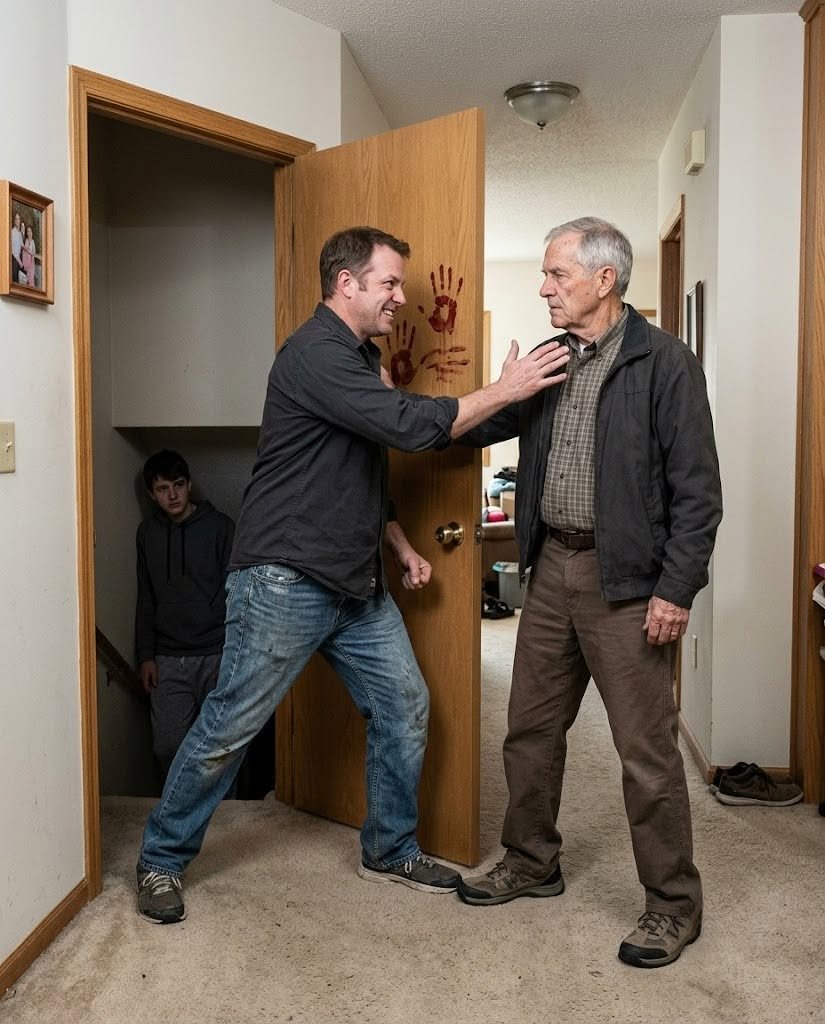
Marcus had turned the basement into a place the child dreaded. The worst moments were not only what happened behind that door. It was the knowledge that someone upstairs knew enough to stop it and chose not to.
Sarah, the boy’s mother, had learned how to pretend. When Marcus raised his voice, she looked away. When something terrible happened downstairs, the television suddenly became louder. The noise was not accidental. It was a choice.
Her son needed protection, but Sarah protected the life she had built with Marcus instead.
The child learned something no kid should ever have to learn: sometimes the person standing closest to you is the person who refuses to stand beside you.
Then Arthur arrived on a Saturday morning.
Marcus expected an easy visit. He saw an older man wearing a worn tweed coat and carrying a wooden cane. To him, Arthur looked harmless. Someone to impress. Someone who would admire the expensive house and leave with no questions.
Marcus walked him through the rooms like he was giving a tour of a victory lap.
Arthur barely paid attention.
He was watching the boy.
He noticed the bruise along the child’s jaw. He noticed the way the boy tracked Marcus’s hands instead of his face. He noticed Sarah’s reaction every time Marcus spoke too loudly.
Those small details told Arthur more than any explanation could have.
When Arthur said he needed the bathroom, Marcus assumed he was simply wandering around an unfamiliar house.
But Arthur stopped at the basement door.
The lock looked wrong.
The door opened slightly.
And there it was.
Five dried handprints marked the white-painted wood.
They were not random stains. They were proof of a child desperately trying to get out.
Arthur understood immediately who had made them.
Before he could say anything, Marcus appeared behind him.
The confident homeowner was suddenly exposed. Instead of explaining, instead of asking why Arthur was there, Marcus chose intimidation.
He grabbed Arthur and shoved him backward.
He warned him to stay out of the family business.
He believed the threat would work because it had always worked before.
Sarah watched her husband put his hands on her own father.
She still did nothing.
Arthur looked at the basement door. Then he looked at Marcus. Then he looked at his daughter.
A different person might have reacted immediately. They might have shouted. They might have created a scene.
Arthur knew something Marcus did not.
Anger was not always the same as justice.
A rushed confrontation could leave the child alone with the same danger after everyone went home. Marcus would deny everything. Sarah would likely support him. The situation would become another secret buried inside that house.
So Arthur changed his approach.
He lowered his voice.
He apologized as if he had made a simple mistake.
Marcus believed he had won.
He told Arthur to leave and never return.
Arthur walked outside, got into his ordinary sedan, and closed the door.
Marcus thought the problem was gone.
It was not.
Arthur did not drive home.
He opened the glove compartment and pulled out a secure phone that did not match the image Marcus had seen.
The quiet grandfather disappeared.
The purpose behind him remained.
Arthur had spent decades pursuing dangerous criminals and bringing hidden truths into the light. The man Marcus dismissed as weak had spent a lifetime understanding how people hide what they do.
The call he made was not about revenge.
It was about uncovering facts.
He requested a complete investigation into Marcus Sterling’s life, finances, and digital history. He wanted to know who Marcus was when nobody was watching.
Because Arthur understood that people like Marcus often depend on one thing: the belief that no one will ever look closely enough.
That night, the storm arrived.
Rain hit the house while Marcus prepared to go back toward the basement.
He still believed he controlled every room, every conversation, and every person inside those walls.
Then the power disappeared.
The television went silent.
The house changed.
Marcus called for Sarah, but there was no answer.
For the first time in a long time, he was not the person creating fear.
He was the person wondering who was nearby.
Then came a sound behind him.
A boot moving across the hardwood floor.
Close.
Too close.
Marcus tightened his grip and turned toward the noise.
He did not know that the man he had pushed aside earlier was no longer simply a grandfather asking questions.
He was someone who had spent thirty years learning how to find people who believed they could hide forever.
The story inside that house was about to change because one person finally decided that silence was no longer acceptable.
Arthur’s greatest weapon was not his phone, his contacts, or his experience.
It was patience.
He had waited long enough to understand the danger. He had waited long enough to make sure the child would not be left alone after the confrontation began.
And now Marcus was about to discover that the person he underestimated was the one person he should have feared.