Ron kept one heavy hand flat on the back of Judy’s dining chair. He didn’t sit down.
That should have told me something. Ron Schafer always sat for Easter dinner. He sat, he said grace, he carved the ham, and he talked about the weather until the pie came out. That was the order of things. It had been the order of things for the nine years I’d been married to his son.
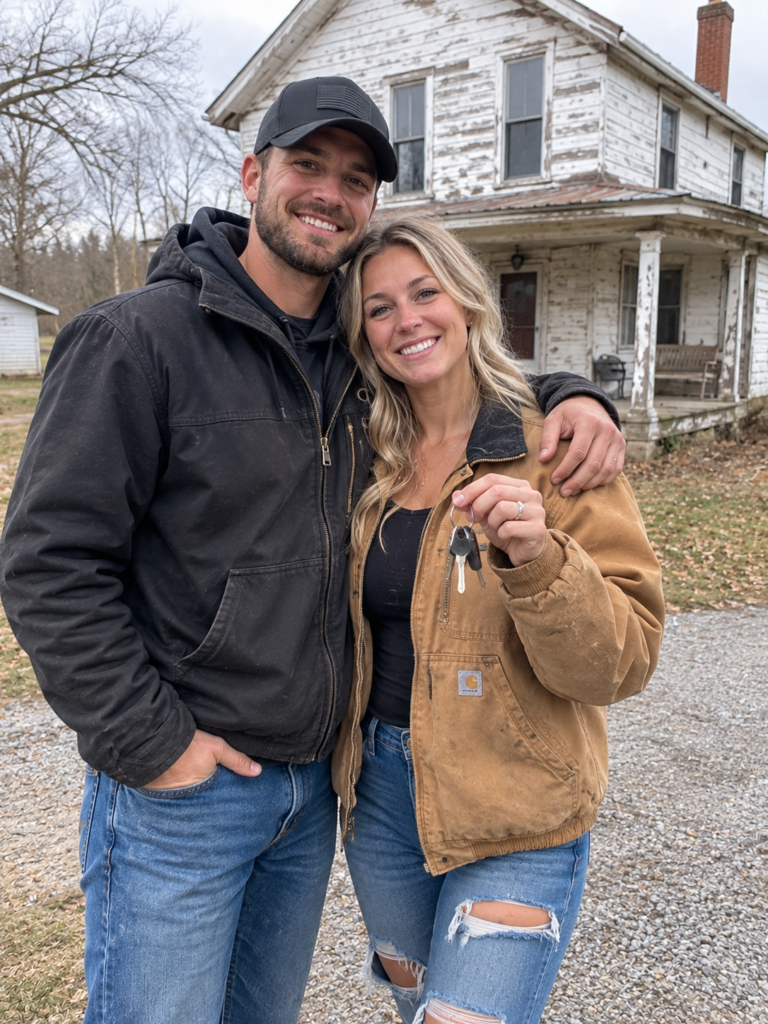
But that Sunday he stood at the head of the table in his brown suit jacket and looked around at all of us. Next to the ham platter, three plain white envelopes sat in a neat stack against the heavy glass gravy boat.
“Before we pass the scalloped potatoes,” Ron said, “your mother and I have an announcement to make.”
Beside me, Nate set his fork down.
“We sold the forty acres down by the creek last Tuesday,” Ron said. “The final papers cleared through the bank yesterday morning.”
Kim stopped her butter knife in the air over a dinner roll.
Nobody said anything. The creek forty was the last piece of Grandpa Arthur’s farm. It was timber and bottomland. Arthur used to take Nate down there to fish when Nate was a boy. I’d heard that story at least a dozen times, usually from Nate, usually late at night.
“Your mother and I talked it over back in February,” Ron said. He adjusted his collar with his free hand. “We do not want you kids sitting around waiting for us to die before you see any good from the family land. We want to hand it out while we’re still here to watch you enjoy it.”
He picked up the top envelope and handed it across the green bean casserole to Kim.
Kim is Nate’s older sister. She was thirty-nine that spring, with two boys and a husband who was halfway out the door. She lived in a rented trailer out on County Road 9 where the roof leaked over the kitchen.
She slid her thumb under the flap and pulled out a blue check.
Then she put her hand over her mouth.
“Twenty thousand dollars,” she whispered. “Mom. Dad. Oh my Lord.”
“That’ll put a proper roof over those two boys of yours,” Judy said. She leaned forward with her bright schoolteacher smile. Judy taught third grade for thirty-one years, and she still praised people the way she praised eight-year-olds. Loudly. Completely. “No more buckets on the kitchen floor every time it rains.”
Kim started to cry.
Ron picked up the second envelope and handed it to Jeff.
Jeff is the youngest. He took the envelope with grease-darkened fingers and pulled the check out without a word. He looked down at his boots and scratched his collarbone with his thumb. His face went red under his hair.
“Twenty thousand for you, Jeff,” Ron said. “That ought to put a down payment on one of those new ranch houses out in the west subdivision.”
“It gets us off the propane truck,” Jeff said to his plate. He’s always talked slow, like every word costs him a little. “Thank you, Dad.”
Ron picked up the third envelope and handed it to Stacy, Jeff’s wife. She was sitting beside Jeff with her hands clasped tight in her lap.
“And twenty thousand for Stacy,” Ron said, waving his broad hand. “To make sure that new place gets furnished properly.”
Stacy pulled out her check, pressed her forehead against Jeff’s shoulder, and started crying softly right there at the table.
I pressed my thumb against the side of my index finger under the tablecloth.
It’s a habit. I’m a billing clerk at the county hospital. I check every total three times before I file it. Nobody taught me to do it with my fingers. I just always have.
Twenty for Kim. Twenty for Jeff. Twenty for Stacy.
Sixty thousand dollars, handed across the ham in less than three minutes.
I looked down at the spot beside the gravy boat.
There were no more envelopes.
“Now then,” Ron said.
He reached into the inside pocket of his suit jacket and pulled out a small, thin envelope. A different kind. Square. The kind a card comes in.
“This last one is for Nate and Emily.”
He held it out across the dishes.
Nate didn’t move for two full seconds. I counted them. Then he reached across the scalloped potatoes and took it.
He passed it to me without opening it. He always hands me anything with paper in it. That’s our deal. He fixes things with his hands, and I handle the paper.
I laid it flat on my napkin, below the edge of the tablecloth.
It was light. It bent easily under my fingers. A cashier’s check has some stiffness to it. I handle checks all day. I knew before I opened it.
But I opened it anyway.
It wasn’t a check.
It was a greeting card. Two bluebirds on the front, sitting on a branch, with gold glitter glued along the edges of their wings.
I turned the envelope over. I checked the corners. I ran my finger along the bottom seam in case something had slipped down in there.
It was empty.
Inside the card, in Judy’s round schoolteacher handwriting, in bright blue ink:
You two have always been so capable, we never worry about you.
Two signatures. Judy. Ron.
That was all.
I read it a second time. I don’t know what I was looking for. A zero I’d missed. A P.S.
There wasn’t one.
“Go on and open it, Nate,” Judy said, beaming across the table at us. “We spent twenty minutes at the card shop picking out that exact bluebird card for you two.”
I slid the card over and set it under Nate’s thumb.
He read it.
He didn’t say anything. But I watched his ears turn red. It started at the very tips and spread down, slow, all the way to his jaw. Nate’s ears have always told on him. He could keep his face still as a fence post, but his ears would give him away every time.
“We know how independent you two are,” Judy said, her voice warm. “Nate makes good money at the diesel shop. Emily’s so sharp with those hospital records. You two don’t need a boost like the others.”
There was a long pause.
“Thank you, Mom,” Nate said.
His voice was flat. Careful. Like he was setting something heavy down on a glass table.
“You see?” Judy turned to Ron with a satisfied smile. “I told you they’d understand. Nate and Emily are built different. They don’t need hand-holding.”
Ron nodded once and picked up the carving fork.
“That takes care of business,” he said. “Pass your plates down. Let’s eat while it’s warm.”
Kim laid her check beside her water glass. But her eyes kept sliding over to the card on Nate’s napkin.
“Are you guys sure you’re okay?” she asked quietly.
“We’re fine, Kim,” I said. I kept my voice even. The same voice I use when somebody calls the billing office to argue about a charge. “Pass the rolls down this way.”
Kim turned to reach for the bread basket near Ron’s elbow.
While she was looking away, I picked up the bluebird card off Nate’s napkin and slid it into the front pocket of his flannel shirt.
Out of sight.
Nate looked down at his pocket. Then at me.
He didn’t say anything. He didn’t have to.
“Dad,” Nate said after a while. “I’ll take those extra folding chairs down to the basement.”
“Good,” Ron said. “Get them out of the doorway so your mother doesn’t trip over them in the morning.”
Nate got up. He scooped three metal chairs under his left arm and walked into the kitchen without another word.
I gathered up the empty bread platter and followed him.
As I stepped past Judy’s chair, she caught my wrist. Her hand was soft and warm. Her face was glowing.
“You two never give us one day of worry, Emily,” she whispered. She squeezed my fingers. “Not one single day.”
“I know, Judy,” I said.
I stood at the kitchen counter and watched Nate’s red ears disappear down the dark basement stairs. The chairs clanked softly against his knee with every step.
Back in the dining room, Kim and Jeff were folding their checks into their wallets. Stacy was laughing now, wiping her eyes with a napkin. Ron was carving. Judy was passing the potatoes.
Everybody was happy.
For nine years, I had believed Ron and Judy treated their three children the same. I’d defended them to my own mother. They’re old-fashioned, but they’re fair.
That belief broke right there, beside the basement stairs, with a bread platter in my hands.
We left at quarter to three.
Nate turned the pickup onto the blacktop heading north before the clock on the dash hit three. The fields on both sides of Route 14 were black and flat, stripped from last fall’s harvest, holding standing water in the low spots.
He reached into his shirt pocket and pulled out the bluebird card. He laid it on the dashboard between us, right above the heater vent. The fan made it flutter.
“What do we have in the savings account at First National?” he asked.
“Six thousand two hundred,” I said. “And seven twenty-five due for April rent next Friday.”
He kept his hands at ten and two. His ears were still red.
“That card cost two ninety-nine at the pharmacy in town,” he said.
“I know.”
“Sixty thousand dollars,” he said. “And we got a note saying we don’t give them one day of worry.”
“Are you mad at your sister?” I asked.
“Kim owes four months on her propane,” Nate said. “She was shaking so hard she could barely hold the paper. I’m not mad at Kim.”
“Jeff?”
“Jeff’s got two kids in diapers and hasn’t had a full shift since the plant laid off forty men in November. He’s been driving propane part-time to keep the lights on.” Nate shook his head. “My brother needed the help.”
He let the silence go for two miles. A red tractor pulled onto the gravel shoulder ahead of us, and Nate eased around it.
“I’m not mad at my mother either,” he said softly. “She thinks she gave us a compliment.”
“It felt like being left out,” I said.
He looked over at me for one second. Then back at the road.
“I’d just like to be worried about one time,” he said. “Just to see what it’s like.”
The truck hit a seam in the pavement. The card slid two inches toward the defrost vent.
I looked at it.
And something in me went quiet and hard.
“We’re going to buy a house,” I said.
“We can’t buy a starter place in this county for less than eighty thousand,” Nate said. “Not with four walls and a sound roof.”
“Then we need forty thousand down. Half. So the payment’s something we can carry.”
“It’d take us five years to save that on my shop wage and your desk pay.”
“Not if we work four shifts instead of two.”
He didn’t answer right away. But his left hand tightened on the wheel until his knuckles went pale.
“We don’t tell my mother,” he said.
“We don’t tell anyone. Not Kim. Not Jeff. Not your dad.”
“If they find out we’re working nights, Dad’ll come over with five hundred dollars and think he fixed it.”
“He won’t get the chance,” I said.
I pulled my phone out of my purse.
“Who are you calling on Easter Sunday?” Nate asked.
“Patty,” I said.
Patty’s Truck Stop sits on the bypass three miles south of the interstate, between a diesel station and a gravel lot full of eighteen-wheelers.
I walked around back, past three grease drums where the smell of old fryer oil was thick enough to taste. Patty was sitting on an upside-down pickle bucket, smoking a thin cigarette with her apron folded across her knees. Gray hair in a tight net. A stack of green guest checks in her side pocket.
I’d waited tables for her the summer I was nineteen. Before nursing school didn’t work out. Before billing.
“You’re late for a kitchen application, Emily,” Patty said without looking up. “We stopped serving the Easter turkey special at two.”
“I’m not applying for kitchen work,” I said. “I want the Friday night and Saturday late shifts.”
Patty blew a thin stream of smoke at the gravel.
“Those are long stretches,” she said. “Overnight. It’s long-haul drivers and boys coming off the night shift at the wire mill. They’re tired and they’re grumpy and they tip in quarters.”
“I know what the shift is. I can carry four plates up one arm and I don’t make mistakes on tickets.”
She looked at me then. Really looked.
“Your husband works over at Dunlap’s diesel shop,” she said. “Does Nate know you’re asking for night work?”
“Nate’s taking night calls too.”
Patty dropped her cigarette into a rusty coffee can full of brown rainwater.
“I pay six an hour plus whatever’s on the tables,” she said. “No complaining about split shifts.”
“When do I start?”
“Friday. Ten-thirty. Bring non-slip shoes and two clean aprons. You drop a tray of mugs, it comes out of your tips.”
“I’ll be here at ten-fifteen,” I said.
Nate was waiting with the engine running and the heater blowing on his work boots.
“Did she take you?”
“Friday night.”
He put the truck in gear, but instead of heading home, he turned toward the industrial park on the east side of town.
“Where are we going?”
“The shop,” he said. “Frank’s usually in the office Sunday afternoons doing his billing.”
Dunlap Diesel and Farm Repair was a steel building with three bays and two acres of broken machinery rusting in the tall grass behind the fence.
Nate parked by the office. I stayed in the cab with the window cracked.
Through the dusty glass, I could see Frank Dunlap behind his gray metal desk, buried in invoice folders and greasy parts manuals. Nate stood in front of him in his good Easter pants, his hands folded behind his back. The way he always stood when he was asking for something.
Frank slid his reading glasses down his nose. He listened for a long time. Then he pulled a yellow legal pad out of his drawer, wrote Nate’s name at the top, and wrote two phone numbers beside it. He underlined them twice.
Nate shook his hand and walked out with his shoulders square.
“What’d he say?”
“He put me first on the emergency list for field repairs,” Nate said. “Whenever a combine breaks a chain or drops a header after nine at night, I get the call. Fifty dollars just to turn the key. Plus twenty-five an hour cash from the farmer if I get him running before daylight.”
“Farmers will pay that?”
“Guys will pay cash to get a combine running at ten o’clock at night with rain coming on a hundred acres of standing corn,” Nate said.
He put his hand on the gearshift. But he didn’t push it into drive.
He looked down at the bluebird card on the dashboard. The glitter on the wings caught the late afternoon light.
He picked it up, turned it over once in his thick fingers, and set it back down face up.
Then we drove home.
Seven months later, my heels burned like salt in a cut at eleven o’clock on a Saturday night.
I had four plates of hot beef on my left arm. Gravy was dripping against the sleeve of my apron. I’d worked forty hours at the hospital that week, and this was my second overnight at Patty’s in two days.
Patty slid two orders of catfish into the window and wiped her red forehead with a wet towel.
“Table four needs extra tartar, Emily,” she said. “And put your feet up for two minutes before you fall over on my linoleum.”
I carried the plates to the corner booth. I set them down without shaking. I picked up four greasy dollar bills off the Formica.
When I came back to the counter, Patty said, “Jeff came by around six in the propane truck. Bought two ham sandwiches on credit. Said his hours got cut again.”
I pulled two napkins out of the dispenser and wiped a coffee ring off the counter.
“Did he say anything about his house?” I asked.
Jeff and Stacy hadn’t bought the ranch house yet. They kept looking. They’d spent some of the money on a new truck in the meantime, because the old one finally died.
“Said Ron and Judy paid his truck insurance for the year,” Patty said.
I walked over to the glass pie case by the register, where the air was cool.
I leaned my forehead flat against the chrome frame and shut my eyes.
When Patty tapped my elbow, forty seconds had gone by. My fingers were still clamped around a pie server.
She set a fresh cup of coffee on the counter beside me.
“You work forty hours at that hospital,” Patty said. “Then you come here and work twenty more. What are you two running from?”
“We need forty thousand dollars,” I said.
“For a house?”
I thought about the bluebird card. I thought about Judy squeezing my fingers. Not one single day.
“For a place where nobody can tell us we owe them a thank-you,” I said.
Patty looked at me for three seconds. Then she nodded once, didn’t ask another question, and filled my coffee to the rim.
Twelve miles north, near the county line, the rain was turning into sleet along the ditch of a dirt road.
Nate told me about it later. I can see it like I was there.
He was flat on his back on a rubber mat in six inches of icy mud under a big green John Deere combine. He had a little brass flashlight clamped in his teeth. An old farmer named Hank Vance stood in the wind holding a work lamp over the open feeder house.
“She snapped right as I hit the north quarter,” Hank yelled over the sleet rattling on his barn roof. “I’ve got sixty acres of wet corn out there in the dark.”
Nate pulled the heavy drive chain into line with his bare hands. His knuckles were scraped gray. He set the pin in the master link and tapped it home with three hard hits of a ball-peen hammer.
“That’ll hold through your lower forty,” he said, spitting out the flashlight.
Hank reached into his overalls and pulled out a wad of bills with a rubber band around it. He peeled off fifteen twenties.
“My wife packed a pumpkin pie before she went to bed,” Hank said. “She said if you got it running, you get the pie.”
At two-thirty in the morning, the back door latch clicked in our rented house on Elm Street.
I was sitting at the kitchen table in my socks with my feet in a dishpan of warm water. My diner apron was still on.
Nate came in wearing canvas coveralls that smelled like diesel and wet dirt and hot engine oil. He set a foil-covered pie tin on the edge of the sink. He pulled a butter knife out of the drying rack and ate half the pie standing right there in his muddy boots.
“How much at Patty’s?” he asked. His voice was rough from four hours in the wind.
“Ninety-six in tips tonight. Forty-two on the morning shift.”
He reached into his thigh pocket and pulled out three hundred dollars in damp, rolled-up twenties. He flattened them on the counter beside my pile.
“Feeder chain on the Vance place,” he said, and took another bite of pie.
I opened my black ledger book. I smoothed out the damp bills and wrote down each amount.
We’d started at Easter with six thousand two hundred dollars.
Now the column said twenty-one thousand four hundred and ten.
Counted to the dollar. Three times.
“Your mom called while you were out,” I said.
Nate stopped scrubbing his hands at the sink. His forearms were covered in gray suds from the lava soap.
“What’d she want?”
“She asked if we wanted Kim’s old living room rug. Since Kim’s buying new carpet for her ranch house.”
Kim had found a little two-bedroom on Cedar Court. Her land money went to the down payment, and to a new bedroom set for the boys, and to a lot of things I didn’t know about.
Nate rinsed his arms under the cold faucet. He dried them on a dish towel.
“Tell her our floors are fine,” he said.
By the next May, Kim had a new chain-link fence running forty yards around her backyard on Cedar Court.
She threw a barbecue to show it off. I brought a green bean casserole. Nate set his folding lawn chair on the fresh sod and held a glass of iced tea he didn’t drink.
“The boys can run all the way to the alley now without touching the street,” Kim said, coming out the sliding door with a bag of chips.
Ron stood at the charcoal grill with a pair of tongs, poking at pork chops.
“Paid the fence crew in cash on Tuesday,” he told the yard.
“That creek money did two good things at once,” Judy said from her lawn chair. She smoothed her yellow blouse and watched Kim’s boys kicking a plastic ball. “It put Kim somewhere safe, and it got rid of that brush lot nobody was using.”
Nate took a slow sip of tea and looked down at the grass between his boots.
“How much was the auger rental for the post holes?” he asked.
“Kim hired a crew out of Lincoln,” Ron said. “Didn’t need an auger.”
“A contractor,” Nate said.
“Full crew,” Kim said, handing out paper plates. “They were done before noon. Forty-two hundred dollars.”
“Worth every nickel,” Ron said.
Nate reached down and picked a piece of gravel out of the lawn. He tossed it over the top rail into the alley ditch.
“It looks sturdy,” he said.
Nobody answered him. The charcoal popped under the meat.
Kim found me later, in her kitchen, while I was scraping plates into the trash.
“Em,” she said. She was holding a dish towel and twisting it. “Can I ask you something?”
“Sure.”
“Did they… at Easter. Did they give you something later? Separately? I keep thinking they must have. Mom wouldn’t just…”
She couldn’t finish.
I looked at her. Kim, with her new fence and her late electric bill and the bags under her eyes. Her husband had moved out in February. She was working the register at the Dollar General and cleaning houses on weekends.
“We’re fine, Kim,” I said.
“That’s not what I asked.”
“I know,” I said. “But it’s what I’m going to answer.”
She looked at me for a long time. Then she hung the towel over the oven handle and went back outside.
Two weeks later, a red Ford pickup pulled into our gravel driveway at ten on a Saturday morning.
A man in a brown hunting jacket got out and walked over to where Nate was standing by the garage.
Nate’s bass boat sat on its trailer under the oak tree. A sixteen-foot Tracker with a fifty-horse Mercury on the back that Nate had spent three winters rebuilding, all the way down to the lower unit gears. He’d hauled the hull out of a river bottom four years before, half full of mud. He’d worked on it past midnight more nights than I could count. The blue fiberglass was waxed so clean it shone in the May sun.
I stood behind the screen door on the back porch, holding a damp dish towel.
I had never asked him to sell that boat.
He never told me he was going to.
The buyer walked around the trailer twice. He kicked the left tire.
“Trolling motor come with it?”
“Foot pedal and two new marine batteries,” Nate said. His ears were pink. “Carburetor was rebuilt last May.”
“She start up smooth on cold mornings?”
“First pull. Every time.”
The man nodded. He pulled a white envelope out of his coat.
“Why’re you selling?” he asked. “She’s a nice rig.”
Nate didn’t look at the house. He didn’t look at me.
“A boat sits when you work sixteen hours a day,” he said.
The buyer counted out thirty-six hundred dollars in hundred-dollar bills on the flat top of the motor cover. Nate picked them up, unbuttoned his shirt pocket, and slid the cash inside. He handed over the signed title without looking down at it.
The man backed his Ford up, dropped the coupler on his hitch, and snapped the safety chains into place with a sharp metal clack.
Nate didn’t move while the red truck pulled the boat down the lane to the blacktop.
I walked out to him.
He pulled the envelope out of his shirt and handed it to me without taking his eyes off the yard.
“Put this in the box under the bed,” he said.
“Nate. You built that motor out of spare parts.”
“We have forty thousand eight hundred now,” he said. His voice was steady and flat. “Counting your tip drawer and the hospital overtime.”
I looked down at the envelope in my hand. Then back at his face.
He didn’t say anything else. He just stood there on the gravel, staring at the rectangle of dead yellow grass where the trailer had been parked for four years.
I put my hand on his back.
He let me.
We stood there like that for a long time.
Jeff and Stacy finally closed on their house in August.
A three-bedroom ranch on Birch Lane, in the west subdivision. Bright white concrete driveway. Oak cabinets. They threw a housewarming on a Saturday afternoon, and half the propane company came.
Judy held my elbow as we walked through the front room toward the kitchen.
“Look at these cabinets,” she whispered, squeezing my sleeve. She beamed up at the high drywall ceiling. “Jeff never could save a dime on his own. Bless his heart.”
Jeff was standing near the kitchen island with a man from his shop.
“Down payment was twenty-two thousand,” Jeff said. “Dad handled the closing costs too.”
I didn’t know that. I pressed my thumb against my finger.
Judy turned her face toward me and patted my shoulder twice.
“You two will be next,” she said. “You’re so good with money.”
Two women from the propane office turned around and smiled at me.
“We’re working on it,” I said.
“Nate and Emily never needed a hand,” Judy told them. “They’ve always been so sensible.”
Across the room, Nate was standing by the coat closet with two jackets Jeff had asked him to hang. He hung them on wire hangers and slid the door shut.
“Where’s the main breaker panel in this house?” he asked Jeff.
“Basement stairwell,” Jeff said. “Why?”
“Just checking,” Nate said.
He went down the basement stairs alone. I knew he’d be down there a while. He does that. When a room gets too full, he finds the part of the house that keeps it running, and he stands next to it until he’s ready to come back up.
The money didn’t sit still that winter.
The transmission went out on our truck in October. Eighteen hundred dollars. My hours at the hospital got cut in December, and for six weeks I made up the difference at Patty’s. Nate worked combines until the ground froze, and then he worked anything Frank Dunlap would send him to. A grain dryer in a blizzard. A milk truck stuck in a ditch at four in the morning.
We were tired all the time. We fought once, in January, about nothing. About whose turn it was to take out the trash. I threw a dish towel at him, one of Judy’s blue ones, and then we both sat down on the kitchen floor and laughed until I cried.
By March, we had forty thousand five hundred and forty dollars in the savings account. Fifteen hundred more in tip cash in a tin under the bed.
Almost two years since Easter.
And every house we looked at was either falling down or eighty-five thousand dollars and climbing.
In March, the wind blew dark dirt across the hospital parking lot.
I was eating a turkey sandwich at my desk at twelve-thirty. The county paper was open between two stacks of insurance claims. I read the legal notices the way some people read the comics. Old habit. Rows of numbers. Something soothing about them.
Page four. Three columns of tiny black type.
I stopped chewing.
Parcel 14-B. Former Miller residence. 2.3 acres. Two-story frame dwelling, wood barn, concrete cistern. Delinquent taxes: $4,800. Public tax sale, Thursday, April 14, 10:00 a.m., Ford County Courthouse steps.
I knew the Miller place. Everybody did. Old Man Miller had lived out there alone after his wife died, and when he passed in November, his kids in Arizona didn’t want it. It sat at the end of a gravel lane north of town, past the creek.
Right past the creek.
I wrote the parcel number on my yellow legal pad. I folded the notice into four small squares and tucked it deep in my purse.
At five past five, I walked out to the parking lot where Nate was idling by the gate.
“Drive north,” I said.
The old Miller farmhouse sat two hundred yards back from the road behind four bare oak trees.
It was gray cedar siding with three boards missing beside the front door. The porch roof sagged three inches on the left where a post had rotted at the bottom. The weeds came up to the truck bumper.
Nate shut off the engine and reached under the seat for his big flashlight.
“Nobody’s lived here since November,” he said.
He got out and walked to the house without saying anything else. I followed him around the south corner, pulling my coat tight against the wind.
He dropped to his knees beside the crawlspace vent and shined the light underneath.
“Foundation’s stacked limestone,” he called out. He crawled in another three feet. “Sill’s oak. Eight by eight.”
He backed out and stood up and brushed the red dirt off his jeans.
We walked out to the edge of the lane. Nate stepped into the tall weeds, shut one eye, and held his thumb up against the roofline. He moved it slowly from one end of the ridge to the other.
“Ridge is straight,” he said. “Foundation hasn’t moved.”
He lowered his hand and looked at the sagging porch.
“Good bones, Em,” he said. “Really good bones.”
He checked the wiring next. Reached up and ran his thumb along the frayed insulation where the power line met the house.
“Sixty amps,” he said. “Old screw-in fuses. Probably knob-and-tube in the attic. A dryer and an air conditioner would blow the main in five minutes.”
“Can you rewire it?”
“I can pull the wire. We’ll need a new panel and a county permit before they turn the power on.”
He walked three yards into the side yard where a cracked concrete cistern lid sat level with the dirt.
Right against the rim, one tiny red-green sprout was pushing up out of the black soil.
I crouched down in the weeds and touched it.
“Peonies,” I said. “My grandmother had red ones just like this by her pump house.”
Nate didn’t look down. He stepped onto the cistern lid and bounced once, testing it.
“Holds,” he said. “We’ll need a deep well eventually. But the hand pump’ll do for washing floors while we clean.”
I stood up and looked past the barn.
Beyond the back fence, the ground sloped down into a long stretch of bare timber. Oaks and cottonwoods along a winding line of water.
“Nate,” I said. “Is that—”
“The creek forty,” he said.
He didn’t turn around to look. He was writing on a little yellow pad with a stub of pencil.
“Grain elevator company bought it,” he said. “They’ll probably clear it for a storage lot.”
His pencil stopped.
Then it started again.
“We have forty thousand five hundred forty in savings,” I said. “Fifteen hundred in the tin.”
“We keep five hundred and forty for the recording fees and the permit,” Nate said. “That leaves forty-one five. That’s our ceiling.”
“What if somebody bids forty-two?”
He wiped the pencil tip on his thigh and folded the pad.
“Then we let them have it,” he said. “And we go back to work.”
Thursday came cold and bright, with frost on the parking lot in front of First National Bank.
I stood at the teller counter at eight minutes after nine. Mrs. Albright has worked that window since before I was born. She slid her glasses up her nose.
“A cashier’s check for forty thousand even?”
“Yes. Payable to the Ford County Treasurer.”
“Leaving how much in the account?”
“Five hundred forty dollars.”
She looked at me over her glasses. She typed. The printer behind her buzzed and pushed out a crisp rectangle of safety paper.
Beside my elbow sat a plain white envelope with seventy-five twenty-dollar bills in it. It smelled faintly of fryer oil.
“Are you two buying farm equipment?” Mrs. Albright asked.
“Property,” I said.
She waited for more. A road name. A family name. I picked up the check and slid it into my inside coat pocket.
“You count that cash before you walk out,” she said, nodding at the envelope.
“I counted it three times on the dresser,” I said.
“Where’s Nate this morning?”
“Waiting for me on the courthouse steps.”
At five minutes to ten, about twenty people stood around the big oak doors at the top of the courthouse stairs, coats zipped high against the wind.
A man in a quilted blue vest sat on a folding stool near the archway with a clipboard on his knee.
“That’s Dale Kessler,” Nate whispered. “Owns twenty rentals on the east side. Buys anything he can get under thirty thousand. Throws down cheap carpet and rents it out.”
“We have forty-one five,” I said.
Nate didn’t answer. His hands were jammed deep in his canvas jacket pockets. He didn’t lean on the pillar. He didn’t join the men talking low by the railing. He just stood there, perfectly still.
The auctioneer, a heavyset man named Dobbs, came out through the doors with a bullhorn and a wooden gavel. He clicked the horn, and a whine echoed off the stone.
“County tax sale,” Dobbs called. “Parcel 14-B. The old Miller residence. Two point three acres, sold as-is. Opening bid set by the county at twenty thousand. Who’ll give me twenty?”
Kessler raised one hand without looking up from his clipboard.
“Twenty from Mr. Kessler. Do I hear twenty-one?”
“Twenty-one,” said a farmer in a red seed cap three steps down.
“Twenty-two,” Kessler said.
“Twenty-three,” the farmer said.
“Twenty-five.” Kessler jumped it two thousand in one breath.
The farmer shook his head and backed away to the railing.
“Twenty-five to Mr. Kessler. Do I hear twenty-six?”
“Twenty-six,” Nate said.
Kessler turned his head slowly. His eyes went over Nate’s grease-stained cuffs and worn boots.
“Twenty-seven,” he said.
“Twenty-eight.”
“Thirty,” Kessler said, and turned his shoulder away from us.
“Thirty-one,” Nate said.
A man on the lower step turned around to look at him.
My fingers gripped the check in my coat pocket so hard the paper creaked.
“Thirty-two.”
“Thirty-three.”
“Thirty-five,” Kessler barked. He stood up off his stool.
“Thirty-six,” Nate said, without taking a breath.
“Thirty-eight.”
“Thirty-nine.”
“Forty thousand,” Kessler snapped. He folded his arms over his vest.
The crowd went silent.
The wind rattled a loose pane in the tall window above our heads.
“Forty thousand dollars,” Dobbs called. “Forty thousand once. Forty thousand twice.”
Nate took one small step forward on the stone.
“Forty-one,” Kessler said, before Nate could open his mouth. He glanced back toward his car at the curb, like he was already done.
I did the math without meaning to. Five hundred left. That was it. That was all we had. Two years of night shifts and a boat and a transmission, and it came down to five hundred dollars.
Nate didn’t look at me. His face didn’t move. He kept his eyes locked on the gavel.
“Forty-one thousand five hundred,” he said.
Kessler tapped his pencil against his clipboard.
He looked at Nate for a long moment.
Then he spit on the stone and turned his back on the stairs.
“Who’ll give me forty-two?” Dobbs yelled, scanning the faces.
Nobody moved. Two blocks away, a diesel truck shifted gears on Main Street.
“Forty-one five once. Forty-one five twice.”
The gavel came down on the brass plate with a crack that bounced off the brick buildings across the square.
“Sold,” Dobbs shouted, “to Nathan and Emily Schafer. Forty-one thousand five hundred dollars. Payment due at the treasurer’s office by close of business Monday.”
I didn’t cry. I didn’t jump up and down. I just stood on the courthouse steps with my hand in my coat pocket, holding a forty-thousand-dollar check, and breathed.
Nate turned around and looked at me.
His ears were bright red.
“We bought a house,” he said, like he was asking.
“We bought a house,” I said.
He put his arms around me right there in front of Dale Kessler and the farmer in the seed cap and half the county. He held on so tight my feet came off the step.
On Sunday, we went to Ron and Judy’s for dinner like always.
We’d agreed in the truck. Not yet. Not until the money was paid and the receipt was in my hand. Nothing could go wrong if nobody knew.
Ron and Judy sat in their armchairs. We sat on the floral sofa. Ron had his hand flat on the back of Judy’s chair, eyes on the muted TV.
“We were at the farm store Friday,” Judy said, smoothing her skirt. “They had four-packs of waffle-weave dish towels on sale for three dollars. The blue ones with the white stripe. I thought of your kitchen right away. A young couple renting can always use extra linens.”
“That was thoughtful, Judy,” I said.
My handbag was on my lap. Inside, in the zippered pocket, was a cashier’s check for forty thousand dollars.
“You two have always been so independent,” Judy said, beaming. “You never gave us one day of worry.”
“Nate knows how to stretch a dollar,” Ron said. “Always has.”
“Is Jeff coming for dessert?” Nate asked.
“Jeff’s working overtime at the propane terminal,” Ron said. “His mortgage went up forty-eight dollars after the county reassessed. We gave him five hundred last Tuesday so his account wouldn’t dip below the minimum.”
In the kitchen, Judy told me Kim had called crying on Thursday. Her electric bill was two months behind. Ron had written her a check for three hundred.
“She has so much on her shoulders with the divorce,” Judy said. “She just can’t catch her breath.”
“It takes time to get settled,” I said.
“And Jeff wants a bank loan for a new lawn tractor. Ron’s going to co-sign.”
She rinsed a wooden spoon under the tap. Her wedding ring clicked against the sink.
“Are you still working those late hours, Emily?” she asked.
I don’t know why she asked. Maybe she’d heard something. Maybe she saw the circles under my eyes.
“Just my regular shifts,” I said.
“Good,” Judy said. “You don’t want to wear yourself out for a landlord who won’t even paint your porch.”
She smiled at me.
“You two are the only ones who don’t need anybody holding your hand,” she said.
I folded my hands on the edge of the counter and didn’t say anything.
Out in the garage, Ron’s riding mower wouldn’t catch. Nate knelt on the cold concrete, pulled the fuel line, took the carburetor bowl apart with his fingers, and blew out the jet. Varnish. Stuck needle.
Ron turned the key. The engine fired right up and hummed.
“That saved me a hundred dollars,” Ron said. “You always were quick with a small engine.”
“Needle was just stuck,” Nate said, wiping his thumbs on a rag.
He did not mention the three hundred dollars he’d earned at midnight two weeks before, under a combine on the county line in freezing rain.
“Your brother tried fixing his own mower last summer,” Ron said, shaking his head. “Burned out the starter. Cost him two hundred.”
“Is the deck belt holding?” Nate asked.
“Slips a little in tall grass. Can you look at it next Sunday?”
“I can look at it,” Nate said.
At six, I drove to Patty’s to pick up my schedule.
“County clerk’s deputy was in here for coffee at three,” Patty said, not looking up from her ticket spindle. “Said you and Nate bought the Miller place on the courthouse steps.”
So much for nobody knowing. In a town that size, the only real secret is the one nobody’s ever bothered to ask about.
“We pay tomorrow,” I said.
“My cousin looked at that place for the estate,” Patty said. “Said the fuse box is six screw-in plugs and the attic’s all knob-and-tube.”
“We know. Nate’s pulling the permit this week.”
“How much’ll you have left after you pay?”
I did the math. Recording fee. Electrical permit. “About eighty-four dollars.”
Patty opened her schedule book and turned it around so I could see the weekend columns.
“I’ve got Friday and Saturday open. Seven to three.”
“Put me down for both.”
“You’re already working forty hours at that hospital.”
“We need six hundred for copper wire and a breaker box.”
Patty marked her ledger in red ink. Then she looked up at me.
“You make sure Nate checks the rafters before he runs new wire,” she said. “That roof leaked back in ninety-six.”
When I went back to pick up Nate, Judy was standing on the porch under the yellow light, holding a little package wrapped in blue paper.
“I didn’t want you leaving without these,” she said.
I could feel the soft waffle-weave cotton through the paper. Four dish towels.
“I know how hard it is to keep up with kitchen things when you’re renting,” Judy said.
Nate came out the screen door, his hands pink from scrubbing.
Judy leaned down and kissed my cheek. Warm. Soft.
I held the dish towels against my chest all the way to the truck.
The deputy clerk behind the glass on Monday morning had a brass nameplate that said Mrs. Gable.
I set the bank envelope on the marble ledge under the speak-hole. The cashier’s check. And the fifteen hundred in twenties, bound with three thick rubber bands from Patty’s. The bills were soft and wrinkled and smelled like canola oil and chicken batter. Seventy-five of them.
“Forty thousand on the bank check,” I said, pressing my thumb against my finger. “And fifteen hundred in cash.”
Mrs. Gable snapped a pink rubber thumb on her finger. She counted the twenties twice, laying them in three flat piles of five hundred on her green blotter.
“Forty-one thousand five hundred exact,” she said.
She stamped the tax sale ledger with a heavy red stamp that made the marble ring.
“The deed comes in the mail in about sixty days,” she said. “But nobody’s going to mind if you start mowing.”
She reached into a lower drawer and pushed a yellow envelope through the steel tray under the glass. Inside was a rusted iron ring with seven skeleton keys on it. No labels.
Nate picked it up and rubbed the biggest key with his thumb.
“These go to the front door?”
“They go to whatever locks are left,” Mrs. Gable said. “County took it as-is.”
I looked down the hallway at the room numbers by the elevator.
“I want to check the parcel records while we’re here,” I said. “Boundaries. Easements. In case there’s something we should know about.”
It was the billing clerk in me. You don’t sign off on an account until you’ve seen the whole history.
“I need to feed the meter,” Nate said. “Meet you down there.”
The land records room was at the end of a long fluorescent hallway behind the furnace. Steel shelves full of canvas-bound ledgers going back to the 1800s. An old clerk named Mr. Henderson sat at a metal desk by the window, eating an apple off a pocketknife.
“Section twelve,” I said. “Along the creek.”
He pointed at row three with his knife.
I pulled the heavy volume onto the oak table and turned the cold pages until I found the Miller boundaries.
Parcel 14-B. Two point three acres. The house.
And right next to it on the survey map, sharing the back fence line, Parcel 14-A.
Forty acres of bottomland timber along the creek.
I don’t know why I kept reading.
Habit, I guess. When I see a number, I follow it.
I traced the ownership of 14-A backward. The sale to the grain elevator company, two Easters ago. Before that, Ronald Schafer, sole owner.
Before that, a gift deed.
The spring Nate turned eighteen.
Arthur Schafer to Ronald Schafer and Nathan Schafer, as joint tenants with right of survivorship.
I read it twice.
Grandpa Arthur had put the creek forty in Ron’s name and Nate’s name. Together. Equal. When Nate turned eighteen.
And three inches below that, recorded six weeks later, was a quitclaim deed.
Nathan Schafer releases all right, title, and interest in the above property to Ronald Schafer, for consideration of one dollar.
Signed in blue ballpoint pen. A loose, young, slanting hand.
I knew that handwriting. I’d seen it on every birthday card for nine years.
It was Nate’s signature.
Nate came around the end of the shelves holding two paper cups of black coffee from the hallway machine.
“Meter’s got twenty minutes,” he said, setting one by my elbow.
I didn’t touch the coffee.
I turned the ledger toward him and put my fingernail on the blue notary stamp.
“Look at line four,” I said.
He bent down and read it.
He read it for a long time. His chin didn’t move.
“That’s my handwriting,” he said.
“You signed it six weeks after your eighteenth birthday.”
He kept looking at it.
“Dad brought a clipboard out to the machine shed,” he said slowly. “I was working on the old Farmall. He said it was insurance papers. For the farm equipment. Since I was eighteen now and I’d be driving the tractors on the road.” He swallowed. “I signed it on the fender. I didn’t even wipe my hands.”
“It was a quitclaim,” I said. “Your grandpa gave you half the creek forty. And you signed it back to your dad for a dollar.”
Nate straightened up.
“Grandpa told me,” he said. “Right before he died. In the hospital. He held my hand and said, ‘The creek ground’s yours, Natey. Don’t let anybody take it.’” He shook his head. “I thought he was confused. He was on a lot of morphine. I thought he meant I could always go down there and fish.”
Nobody said anything for a while. The furnace thumped behind the wall.
“Your dad sold it to the elevator,” I said. “Sixty thousand dollars.”
“Twenty to Kim,” Nate said. “Twenty to Jeff. Twenty to Stacy.”
“And a card to us.”
I watched his ears turn red. Not pink. Not the slow climb from the tips. All at once. Dark, deep red, all the way down to his collar.
“He knew I’d never look,” Nate said. “He knew I’d never come down here.”
“He knew you were capable,” I said.
Nate’s mouth settled into a hard, thin line.
“He didn’t leave us out by accident,” he said.
“No.”
He picked up both coffee cups. He walked to the metal trash can by the door and dropped them in without drinking a sip.
“Let’s go see our house,” he said.
The lane was grown over with wild mustard and dandelions. The house sat gray and quiet. The porch dipped toward the ground near the cistern.
Nate parked by a dead lilac bush and shut off the truck.
We walked through the knee-high grass to the front steps. He pulled out the iron ring. Seven dark keys clinked together in his palm.
“Which one first?”
“The heavy one with the square tooth,” I said.
He stepped onto the porch. The old pine boards creaked under his boots.
The first key went in two inches and stopped.
The second turned halfway and jammed.
The third was too wide for the slot.
“Four left,” I said from the step behind him.
He took the fourth one. A long iron key with two rounded notches. It slid in smooth, all the way to the collar.
He turned his wrist.
Inside the door, a heavy iron latch dropped with a sound like a hammer on an anvil.
Nate pushed the oak door open three inches.
The smell of old plaster and wallpaper paste and cold pine drifted out onto the porch.
He stood there for five seconds without moving.
“Capable,” he said.
Then he sat down hard on the top step. His shoulders dropped. He leaned forward with his elbows on his knees.
I sat down beside him and pulled my coat around me.
A strange, ragged sound came out of his chest. Half a cough. Half a laugh.
I looked at his profile. His red ears. His jaw.
And I started laughing too.
We sat on the porch of our falling-down house and laughed until we couldn’t breathe. Until Nate wiped his eyes with the heel of his hand and I had the hiccups. Out past the barn, the bare cottonwoods along the creek moved in the wind.
His creek.
The one he was supposed to have.
That night, Nate didn’t sleep.
I heard him get up at one. I found him at the kitchen table in the dark, with the bluebird card in front of him.
“What do you want to do?” I asked.
“I don’t know,” he said.
“We could talk to somebody. A lawyer.”
He was quiet for a long time.
“Find out what it would even mean,” he said finally. “That’s all. Just find out.”
The lawyer’s name was Walter Pruett. He was seventy-three, with an office over the hardware store and a dog asleep under his desk. He did wills and land deals for half the farmers in the county. He’d known Arthur Schafer.
He read the copies I’d paid a dollar a page for in the records room. He read them twice. He took off his glasses.
“Your grandfather came to me about this,” he said. “Back then. He wanted it airtight. He said Ron had borrowed against the home place twice and lost one of the quarters in the eighties. He didn’t want the creek ground going the same way. So he put you on it. Survivorship. If Arthur trusted Ron alone with it, he’d have just deeded it to Ron.”
Nate sat very still.
“Can we do anything?” I asked.
“Maybe,” Mr. Pruett said. “You could argue fraud. He told an eighteen-year-old boy he was signing insurance papers. Nebraska has a discovery rule. Clock might start when you found out, not when you signed.” He spread his hands. “But it’s your word against your father’s, about a conversation in a machine shed twenty years ago. The land’s sold to a company with lawyers of their own. It would take two years and more money than you’ve got. And you’d be suing your father.”
He looked at Nate.
“I’ve seen a lot of families go to court over land,” he said. “I’ve never once seen one come out the other side still a family.”
Nate stood up and shook his hand.
“Thank you, Mr. Pruett,” he said. “I just needed to know.”
In the truck, he said, “I’m not suing my dad.”
“Okay.”
“But I’m going to ask him.”
“Okay.”
“Sunday,” he said.
Sunday came.
We sat at the dining room table. Same lace tablecloth. Same gravy boat. Kim and her boys. Jeff and Stacy and their kids. Ron at the head. Judy beside him.
Halfway through the roast, Nate set down his fork.
“Emily and I bought a house,” he said.
The table went quiet.
Judy’s face lit up. “Oh! Oh, Nate! Where? Which subdivision?”
“The old Miller place,” Nate said. “North of town. We bought it at the tax sale. Paid cash.”
Ron’s fork stopped.
“Cash?” Jeff said. “How’d you get cash?”
“Emily’s been working overnights at Patty’s for two years,” Nate said. “I’ve been taking emergency field calls for Frank. And I sold the boat.”
“You sold the boat?” Jeff said.
Judy’s hand was at her throat. “Overnights? Emily? You told me just your regular shifts.”
“I know,” I said. “I’m sorry I lied to you, Judy.”
Ron hadn’t said anything. He was looking at Nate.
He knew. I could see it. The second Nate said Miller place, he knew where the back fence line ran.
“That place is a wreck,” Ron said. “Porch is falling in. You should’ve come to me.”
“I know it’s a wreck,” Nate said. “I’m going to fix it.”
He reached into his shirt pocket and pulled out a folded piece of paper. The copy from the records room. He unfolded it and laid it on the tablecloth next to Ron’s plate.
Right where the envelopes had been.
“I went to the courthouse,” Nate said. “To check the boundaries.”
Ron looked down at the paper.
He didn’t pick it up. He didn’t need to.
“What is that?” Judy said. “Ron? What is that?”
Ron didn’t answer.
“It’s a quitclaim deed, Mom,” Nate said. His voice was quiet. Steady. “Grandpa gave the creek forty to Dad and me together. When I turned eighteen. Six weeks later, Dad brought a clipboard out to the shed and told me it was insurance papers. I signed my half back to him for a dollar.”
Kim put her fork down very slowly.
“That’s not…” Judy looked from Nate to Ron. “Ron. Tell him that’s not right.”
Ron’s jaw worked.
“Ron,” Judy said.
“It was his grandfather’s idea of a joke,” Ron said finally. His voice was rough. “Putting a boy’s name on my land. My land. I worked that farm for thirty years under that man. Then he goes and puts a kid on the deed like I can’t be trusted to—”
He stopped.
“Like you couldn’t be trusted,” Nate said.
The room was so quiet I could hear the clock in the hallway.
“You were always his favorite,” Ron said. He wasn’t looking at Nate. He was looking at the gravy boat. “Every Saturday. Fishing. The shop. Teaching you engines. He never took me fishing once. Not once in my life. And then he gives you the creek.” He shook his head. “Kim got nothing from him. Jeff got nothing. I thought… I thought it’d be fair. To spread it around. You were always going to be fine. You got everything else he had.”
“He didn’t give me anything else,” Nate said. “He gave me his time. That’s all. And the creek.”
“Nate—”
“I didn’t want the money, Dad.”
His voice cracked on the last word. Just a little.
“I’d have given it to Kim myself,” he said. “If you’d asked me. If you’d come out to the shed and said, ‘Your sister’s roof is leaking. Your brother lost his job. Can we sell the creek and help them out.’ I’d have said yes. You know I would’ve.”
He looked at Ron.
“You didn’t ask,” Nate said. “You just took it. And then you gave me a card.”
Judy made a sound.
We all turned.
She was staring at Ron. Her face was white. Her hand was over her mouth.
“You told me Nate signed it over when he was a boy,” she said. “You told me he didn’t want it. You said, ‘Nate’s not interested in land. He just wants his engines.’ You told me that.”
Ron didn’t say anything.
“I bought that card,” Judy said. Her voice was shaking now. “I stood in that pharmacy for twenty minutes. I picked out the bluebirds because Nate used to love the bluebirds at the creek when he was little. Arthur built him that birdhouse. I thought…”
She stopped.
She looked at Nate.
“I thought I was telling you I was proud of you,” she said.
“I know, Mom,” Nate said softly.
Kim stood up.
She was crying. She went around the table and stood behind Nate’s chair and put her arms around his neck from behind, the way she used to when they were kids.
“I’ll pay it back,” she said into his hair. “Nate. I swear to God. I’ll pay you back every dollar. It might take me twenty years, but—”
“Kim,” Nate said. “Stop. I don’t want it back.”
“But it was yours—”
“Your boys have a roof,” Nate said. “That’s where it went. I’m glad it went there.”
Jeff was staring at his plate. His face was dark red under his hair. Just like his brother’s.
“I didn’t know,” he mumbled. “Nate. I didn’t know.”
“I know you didn’t, Jeff.”
Ron pushed back his chair.
He stood up. He picked up the deed copy off the tablecloth. He held it for a second.
Then he set it back down and walked out through the kitchen. We heard the back door. We heard the garage door go up.
Nobody followed him.
Judy sat in her chair with her hands in her lap. She looked old. Older than I’d ever seen her.
Then she reached across the table and took my hand.
Her hand was cold.
“Overnights,” she said. “Two years.”
“Yes.”
“And Nate out in the fields. In the cold.”
“Yes.”
She squeezed my hand so tight it hurt.
“I should have worried,” she whispered. “I should have been worrying the whole time.”
Ron didn’t call for three weeks.
We didn’t call him either.
Nate pulled the electrical permit. He worked on the house every evening after the shop and all weekend. I scrubbed eighty years of grime off the kitchen floor on my hands and knees with water from the hand pump. We slept on an air mattress in the front room some nights because we were too tired to drive back to Elm Street.
Kim showed up the first Saturday with a bucket, her two boys, and three boxes of contractor trash bags.
“I can’t pay you back,” she said. “But I can scrub.”
She pulled wallpaper off the dining room walls for nine hours. Her boys ran laps around the barn and caught a garter snake.
Jeff came the second Saturday. He stood in the yard with his hands in his pockets.
“I’m no good with wiring,” he said.
“I know,” Nate said. “Can you swing a sledgehammer?”
Jeff could. He tore out the rotten back porch in an afternoon and hauled every board to the burn pile without saying three words.
At the end of the day, he stood by the truck and scratched his collarbone.
“I talked to Stacy,” he said. “We’re going to sell the new truck. It was dumb. We didn’t need it.”
“Jeff, you don’t have to—”
“I know I don’t,” Jeff said. “We’re going to anyway.”
Judy came on a Tuesday.
By herself. In the middle of the afternoon. I was standing on a ladder scraping the ceiling in the front room when I heard a car door, and there she was, coming up the lane in her church shoes, carrying a casserole dish and a bucket of cleaning supplies.
She stopped at the bottom of the porch steps and looked up at the house.
“It’s going to be lovely,” she said.
“It’s going to be a lot of work.”
“I know,” Judy said. “That’s why I brought rubber gloves.”
She stayed until dark. She washed every window in the house with vinegar and newspaper, the way her mother taught her. She didn’t talk about Ron. I didn’t ask.
Before she left, she stood in the kitchen and looked at me.
“I used to lie awake about Kim,” she said. “And Jeff. Every night. What was going to happen to them. And I’d think, at least I don’t have to worry about Nate. At least that one is easy.” She shook her head. “I was so grateful you were easy. I never stopped to think what it cost you to be easy.”
She put her hand on my cheek.
“I’m worried about you now,” she said. “Both of you. I want you to know that. You’re going to have to put up with it.”
I laughed. I couldn’t help it.
“Okay, Judy,” I said.
Four weeks after Easter dinner, I pulled up the lane at six-thirty on a Saturday morning with a thermos of coffee.
Ron’s truck was parked by the dead lilac.
He was on the front porch with a hydraulic jack and a new pressure-treated four-by-six post. He’d jacked the porch roof up three inches, level, and he was setting the new post into a concrete footing he must have poured the day before. I hadn’t even known he’d been out.
Nate was standing in the yard in his work clothes, watching him.
Neither of them was talking.
I got out of the truck and stood next to Nate.
“How long’s he been here?” I whispered.
“Since five,” Nate said. “He was here when I pulled in. Didn’t say anything. Just handed me the level.”
Ron set the post. He tapped it plumb with a rubber mallet. He lowered the jack slowly, and the porch roof settled down onto the new post, and it held. Straight. Level. The way it was supposed to be.
He came down the steps. He stood in front of Nate. He was holding his hat in both hands.
He was quiet for a long time.
“I can’t give it back,” he said. “The creek. It’s gone. I can’t fix that.”
“I know, Dad.”
“I can fix a porch,” Ron said.
Nate looked at the porch. Then back at his father.
“It’s a good post,” Nate said.
Ron nodded. He looked at the ground.
“I’ve worried about you every day since that clipboard,” he said. His voice was barely above a whisper. “Every single day. I just couldn’t say so. Because then I’d have to say why.”
Nate didn’t say anything.
But he reached out and took the mallet out of his father’s hand. And he turned around and walked up the porch steps to check the post for himself.
Ron watched him.
Then he followed him up.
It took us all summer.
Nate pulled every foot of the old knob-and-tube wire out of the attic and ran new copper. The county inspector signed off in August. When the power company turned the meter on, Nate flipped the main breaker in the new panel and every light in the house came on at once, and Kim’s boys cheered from the yard like it was the Fourth of July.
Ron came out most Saturdays. He and Nate rebuilt the back steps together. They didn’t talk much. But one Saturday in July, I heard them laughing in the barn about something. I never found out what.
Patty sent over a box of old diner mugs, the heavy white ones, with a note: For the coffee you’re going to drink in your own kitchen. Don’t drop them. It comes out of your tips.
I quit the overnights in September.
Patty hugged me in the back lot, by the grease drums, and smelled like cigarettes and coffee.
“Go home, Emily,” she said. “You’ve got one now.”
We moved in on the first of October.
It wasn’t finished. The upstairs was still bare studs. The kitchen cabinets were the old ones, painted white. We had a mattress on the floor, a card table, two folding chairs, and Patty’s mugs.
And four blue dish towels with white stripes, hanging on the oven handle.
That first night, after everyone had gone home, I found Nate standing in the upstairs hallway with the wall open between the studs.
He was holding the bluebird card.
“I’ve been thinking about burning it,” he said.
“Okay.”
“Then I thought, no.” He turned it over in his hands. “It’s not a bad card. Mom meant it. She just didn’t know what she was saying.”
He looked at me.
“I want it in the house,” he said. “But I don’t want to look at it.”
So we put it inside the wall.
He tucked it between the studs, down low, right next to the copy of the old quitclaim deed. Then he nailed up the drywall over both of them and screwed it tight.
“Somebody’ll find it in a hundred years,” I said.
“Good,” Nate said. “Let them figure it out.”
The peonies came up the next May.
Red ones, all along the cistern, just like my grandmother’s. Six big bushes that Old Man Miller’s wife must have planted fifty years before. Nobody had touched them in a decade. They didn’t care. They came up anyway.
Judy and Ron came out on a Sunday afternoon for the first dinner at our table. A real table, oak, that Nate found at a farm auction for forty dollars and refinished in the barn. Kim brought the boys. Jeff and Stacy brought a ham.
Before we ate, Judy stood up.
She was holding a small envelope. Square. The kind a card comes in.
My stomach dropped. Just for a second. I couldn’t help it.
Nate’s ears turned pink.
Judy saw. She saw both of us. Her face crumpled a little, and then she straightened it.
“It’s not money,” she said quickly. “And it’s not… It’s not that.”
She handed it to Nate.
He opened it.
It was a plain card. No glitter. No birds. Just white with a little blue flower on the front.
Inside, in her round schoolteacher handwriting:
I worry about you. Every day. I always will. Love, Mom.
Nate read it twice.
Then he passed it to me, the way he always passes me anything with paper in it.
I read it. I pressed my thumb against my index finger out of habit, like there might be something to count.
There wasn’t.
It was already exactly right.
After dinner, after the dishes, after everyone had gone home, Nate and I sat on the front porch steps in the dark. The new post Ron had set stood straight beside us.
Out past the barn, the cottonwoods moved along the creek. The elevator company had never cleared it after all. They put a little gravel lot at the far end by the road and left the rest. Nate walked down there sometimes in the evenings. He didn’t fish. He just walked.
“Do you ever think about how much it would’ve been?” I asked. “If we’d had the twenty thousand. Two years ago.”
“Sometimes,” Nate said.
“We’d have been in a house a lot sooner.”
“Yeah.”
“Not this one, though.”
He was quiet for a while.
“No,” he said. “Not this one.”
He reached over and took my hand. His palm was rough and warm, and there was still a little grease under his nails from Saturday.
“Capable,” he said, and laughed under his breath.
“Capable,” I said.
We sat there until the porch light drew moths, and the peonies by the cistern went dark, and the whole house behind us was quiet and ours.