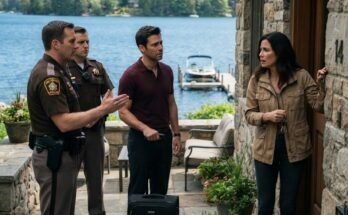
“Under Article Seven,” the lawyer said evenly, “Eleanor Whitmore leaves the residence at 418 Elm Street, including the land, all furnishings not otherwise designated, and the remaining contents of the property…”
Brenda leaned forward.
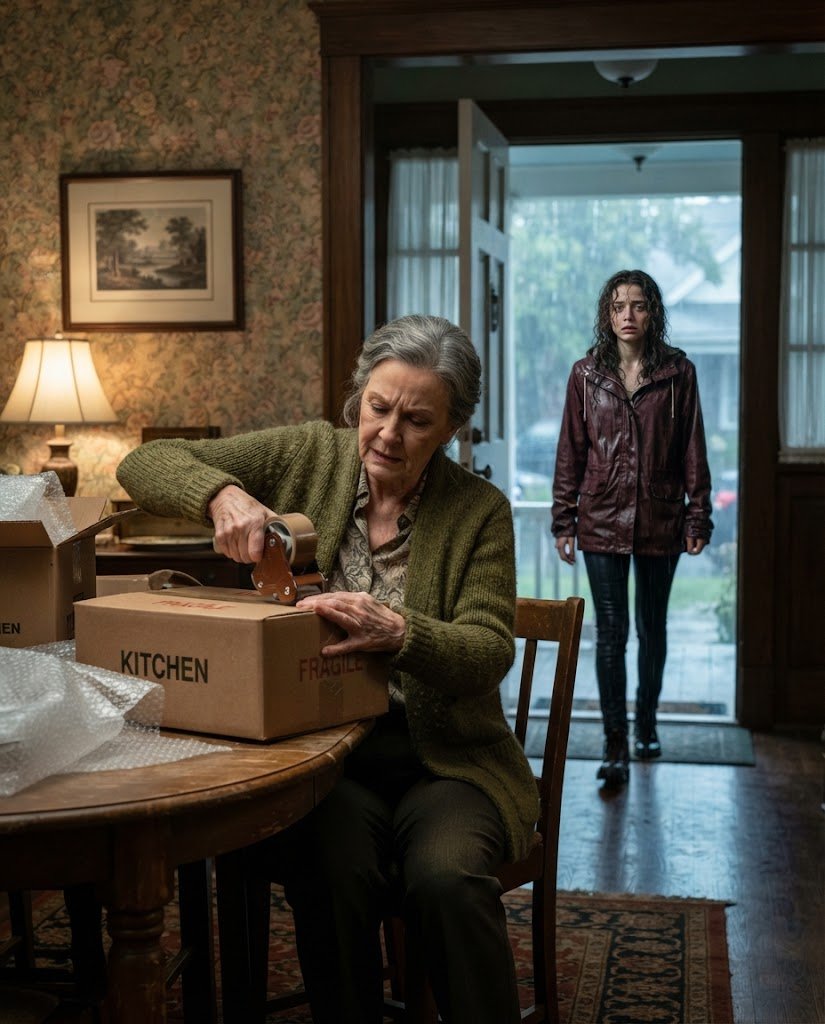
Her manicured fingers closed around the edge of the mahogany table.
“…not to Brenda Whitmore.”
The room went completely silent.
Brenda blinked.
Once.
Twice.
Then she laughed.
It was a small, sharp sound.
“What?”
The lawyer didn’t react.
She simply continued.
“The property is to be transferred to the Eleanor Whitmore Animal Protection Trust.”
Brenda’s face emptied.
I stared at the lawyer.
Even I hadn’t expected that.
My grandmother’s house wasn’t just some old family property.
It was worth nearly three million dollars.
It sat on almost six acres of land in one of the most expensive neighborhoods in the county, surrounded by mature trees and protected from the road by an old stone wall. Developers had been trying to buy it for years.
Brenda had spent the last three days talking as though the sale were already complete.
She had measured rooms.
Called contractors.
Scheduled an appraiser.
She had even told one developer that demolition could begin “within the month.”
Now she looked like someone had reached across the table and slapped her.
“That’s impossible,” she said.
The lawyer lifted her eyes.
“Mrs. Whitmore’s instructions are extremely clear.”
“My mother promised me that house.”
“No,” the lawyer replied. “She did not.”
Brenda’s cheeks turned red.
“You weren’t there.”
“I was her attorney for eighteen years.”
That shut Brenda up for approximately three seconds.
Then she pointed toward me.
“So she gets it?”
“No.”
Brenda turned back.
“Then who gets three million dollars?”
“The trust.”
“That doesn’t answer my question.”
“It answers it precisely.”
The lawyer turned another page.
“The trust’s stated purpose is to fund veterinary care, emergency rescue, food assistance, foster programs, and temporary shelter for abandoned domestic animals in this county.”
My throat tightened.
I immediately thought of Tom.
The veterinary bills.
The anonymous envelopes.
The rescue program that should have closed two years earlier but somehow survived.
Eleanor hadn’t merely been slipping them occasional donations.
She had been preparing something much larger.
Brenda scoffed.
“You’re telling me my mother gave a three-million-dollar house to cats?”
The lawyer’s expression hardened.
“No. Your mother gave her property to a charitable trust designed to prevent animals from being abandoned.”
The words landed like stones.
Brenda looked at me.
I said nothing.
But we were both thinking the exact same thing.
A cardboard box.
Packing tape.
A freezing parking lot.
And a tiny orange kitten nearly drowning beside a storm drain.
Brenda shifted in her chair.
Then she forced a smile.
“Fine.”
She leaned back.
“Mother was senile. We’ll challenge it.”
The lawyer was ready for that too.
“Mrs. Whitmore anticipated that possibility.”
A folder slid across the table.
Inside were medical evaluations from two independent physicians.
Neurological examinations.
Cognitive assessments.
Signed statements.
All dated within six weeks of the new will.
Eleanor had been physically weak.
But mentally?
Perfectly competent.
Brenda flipped through the pages faster and faster.
Her breathing changed.
“She planned this.”
“Yes.”
“She planned for me to challenge her.”
“Yes.”
Brenda slammed the folder down.
The lawyer remained completely calm.
“And there is more.”
That was the moment Brenda finally looked afraid.
The lawyer placed a small black remote on the table and pressed a button.
A television mounted on the conference-room wall flickered to life.
For a second, there was only darkness.
Then my grandmother appeared.
Alive.
Sitting in her favorite blue armchair.
Macaroni was curled in her lap.
My heart stopped.
I hadn’t heard her voice since the morning before she died.
Seeing her there nearly broke me.
She looked thin.
Older than I remembered.
But her eyes were sharp.
Very sharp.
“Hello, Brenda,” Eleanor said on the screen.
Brenda froze.
My grandmother smiled.
“If this video is being played, I assume you are currently furious.”
I nearly laughed through my tears.
Brenda didn’t.
Eleanor stroked Macaroni’s head.
“I also assume you have already threatened to contest my will.”
The lawyer folded her hands.
The room remained completely still.
“I know my daughter,” Eleanor continued. “I love her. But knowing someone and trusting someone are not the same thing.”
Brenda whispered, “Turn this off.”
The lawyer ignored her.
Eleanor continued.
“For years, Brenda has treated my home as an asset she was waiting to inherit. She has discussed developers, subdivision plans, demolition estimates and sale prices while I was still alive.”
Brenda suddenly looked around the table.
“That’s a lie.”
But Eleanor’s recorded voice kept going.
“Twice, Brenda brought real estate representatives onto my property without my permission.”
Brenda’s mouth closed.
I remembered one of those visits.
Grandma had called me afterward.
She had sounded irritated but had brushed it off.
I hadn’t realized how serious it was.
Then Eleanor lifted one hand toward the camera.
“And before anyone suggests that I am confused, my attorney has copies of the security footage.”
Brenda stopped breathing.
I looked at the lawyer.
She gave the smallest nod.
Grandma had prepared for everything.
But she wasn’t finished.
“My home should not become luxury townhouses,” Eleanor said. “Not while this county has volunteers keeping abandoned animals alive using donated blankets and expired equipment.”
Macaroni stretched in her lap.
Grandma smiled down at him.
“This ridiculous little creature reminded me of something important.”
Her voice softened.
“When you are old, people begin discussing what will happen to your possessions while you are still using them.”
My chest tightened.
“They begin deciding what has value.”
She looked directly into the camera.
“And sometimes, if they are not careful, they begin deciding who has value.”
Brenda looked away.
Grandma stroked Macaroni again.
“So I made my own decision.”
The video ended.
For several seconds, no one moved.
Then Brenda stood.
“This is absurd.”
The lawyer held up one finger.
“We are not finished.”
Brenda slowly sat back down.
The lawyer turned to the next section.
“Eleanor also established a pet trust for Macaroni.”
I felt my stomach drop.
A pet trust.
Of course she had.
“The trust contains seventy-five thousand dollars designated exclusively for Macaroni’s lifetime food, veterinary treatment, insurance, boarding when necessary, and general care.”
Brenda actually laughed.
“Seventy-five thousand dollars for that disgusting cat?”
The lawyer’s gaze sharpened.
“Mrs. Whitmore specifically anticipated that reaction.”
I covered my mouth.
Even now, Grandma was three moves ahead.
“The named caretaker is…”
The lawyer looked directly at me.
“…her granddaughter.”
My eyes filled immediately.
I couldn’t speak.
I hadn’t wanted money.
I hadn’t even known the trust existed.
I had just wanted Macaroni alive.
The lawyer continued.
“You receive no unrestricted ownership of those funds. They belong to the trust. Reasonable expenses are reimbursed, and any amount remaining after Macaroni’s death transfers automatically to the county animal rescue program.”
I nodded.
“That’s fine.”
Brenda stared at me.
“You knew.”
I looked at her.
“No.”
“Don’t lie.”
“I was driving through a thunderstorm trying to find a kitten you threw away. I wasn’t exactly checking Grandma’s estate documents.”
Her face twitched.
The lawyer spoke again.
“There is another provision.”
Brenda’s eyes snapped toward her.
The lawyer’s tone became slower.
More deliberate.
“Article Nine concerns beneficiary conduct toward Macaroni during the period between Eleanor’s death and the formal transfer of the pet trust.”
Something cold moved down my spine.
Brenda went pale.
The lawyer read.
“Any beneficiary who intentionally removes Macaroni from Eleanor’s residence without authorization, abandons him, surrenders him, causes him unnecessary physical danger, or attempts to have him euthanized shall be treated as having predeceased Eleanor for purposes of all discretionary inheritance.”
Nobody moved.
Nobody breathed.
Brenda’s lips parted.
“What discretionary inheritance?”
The lawyer looked directly at her.
“Yours.”
I turned slowly.
Brenda stared back at her.
“What?”
The lawyer pulled out another document.
“Your mother originally left you eight hundred thousand dollars.”
The color drained from Brenda’s face.
Eight hundred thousand.
Even after giving the house away, Grandma had still planned to leave her daughter almost a million dollars.
Brenda gripped the table.
“Originally?”
“Yes.”
The lawyer’s voice was almost painfully calm.
“That inheritance was contingent upon your compliance with Article Nine.”
Brenda looked toward me.
Then toward the door.
Then back at the lawyer.
“You cannot prove anything.”
And suddenly, I understood.
She thought she had found her escape.
Nobody had been at the house when she drove Macaroni away.
I arrived later.
Her word against mine.
She leaned forward.
“I took the cat to a shelter. That is responsible behavior.”
“You left him outside a closed building,” I said.
“Prove it.”
My blood went cold.
Brenda smiled.
It was ugly.
Confident.
“Maybe she did it,” she said, pointing at me. “Maybe she wanted the seventy-five thousand dollars.”
I couldn’t believe what I was hearing.
“You taped him inside a box.”
“Again.”
She spread her hands.
“Prove it.”
The conference-room door opened.
Tom walked in.
Brenda’s smile vanished.
He wasn’t wearing his yellow raincoat now.
He wore a clean blue shirt and carried a manila envelope.
Behind him was a younger woman I recognized from the shelter.
Tom sat beside the lawyer.
“I found the kitten at 6:43 p.m.,” he said quietly.
Brenda stared.
Tom continued.
“Cardboard box was approximately twenty feet from the main entrance. Partially collapsed from water exposure. Packing tape still attached to three sides.”
Brenda recovered quickly.
“That doesn’t prove I put him there.”
“No,” Tom said.
“It doesn’t.”
The lawyer pressed another button.
The television changed.
Security footage appeared.
The shelter parking lot.
Timestamped.
5:58 p.m.
Rain blasted sideways across the camera.
A black SUV pulled into the lot.
My aunt’s black SUV.
The driver’s door opened.
Brenda stepped out.
Even through the rain, there was no mistaking her.
She opened the rear hatch.
Removed a cardboard box.
Carried it toward the entrance.
Set it on the ground.
Then hurried back to her vehicle without knocking.
Without waiting.
Without checking the doors.
Without making a phone call.
She drove away.
The video continued.
Within minutes, water began spreading across the parking lot.
The box slowly shifted.
Then shifted again.
Pulled by runoff.
Toward the storm drain.
Tom entered the camera frame forty-five minutes later.
He spotted it.
Ran.
Grabbed it.
Seconds before the box reached the rushing water.
Brenda stared at the screen.
Her face looked gray.
“Where did you get that?”
“The shelter has security cameras,” Tom said.
Brenda sank backward.
The lawyer placed another sheet on the table.
“Additionally, the cardboard box contained a shipping label bearing your name and the Elm Street address.”
Brenda said nothing.
“The tape has been preserved. Photographs were taken before the box was discarded.”
Nothing.
“And Mr. Harris documented Macaroni’s condition upon intake.”
Tom nodded.
“Body temperature was low. Fur soaked. Significant distress. No permanent injury.”
Brenda looked like she wanted the floor to split open beneath her.
The lawyer closed the folder.
“Article Nine has been triggered.”
My aunt’s voice came out almost inaudibly.
“What happens to my eight hundred thousand?”
The lawyer answered immediately.
“It transfers to the Eleanor Whitmore Animal Protection Trust.”
Brenda made a sound I had never heard from another human being.
Not quite a gasp.
Not quite a scream.
Eight hundred thousand dollars.
Gone.
Because she couldn’t tolerate one tiny kitten for a few hours.
But apparently my grandmother hadn’t finished.
The lawyer turned another page.
“Your mother did leave you one personal item.”
Brenda’s head lifted.
A strange flicker of hope crossed her face.
The lawyer reached under the table and placed a cardboard box in front of her.
Brenda stared.
It wasn’t the same soaked box from the shelter.
But it was the same size.
On the lid was an envelope.
Her name was written across it in Eleanor’s handwriting.
BRENDA.
Nobody spoke.
Brenda slowly opened the envelope.
Her hands trembled.
Inside was a single sheet of paper.
She read it silently.
Her face changed.
I don’t know what I expected.
Anger.
Humiliation.
Maybe another explosion.
Instead, Brenda looked wounded.
Almost small.
“What does it say?” I asked.
She immediately folded the paper.
The lawyer looked at me.
“Your grandmother authorized the letter to be read aloud if Brenda chose not to.”
Brenda snapped, “No.”
But the lawyer had her own copy.
She began.
“My daughter,
If you are receiving this box instead of the inheritance I intended for you, then you made a choice after my death that confirmed a fear I had while living.”
Brenda stared at the table.
“I hope I was wrong.
I hope Macaroni is sleeping safely somewhere, and this letter never needs to be opened.
But if you abandoned him because you believed my death made his life inconvenient, then you have misunderstood everything I tried to teach you.”
My eyes blurred.
The lawyer continued.
“Compassion is easiest when it costs nothing.
Character is what remains when kindness becomes inconvenient.”
Brenda’s lower lip trembled.
“You may believe I chose a cat over my daughter.
I did not.
I chose to make your inheritance depend upon whether you could protect something small, frightened, and unable to benefit you.”
Tom lowered his head.
“And if you failed that test, Brenda, you did not lose your inheritance because of a cat.
You lost it because of yourself.”
Silence.
Absolute silence.
Then came the final sentence.
“The box is yours.
You seem to place great importance on deciding what belongs inside one.”
Brenda shoved back from the table so violently that her chair hit the wall.
“You all think this is funny?”
Nobody answered.
“You think she was some saint?”
Her eyes found mine.
“You think you knew her because you called every Sunday?”
I stood.
“No.”
My voice surprised even me with how calm it sounded.
“But I knew enough not to leave something she loved to die in the rain.”
That hit her harder than yelling would have.
Brenda grabbed her purse.
She marched toward the door.
Then the lawyer spoke one final time.
“Brenda.”
She stopped.
“There is a thirty-day preservation order on the Elm Street property.”
Brenda turned around.
“What now?”
“You may not remove, sell, destroy, donate, or dispose of anything remaining inside the residence.”
Brenda’s expression shifted.
Just slightly.
But I saw it.
So did the lawyer.
“What did you remove?” she asked.
“Nothing.”
Too fast.
The lawyer stared at her.
“Mrs. Whitmore maintained a detailed photographic inventory.”
Brenda’s jaw tightened.
“I said nothing.”
She walked out.
The door slammed.
At the time, I thought that was the end.
I was wrong.
It was barely the beginning.
The next morning, I received a phone call from the lawyer.
“Can you meet me at Eleanor’s house?”
Something in her voice made me sit upright.
“What happened?”
“We found discrepancies.”
I drove over immediately.
Tom came too.
Macaroni rode in his carrier beside me, wrapped in one of Grandma’s old knitted blankets.
The Victorian house looked different when I pulled into the driveway.
Quieter.
Almost hollow.
Police weren’t there.
But two representatives from the estate were standing inside with tablets and printed photographs.
The lawyer led me upstairs.
Grandma’s bedroom still smelled faintly like lavender powder.
Her reading glasses sat beside the bed.
A half-finished book rested on the nightstand.
For a moment, grief hit me so hard I had to grip the doorframe.
Macaroni began crying from his carrier.
I opened it.
He stepped out.
Then something happened that shattered me.
He ran straight to Grandma’s bed.
Jumped onto it.
Walked to her pillow.
Circled twice.
And lay down.
He waited.
I sat beside him and cried silently.
The lawyer gave me a minute.
Then she showed me what was missing.
A jewelry case.
Two antique watches.
Several envelopes of emergency cash.
A small collection of gold coins.
And one emerald brooch that had belonged to my great-grandmother.
Estimated total value?
Nearly ninety thousand dollars.
All had been photographed by the estate attorney one month earlier.
All were gone.
There was only one person who had been alone in the house after Eleanor died.
Brenda.
“She took them,” I whispered.
The lawyer didn’t answer.
She didn’t need to.
But Grandma had one final surprise.
The old house had cameras.
Not obvious ones.
She had installed them after the unauthorized developer visits.
The system recorded motion in the entry hall, study and upstairs corridor.
At 2:14 p.m., only ninety minutes after Grandma died, Brenda appeared on camera carrying an empty tote bag upstairs.
At 2:27, she came back down.
The bag was full.
Three separate trips followed.
Then, at 3:06, she carried Macaroni downstairs by the scruff of his neck.
He twisted desperately in her hand.
My stomach turned.
She dropped him into the cardboard box.
The camera had no audio in that room.
It didn’t need any.
We watched Brenda fold the top closed.
Tape it.
Pick it up.
Walk out.
That afternoon, the lawyer contacted Brenda.
Within two hours, every missing item was returned.
Brenda claimed she had merely taken them “for safekeeping.”
Nobody believed her.
The estate chose not to pursue criminal charges after all items were recovered, partly because Grandma’s instructions strongly favored protecting the charitable assets rather than spending years destroying the family in court.
But Brenda received written notice that any further interference with the estate would trigger immediate legal action.
She disappeared from town three days later.
The developers disappeared with her.
And then the strangest part of Grandma’s plan began.
The trust did not sell the house.
Instead, using part of Grandma’s liquid assets, the trust converted the property.
The formal dining room became an adoption meeting space.
The old sunroom became a kitten nursery.
A detached carriage house was renovated into a veterinary treatment room.
The six acres behind the home became secure outdoor rehabilitation areas.
Grandma’s enormous kitchen became storage for food donations and medicine.
And the room Brenda had already measured for demolition became the volunteer office.
Tom cried the first time he saw the architectural plans.
“You know what she told me once?” he said.
We were standing beneath the huge oak tree behind the house.
“What?”
“She said this place was too big for one old woman.”
I smiled.
“That sounds like her.”
Tom shook his head.
“No. She said something else.”
He looked toward the house.
“She said, ‘Someday I’ll figure out how to fill every room again.’”
Six months later, she did.
The Eleanor Whitmore Rescue House opened on a Saturday morning.
No expensive gala.
No champagne.
Grandma would have hated that.
We had folding chairs.
Coffee.
Homemade cookies.
Volunteers.
Veterinarians.
Families looking to adopt.
And approximately thirty-seven animals making enough noise to wake the dead.
I liked to think Grandma appreciated that.
Above the entrance hung a small bronze plaque.
Not a giant portrait.
Not a list of donations.
Just one sentence.
CHARACTER IS WHAT REMAINS WHEN KINDNESS BECOMES INCONVENIENT.
Tom had suggested it.
I approved it immediately.
Macaroni became the unofficial king of the place.
The seventy-five-thousand-dollar trust turned out to be comically excessive for one healthy orange cat, but Grandma had known exactly what she was doing.
Every reimbursement I didn’t use remained invested.
Every dollar left after his lifetime would eventually help other animals.
So I bought him good food.
Took him for regular checkups.
And refused to purchase the ridiculous diamond-studded cat collar Tom once jokingly sent me a link to.
Macaroni preferred a three-dollar cardboard scratching pad anyway.
Naturally.
Almost a year passed before I saw Brenda again.
She came to the rescue house alone.
No designer suit.
No clipboard.
No real estate developer.
She stood outside the front gate for nearly five minutes before entering.
I watched from the porch.
Macaroni was asleep in a patch of sunlight beside my chair.
Brenda noticed him.
She stopped.
He noticed her too.
His body immediately stiffened.
That tiny reaction told me animals remembered more than people liked to believe.
Brenda stayed several feet away.
“I’m not here to cause trouble,” she said.
I didn’t answer.
She looked at the house.
Children were laughing inside.
A volunteer carried a basket of clean towels through the hallway.
Somewhere in the back, a dog barked.
Then another answered.
Brenda swallowed.
“I drove past three times before coming in.”
“Why?”
She looked embarrassed.
“I don’t know.”
I did.
But I let her find the words herself.
Finally, she said, “I hated that cat.”
Macaroni opened one eye.
Brenda almost laughed.
“I hated him because Mother loved him.”
That surprised me.
She stared toward the gardens.
“I used to visit her and she’d barely talk to me. Then she’d spend twenty minutes telling me Macaroni climbed a curtain.”
“She talked about you too.”
Brenda looked at me.
“She did?”
“All the time.”
That seemed to hurt worse.
She sat carefully on the far end of the porch.
“She and I fought for years.”
“I know.”
“I kept thinking the house was the proof.”
“Proof of what?”
“That she finally valued me.”
There it was.
Not greed exactly.
Something older.
Uglier.
A wound that had turned into greed because Brenda had fed it for too long.
“She left you eight hundred thousand dollars,” I said.
Brenda closed her eyes.
“I know.”
“She did value you.”
“I know that now.”
Macaroni stood.
Brenda immediately tensed.
He walked toward me instead and climbed into my lap.
I stroked his back.
“I could have killed him,” Brenda whispered.
“Yes.”
No softening.
No pretending.
She needed the truth.
“Tom said ten more minutes.”
Her eyes filled.
“I know.”
“You sealed the box.”
“I know.”
“And then you lied about it.”
“I know.”
For several seconds, she cried quietly.
I didn’t hug her.
Some things aren’t healed by pretending accountability is cruelty.
Then she reached into her purse.
My body tightened.
But she only removed an envelope.
“I sold my condo.”
I frowned.
“What?”
“I bought something smaller.”
She placed the envelope on the table.
Inside was a cashier’s check.
One hundred thousand dollars.
Payable to the Eleanor Whitmore Animal Protection Trust.
I stared at it.
“I don’t want this if you’re trying to buy forgiveness.”
“I’m not.”
“Then why?”
Brenda looked at Macaroni.
“Because I spent almost a year being furious that Mother gave my money to animals.”
She wiped her face.
“Then I realized it was never my money.”
That sounded like Eleanor.
Maybe some lessons just took longer.
I took the check.
Not for me.
For the rescue.
“I still don’t trust you,” I said.
“I know.”
“And this doesn’t erase anything.”
“I know.”
“But Grandma would want it used.”
Brenda nodded.
“I know.”
Then she stood.
She hesitated at the steps.
“Can I ask you something?”
“What?”
“What was in the cardboard box she left me?”
I stared at her.
“You never opened it?”
She shook her head.
“I couldn’t.”
I almost smiled.
“Open it.”
Brenda left without another word.
Three days later, I received a photograph from an unknown number.
A cardboard box was sitting on a kitchen table.
Inside was one object.
Grandma’s old red umbrella.
Beneath it was another note.
Brenda had photographed that too.
It said:
FOR THE NEXT TIME YOU SEE SOMETHING HELPLESS IN THE RAIN.
I laughed so hard I cried.
That was Eleanor.
Even dead, she refused to waste a perfectly good lesson.
Years later, people would tell the story differently.
Some said Eleanor had disinherited her daughter because Brenda hated a cat.
Others said a millionaire widow gave her mansion away to animals.
Some called it revenge.
Some called it eccentricity.
They were all wrong.
Grandma’s real genius was much simpler.
She didn’t use her will to punish Brenda.
She used it to reveal her.
The money had been waiting.
The inheritance was real.
Brenda could have walked away with eight hundred thousand dollars.
All she had to do was protect one small living creature for a few days.
She didn’t even need to love him.
She didn’t need to keep him forever.
She didn’t need to spend her own money.
She only had to avoid being cruel.
That was the test.
And for forty-five terrible minutes in a freezing parking lot, Brenda failed it.
But Grandma had also left something none of us noticed at first.
A way back.
Not to the inheritance.
That was gone permanently.
Not to the house.
That belonged to the rescue forever.
But a way back to being human.
Brenda eventually began volunteering twice a month.
At first, Tom watched her like a prison guard.
So did I.
We never allowed her near incoming animals unsupervised.
She didn’t complain.
She washed food bowls.
Folded towels.
Cleaned litter boxes.
Answered phones.
For almost six months, she never touched a cat.
Then one winter evening, another storm came.
Not as violent as the night Grandma died.
But cold.
Heavy rain.
A volunteer found a soaked cardboard box beside the front gate.
Inside were four kittens.
Someone had abandoned them.
I was upstairs when Tom called my name.
By the time I reached the entrance hall, Brenda was already there.
She had opened the box.
One kitten was barely moving.
Brenda pulled off her expensive wool coat without hesitation.
Wrapped the kitten inside it.
Held the tiny body against her chest.
“Tom,” she shouted, panic cracking her voice. “Get the heating pads.”
Macaroni appeared at the top of the stairs.
He watched.
Brenda didn’t notice him.
She was too busy rubbing warmth back into the kitten.
For nearly an hour, she sat on the floor.
Wet.
Shaking.
Whispering to a creature that weighed less than a pound.
“Come on.”
The kitten barely moved.
“Come on, sweetheart.”
Tom worked beside her.
I stood in the doorway.
Nobody mentioned Eleanor.
Nobody needed to.
Finally, the kitten lifted its head.
A tiny sound escaped its mouth.
Brenda started crying.
Then something orange brushed against my ankle.
Macaroni walked slowly across the room.
Toward her.
I stopped breathing.
He approached cautiously.
Brenda saw him.
She went perfectly still.
Macaroni sniffed the edge of her wet sleeve.
Then the kitten.
Then he did something I never expected.
He sat beside Brenda.
Not on her lap.
Not against her.
Just beside her.
Close enough.
Brenda covered her mouth and sobbed.
I looked through the tall windows toward the rain running down the glass.
For one impossible second, I could almost hear Grandma laughing.
Not because Brenda had suffered.
Not because she had lost the money.
Not even because her elaborate legal trap had worked perfectly.
But because years after her death, the lesson finally had.
The house Brenda once wanted bulldozed was glowing with light.
The room she wanted emptied was full.
Animals slept beneath blankets.
Volunteers moved through the halls.
Four rescued kittens were warming beside a heater.
Tom was making coffee.
Macaroni was purring.
And Brenda Whitmore was sitting on the floor in her ruined designer clothes, protecting something small and helpless from the rain.
Grandma had won.
Completely.
Brilliantly.
And, in the end, far more savagely than any of us had understood.
Because Eleanor hadn’t simply taken Brenda’s inheritance away.
She had forced her to discover exactly what it was worth.
And then she had given her something money never could.
A second chance to become the person she should have been all along.