One night, I decided to have the drink examined by a laboratory. When the doctor reviewed the results, his expression changed. He quietly closed his office door and asked, “MA’AM, DOES YOUR HUSBAND KNOW YOU’RE HERE?” What he revealed next made me question everything about my marriage…
My name is Eleanor, and I’m sixty-four years old. When I married Graham, a successful thirty-one-year-old businessman, nearly everyone in my family questioned my decision.
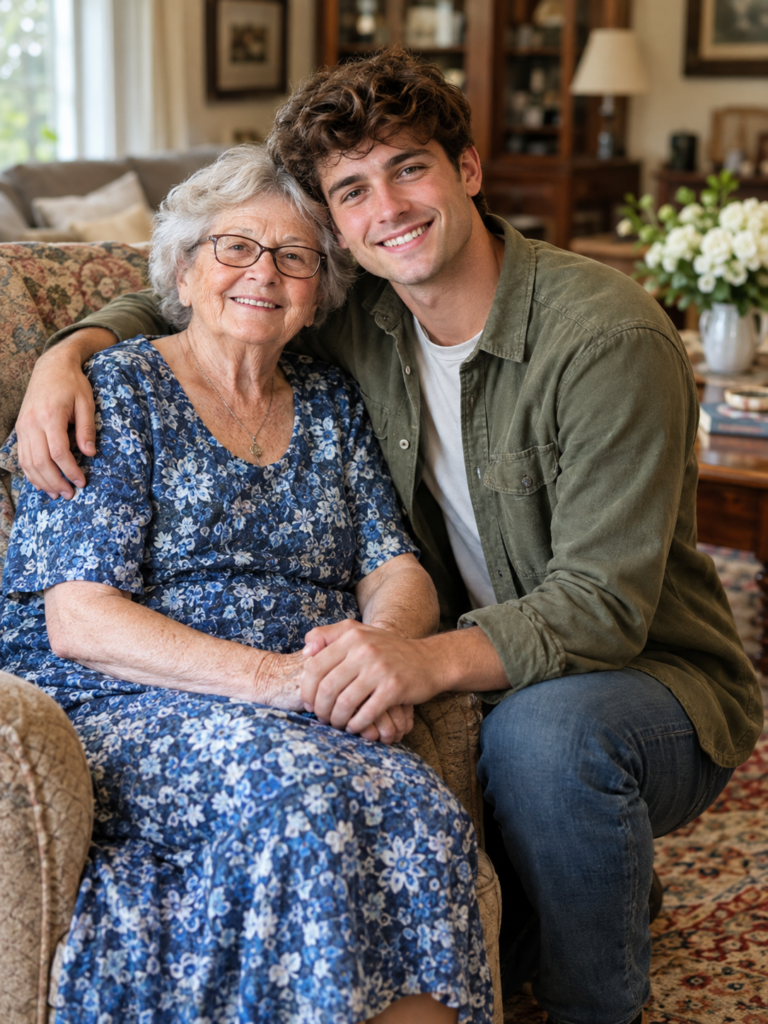
Graham owned a thriving company, an elegant mansion, and several valuable properties. He had enough money to enjoy a comfortable life without ever worrying about finances.
I was simply a retired schoolteacher living on a modest pension.
Whenever someone asked why a handsome, wealthy young man would marry a woman my age, I smiled.
Because I genuinely believed he loved me.
During our first months together, Graham treated me wonderfully.
He surprised me with flowers, prepared breakfast every morning, and remembered the smallest details about my preferences.
I felt fortunate to have found happiness again.
But six months into our marriage, something began to trouble me.
Every evening, Graham personally prepared my favorite warm drink.
“Here you go, sweetheart,” he’d say affectionately. “This will help you relax.”
He often remained beside me until I’d finished the entire cup.
At first, I considered it another thoughtful gesture.
Then one evening, I unexpectedly returned to the kitchen.
Graham was standing at the counter, adding several drops from a small dark bottle to my drink.
The moment he noticed me, he quickly slipped the bottle into his pocket.
“Graham, what was that?” I asked.
He smiled.
“Just a little special flavoring, darling.”
“Then why did you hide the bottle?”
His smile faltered.
“Eleanor, you’re worrying about nothing.”
But I noticed his nervous expression.
And suddenly, the routine that had once made me feel loved no longer seemed quite so innocent.
For several weeks, I’d been unusually tired. Some mornings, I struggled to concentrate, and I occasionally forgot simple things.
Graham repeatedly assured me that I only needed more rest.
I wanted to believe him.
Then, late one night, I woke to the sound of his voice.
He was standing near our bedroom window, speaking quietly on his phone.
“Yes, I’m still following the instructions,” he whispered.
There was a pause.
“But she’s beginning to ask questions.”
I remained perfectly still.
Then he said something that made my heart race.
“We’re running out of time. If this continues, we could lose her.”
Who was he talking to?
And what exactly were they trying to accomplish?
The following evening, I decided I needed answers before continuing his nightly routine.
Without telling Graham, I arranged to have a sample of the drink examined independently.
The next morning, after he left for work, I took it to a private laboratory.
The receptionist explained that the analysis could take some time.
Two days later, my phone rang.
“Mrs. Hollis? Dr. Whitfield would like to speak with you in person as soon as possible.”
Something in her voice made me uneasy.
When I arrived, the doctor was studying a report.
He looked up at me, then glanced toward the door.
His expression became unusually serious.
He stood, closed the door for privacy, and returned to his desk.
“Mrs. Hollis,” he said carefully, “does your husband know you came here?”
“No,” I whispered.
“Doctor, please tell me. Is there something in that drink I should be worried about?”
He hesitated.
Then he turned his computer screen toward me.
There was my full name.
My date of birth.
And a medical record I’d never seen before.
Beneath my information were two words that made my breath catch:
RESEARCH PARTICIPANT.
“But I’ve never agreed to participate in medical research,” I whispered.
The doctor looked at me with deep concern.
“Mrs. Hollis, that’s exactly what we need to discuss.”
Then he opened another file.
And when I saw the photograph inside, I realized the mystery wasn’t just about my evening drink.
It was about why Graham had chosen to marry me in the first place.
PART 2
My 31-year-old millionaire husband secretly added something to my nightly drink—then a doctor revealed why he had married me
The first time I noticed my husband adding something unfamiliar to my evening drink, I convinced myself there was a perfectly reasonable explanation.
The second time, I began questioning everything I thought I knew about our marriage.
But when I overheard him whispering, “We’re running out of time. She can’t discover what happened to the others,” I realized that the man I trusted most had been keeping a secret I was never supposed to uncover.
My name is Eleanor Hollis. I’m sixty-four years old, a retired elementary schoolteacher, and six months ago, I married a thirty-one-year-old millionaire named Graham.
Almost everyone questioned our relationship.
My younger sister, Joyce, was particularly worried.
“Eleanor, he’s thirty-one, wealthy, and successful. Why would he want to marry someone twice his age?”
“Perhaps because he loves me,” I answered.
I desperately wanted that to be true.
Graham was handsome, charming, and the owner of a successful medical technology investment company. He lived in a magnificent mansion and seemed capable of purchasing anything he wanted.
I’d spent thirty-eight years teaching elementary school and lived comfortably on my retirement savings.
Our lives couldn’t have been more different.
Whenever I questioned why he’d chosen me, Graham smiled.
“Because you’re the only person who makes me feel completely at peace.”
He remembered everything about me.
My favorite flowers, my mother’s recipes, and the books I’d loved as a little girl.
Our wedding was beautiful, and the first months of marriage felt almost magical.
Every morning, he brought me breakfast. He purchased thoughtful gifts and insisted I relax instead of worrying about household chores.
Sometimes I’d catch him watching me read.
“Why are you staring?” I’d ask playfully.
He would smile.
“Just making sure you’re really here.”
I thought it was romantic.
Now those words carry a different meaning.
Three months into our marriage, Graham insisted I visit a private medical clinic.
“Sweetheart, you’re sixty-four. I simply want to make sure you’re healthy.”
“I already had my annual examination.”
“This clinic offers more advanced screening. Please, do it for me.”
Eventually, I agreed.
The facility was inside a modern building with mirrored windows. A physician named Dr. Vincent Pryor greeted us.
I completed several examinations and signed numerous documents.
Some forms contained unfamiliar medical terminology.
When I began reading them carefully, Graham touched my shoulder.
“Don’t worry, darling. I’ve already reviewed everything.”
Trusting him, I signed.
That decision would eventually change my life.
Afterward, Graham began preparing a special bedtime drink.
Warm milk, honey, cinnamon, and vanilla.
“My mother used to make something similar,” I told him.
“I remembered,” he replied affectionately.
Every evening, he placed the cup beside my favorite reading chair.
“Here you are, sweetheart. It’ll help you relax.”
At first, the routine felt comforting.
Then something changed.
I began waking up unusually tired. My concentration suffered, and ordinary conversations became difficult to remember.
Sometimes I couldn’t recall where I’d placed my belongings.
Graham insisted I was simply adjusting to a new lifestyle.
“You’ve been distracted lately,” he would say gently.
Before long, he started answering questions for me during conversations with friends.
“Eleanor needs more rest these days,” he’d explain.
I gradually stopped trusting my own judgment.
One afternoon, Joyce visited.
“You look exhausted,” she observed.
“It’s nothing.”
“And you seem distracted.”
“Probably too much coffee.”
She took my hand.
“Eleanor, are you happy?”
I hesitated.
“Sometimes I don’t feel like myself anymore.”
Joyce looked concerned.
“You should speak with your own doctor.”
Before I could respond, Graham appeared in the doorway carrying flowers.
His smile briefly faded when Joyce suggested an independent appointment.
Then he quickly recovered.
“Of course,” he said. “I’ll arrange one.”
But the appointment never happened.
That evening, I walked into the kitchen unexpectedly.
Graham stood beside my cup, adding several drops from a small dark bottle to the warm milk.
I stopped.
“What did you just put in there?”
He turned sharply.
“Nothing unusual. Just flavoring.”
“Then may I see the bottle?”
His expression tightened.
“Eleanor, you’re worrying over nothing.”
He handed me the cup.
“Please, sweetheart. It’s getting cold.”
I wanted to question him further.
But his familiar, reassuring smile made me doubt myself.
I accepted the drink.
The following morning, I felt unusually sluggish.
Graham was sitting beside me when I woke.
“How are you feeling?” he asked.
“Not very well.”
He closed his eyes.
“I’m sorry.”
“Sorry for what?”
He hesitated.
“That you’re having such a difficult morning.”
Something about his answer troubled me.
Over the following days, I began paying closer attention to Graham’s behavior.
He always prepared my evening drink himself.
He never tasted it.
And whenever I suggested skipping it, he became strangely insistent.
One evening, I mentioned visiting Joyce for a few days.
“Not right now,” he answered immediately.
I stared at him.
“Why not?”
He softened his voice.
“Your treatment schedule could be interrupted.”
I frowned.
“My treatment?”
He looked startled.
“I meant your wellness routine.”
I asked what he was talking about, but he avoided giving me a clear answer.
Then, one night, I woke and heard him speaking quietly on his phone near the bedroom window.
“Yes, I’m still following the instructions,” he whispered.
A pause.
“But she’s becoming suspicious.”
I remained still.
“I can’t make any more changes. She’s already having difficulties.”
My heart began pounding.
Then he said something that frightened me.
“We’re running out of time. If this continues, we could lose her.”
He listened for several seconds.
Finally, he whispered, “I know what happened to the others. I’m not letting that happen again.”
The others?
Who were they?
And why was Graham discussing my condition with someone I had never met?
The following evening, I decided I needed answers before continuing the routine.
I arranged for a sample of the drink to be examined independently.
When Graham received a telephone call and stepped into the hallway, I set aside some of the beverage in a clean container.
The following morning, after he left for work, I brought it to a laboratory.
A technician explained that identifying unfamiliar ingredients could require specialized analysis.
Two days later, I received a telephone call.
“Mrs. Hollis, Dr. Gordon Whitfield would like to discuss your results in person.”
I arrived at his office feeling anxious.
Dr. Whitfield examined the report, then closed his office door to give us privacy.
“Does your husband know you’re here?”
“No.”
He leaned forward.
“Mrs. Hollis, I recommend that you receive an independent medical assessment before continuing any treatment associated with this beverage.”
“Doctor, what exactly did you find?”
“The sample contains an unfamiliar medical compound associated with an experimental research program.”
I stared at him.
“Experimental?”
“Yes. It isn’t something that should be administered without proper medical supervision and informed consent.”
Suddenly, my exhaustion and concentration problems seemed more concerning.
Dr. Whitfield asked whether I’d recently visited a private clinic.
“Yes. My husband arranged an examination.”
“Was the physician named Vincent Pryor?”
My breath caught.
“How did you know?”
He opened a file.
“My laboratory has worked with organizations connected to that facility.”
Then he turned his computer toward me.
There was my name.
My address.
My birth date.
And beneath them, two words:
RESEARCH PARTICIPANT.
“I never volunteered for medical research,” I whispered.
According to the records, however, I’d been enrolled in an experimental program investigating biological processes associated with aging.
The clinic had attached consent forms bearing my signature.
I remembered Graham telling me they were routine documents.
“His company is listed as one of the financial backers,” Dr. Whitfield explained.
I felt overwhelmed.
My husband hadn’t simply arranged medical examinations.
He was connected to a research program I hadn’t knowingly agreed to join.
Then Dr. Whitfield’s telephone rang.
He glanced at the screen.
His expression changed.
“It’s your husband.”
“How does he know I’m here?”
“I don’t know.”
He let the call end and retrieved a sealed envelope from a cabinet.
“Someone delivered this yesterday with instructions to give it to you if your results showed a connection to the research program.”
My name was written across the envelope.
Inside was an old photograph.
A hospital room.
A narrow bed.
A young man standing nearby.
And lying in the bed was a silver-haired woman who looked astonishingly like me.
The same eyes.
The same mouth.
Even the same hairstyle.
But the photograph was dated twenty-seven years earlier.
On the back, someone had written:
ELEANOR IS NOT THE FIRST. ASK GRAHAM WHAT HAPPENED TO THE OTHER THREE.
My hands began shaking.
I examined the young man beside the hospital bed.
He looked exactly like Graham.
But how could my thirty-one-year-old husband appear in a photograph taken twenty-seven years ago?
Before I could speak, someone knocked on the office door.
“Eleanor?”
My heart seemed to stop.
It was Graham.
“Sweetheart, I know you’re in there.”
I held the photograph against my chest.
“Then explain why you’ve been hiding this research from me!”
For several seconds, there was silence.
Finally, Graham answered through the door.
“Because I thought I could protect you.”
“Protect me from what?”
His voice trembled.
“From what happened to the others.”
Dr. Whitfield remained beside me as I agreed to let Graham enter.
I insisted that he stay across the room.
He looked exhausted.
His neatly tailored suit was wrinkled, and his hands were trembling.
I held up the photograph.
“Who is this woman?”
Graham stared at it.
“Her name was Rosalind Hale.”
“And the man beside her?”
“My father.”
I looked at the photograph again.
The resemblance between Graham and his father was extraordinary.
At least one mystery had been explained.
But the others remained.
“Why does Rosalind look like me?”
Graham lowered his eyes.
“She was someone very important to my father. She helped raise him, and later she developed a complicated neurological condition.”
His father had become a physician and dedicated himself to studying her illness.
Eventually, he became convinced that certain processes involved in her condition might be connected to aging.
He began exploring an experimental treatment he hoped could improve her health.
“Was it successful?” I asked.
Graham shook his head.
“No. Rosalind passed away after struggling with her condition.”
I glanced at the photograph.
“And the other three women?”
“My father continued the research using participants with characteristics he believed were similar.”
Dr. Whitfield interrupted.
“Physical resemblance alone isn’t a scientifically valid reason to select research participants.”
“I understand,” Graham replied.
I was losing patience.
“What happened to them?”
Graham swallowed.
“All three experienced serious medical difficulties. Two eventually passed away, and the third continued dealing with long-term health complications.”
I gripped the chair.
“And you knew?”
“Not at first.”
“When did you find out?”
He hesitated.
“Before we married.”
My heart sank.
He had known about the troubling history before our wedding.
Before the flowers.
Before the promises.
Before convincing me that our relationship was a beautiful second chance.
I looked directly at him.
“Did you choose me because I resembled Rosalind?”
Tears filled his eyes.
“Not only because of that.”
His answer devastated me.
“How did you find me?”
“At a charity fundraiser.”
I remembered meeting him at an event supporting retired teachers.
He had approached me after my speech about children’s literacy.
But now I realized our meeting hadn’t been entirely accidental.
Graham admitted he’d first seen my photograph in a database associated with the research program.
He’d learned about my background before introducing himself.
My age.
My career.
My family.
Even certain personal preferences.
Suddenly, all his thoughtful gestures seemed different.
The flowers.
The childhood recipes.
The books.
Some of those details hadn’t come from conversations we’d shared.
He’d known them before we ever met.
“Did you actually fall in love with me?” I asked.
“Yes,” he whispered.
“Or did you fall in love with the chance to continue your father’s research?”
Graham covered his face.
“At first, I wanted to meet you because of the program. But after hearing you speak, everything changed.”
He explained that his father had spent years regretting his inability to help Rosalind.
Graham inherited his research files and became determined to continue the work.
Dr. Pryor later persuaded him that newer technology might produce better results.
“When your screening suggested certain medical concerns,” Graham said, “I thought the program might benefit you.”
“But my regular doctor said I was healthy!”
He looked away.
Three weeks earlier, he’d discovered discrepancies between my original medical results and the records used to justify enrolling me.
The original tests hadn’t identified the condition researchers claimed I had.
“So the records were inaccurate?”
“It appears that way.”
“Then why did you continue giving me the evening drink?”
“Dr. Pryor claimed that changing the routine without supervision could create additional problems.”
Dr. Whitfield spoke firmly.
“That should have been reviewed independently. It doesn’t justify continuing an experimental intervention without someone’s informed consent.”
I stared at Graham.
“You watched me become more exhausted every day.”
His face crumpled.
“I know.”
“You knew I was having trouble remembering things.”
“Yes.”
“And still you kept preparing that drink without telling me the truth.”
He said nothing.
I finally understood that whatever Graham believed about protecting me, he’d placed his own judgment above my right to make decisions about my health.
Dr. Whitfield asked whether Graham possessed evidence of the research irregularities.
He admitted he’d copied several records but hadn’t reported them.
He claimed Dr. Pryor had threatened to remove him from decisions about my participation if he interfered.
I almost laughed.
“Graham, I’m your wife. You don’t get to decide everything for me.”
He lowered his head.
I turned toward Dr. Whitfield.
“I want the records reviewed. And I want an independent medical examination.”
Graham stepped forward.
“Eleanor, please—”
I raised my hand.
“No. You don’t get to make these decisions for me anymore.”
For the first time, he stopped arguing.
After Graham left to retrieve the documents, Dr. Whitfield helped arrange my medical evaluation and preserve the laboratory findings.
I called Joyce.
The moment she heard my voice, she knew something was wrong.
“Eleanor, what’s happened?”
“I need you.”
She arrived shortly afterward.
When I explained everything, she hugged me tightly.
She never said she’d warned me.
Instead, she whispered, “You’re coming home with me.”
I nodded.
For the first time in months, I felt safe enough to cry.
The following morning, Graham delivered copies of the research files.
Some confirmed what we already knew.
Others revealed troubling details.
My original medical screening had not supported the condition used to justify my participation.
The research notes also documented my dizziness, confusion, and excessive sleeping.
Yet the program had continued without properly addressing my concerns.
Even more troubling, some records contained Graham’s initials.
He couldn’t claim he’d been completely unaware.
Meanwhile, investigators began reviewing the clinic’s practices and the experiences of earlier participants.
The third woman particularly interested Dr. Whitfield.
Her records suggested she’d withdrawn consent and attempted to report the program.
But her file ended abruptly.
Nobody knew whether she’d managed to make her concerns heard.
I remembered the photograph.
Someone had warned me.
Someone had known I might become another participant who wasn’t fully informed.
Several days later, Graham called.
“Eleanor, Dr. Pryor knows the documents have been released.”
“Good.”
“He’s claiming you knowingly agreed to everything.”
I looked at the paperwork beside me.
“Then he’ll have to explain why nobody properly informed me about the research.”
Graham remained silent.
Then he admitted he’d discovered a statement written by the third woman.
She had described how her concerns were dismissed even after she’d reported troubling changes in her health.
I asked Graham a question I’d avoided.
“If I hadn’t discovered the bottle, would you eventually have told me?”
There was a long silence.
Finally, he whispered, “I don’t know.”
Those words told me everything.
Weeks later, I returned to the mansion with Joyce and someone assisting with our separation arrangements.
I wasn’t returning to reconcile.
I wanted my books, my mother’s photographs, and the handmade quilt Joyce and I had sewn together years earlier.
Graham waited in the entrance hall.
He looked older than I remembered.
“How are you feeling?” he asked.
“Better.”
His eyes filled with tears.
“I’m glad.”
He told me Dr. Pryor had been removed from the research program pending further review and that the clinical trial had been suspended.
He’d also begun cooperating with investigators.
Then I asked whether anyone had discovered who sent the mysterious photograph.
Graham nodded.
“Yes.”
“Who?”
“The third woman.”
I felt my chest tighten.
“She’s alive?”
“Yes. Her name is Gwen Sutter.”
She had survived the earlier trial but continued living with significant health challenges.
After learning that the research might have resumed, Gwen began investigating.
She eventually discovered my name and arranged for the photograph to reach Dr. Whitfield.
“Why didn’t she contact me directly?” I asked.
“She was afraid you wouldn’t believe her.”
I looked down at the photograph.
She was probably right.
Six months earlier, I might have dismissed her warning.
I had trusted Graham completely.
I turned back toward him.
“Did you ever intend to tell me the truth?”
“I kept waiting for the right moment.”
“When would that have been?”
“When the research produced something positive.”
“And if it never did?”
He looked away.
I already knew the answer.
“Graham, you weren’t simply trying to protect me,” I said. “You were trying to make things right for Rosalind.”
He began crying.
“I really did fall in love with you.”
“I believe that.”
He looked surprised.
“But you became so focused on finding answers that you forgot I had a right to choose for myself.”
His shoulders slumped.
“I’m sorry.”
I believed his regret was genuine.
But an apology couldn’t restore the months I’d spent confused and uncertain about my own health.
“I’ve decided our marriage is over,” I told him.
He begged me to reconsider.
I shook my head.
“If you truly want to do something for me, cooperate fully with the investigation. Tell the truth, including the parts that make you uncomfortable.”
He nodded.
I collected my belongings and walked out.
This time, I didn’t look back.
In the months that followed, I gradually felt more like myself again.
My doctors continued monitoring my health, and although progress wasn’t immediate, my energy improved.
I began remembering ordinary things again.
The names of favorite books.
Appointments.
Little conversations with friends.
I moved into Joyce’s guest room temporarily and slowly rebuilt my routines.
Then I finally met Gwen Sutter.
She walked with a cane and spoke quietly, but her eyes were warm.
We sat together in a small café.
She told me about the earlier research program and how she’d initially believed the doctors genuinely wanted to help her.
When she began experiencing troubling symptoms, her concerns were repeatedly dismissed.
Eventually, she started questioning her own judgment.
Listening to her felt like hearing my own experience.
“Why did you warn me?” I asked.
Gwen smiled sadly.
“Because nobody listened when I first asked questions.”
I reached across the table and squeezed her hand.
“Thank you.”
“Live well, Eleanor,” she answered. “That’s enough.”
I carried those words with me.
The review of the research program continued, and eventually my marriage formally ended.
Graham didn’t contest our separation.
He sent one final letter.
In it, he admitted that he’d mistaken control for protection and allowed his father’s unfinished work to overshadow my well-being.
One sentence stayed with me.
I thought I was helping you have a better future, but I forgot to respect the life you already had.
I folded the letter and placed it in a drawer.
I didn’t respond.
Some apologies deserve acknowledgment, but they don’t always require reconciliation.
A year after discovering the mysterious bottle, I moved into a small house near Joyce.
It had a sunny kitchen, a modest garden, and enough shelves for my beloved books.
I began volunteering at a children’s reading program twice a week.
One morning, a little girl handed me a book.
“Can you help me read this?”
I smiled.
“Of course, sweetheart.”
As we read together, I felt something I’d been missing for a long time.
I felt like Eleanor again.
Not a wealthy man’s wife.
Not a research participant.
Not someone whose future was being decided by other people.
Just a woman who loved teaching and still had a meaningful life ahead of her.
One evening, after working in my garden, I prepared myself a warm drink.
Milk, honey, cinnamon, and a touch of vanilla.
For a moment, I paused as I stirred it.
I remembered Graham standing in the kitchen.
The dark bottle.
The questions he wouldn’t answer.
The way he’d insisted that his decisions were always for my benefit.
Then I looked around my own home.
Nobody was questioning my judgment.
Nobody was insisting I follow a routine I didn’t understand.
Nobody was making decisions about my health without my permission.
I carried the cup to the window and took a small sip.
It tasted exactly as it had when my mother prepared it during my childhood.
Warm.
Sweet.
Comforting.
I drank a little more.
Then I set it down.
Half the cup remained.
And I smiled.
Because for the first time in a very long while, I didn’t have to finish it.
I could drink the rest.
Or leave it.
Or pour it away.
The decision belonged entirely to me.
And after everything I’d experienced, I finally understood something important.
Real love doesn’t require someone to surrender their freedom. No matter how beautiful a relationship appears, trust must be built on honesty, respect, and the right to make your own choices.