The thing that made me run wasn’t Henry.
It was the clippers.
I was lying in bed with the baby monitor on my nightstand, the way I had been every night for four years. The screen glowed that grainy gray-green that makes everything look like it’s underwater. I’d checked it at 11:30, like always. Both boys asleep. Both lumps under their blankets.
Then the bedroom door on the screen opened.
Henry stepped into the boys’ room.
And in his right hand, clear as anything, even in night vision, was a pair of hair clippers.
I was out of bed before I could think.
“Henry!”
I took the stairs two at a time. I nearly slipped on the landing in my socks. I grabbed the railing and kept going.
By the time I reached the boys’ room, he was standing between their beds with the clippers in one hand.
Both twins were awake.
Leo was in Max’s bed. Max was in Leo’s.
And both of them were grinning.
I shoved the door all the way open.
“What are you doing?”
Henry jumped. The clippers nearly slipped out of his hand.
“Jeez, Emma.”
“Why do you have those?”
The boys started laughing. Big, gleeful, can’t-stop four-year-old laughing. Leo kicked his feet under the blanket. Max buried his face in the pillow.
Henry looked at them. Then at me.
Then he sighed.
“They switched,” he said.
“I can see that.”
“No,” Henry said. “I mean the letters.”
I stared at him.
Max sat up and pointed to his own head.
There was no M anymore.
I looked over at Leo.
There wasn’t an L either.
The big, ridiculous letters Henry had made that afternoon, by leaving strips of hair longer than the rest, were almost completely buzzed away. What was left looked like somebody had mowed a lawn in the dark. Little tufts. Bare stripes. A patch here. A ridge there.
I turned to Henry.
“You shaved them again?”
“No.”
Leo sat up proudly.
“We did,” he said.
My stomach dropped.
“You what?”
Max pointed at Leo.
“He did mine.”
Leo pointed back.
“Then he did mine.”
I closed my eyes.
For one full second, I had to remind myself that screaming would not make hair grow back.
“You used your father’s clippers,” I said.
Both boys nodded. Very pleased. Like they’d built a birdhouse.
Henry winced.
“I left them on our bathroom counter,” he said. “After the haircut this afternoon. I guess they snuck out after lights-out. While we were downstairs.” He rubbed his face. “While we were… talking.”
Talking. That was a generous word for what we’d been doing downstairs.
“They must have done it in the dark,” Henry said. “Then got back in bed. I couldn’t sleep. I came up to check on them, and the clippers were on the floor by the dresser.”
I looked at him.
“Why were they somewhere they could reach them?”
“They were on the counter.”
“They’re four.”
“I know.”
“We have discussed this, Henry.”
“I know.”
I pointed at the clippers in his hand.
“Then why are you holding them?”
He sighed.
“I found them on the floor when I came in,” he said. “I picked them up so nobody would step on them. I was about to take them away.”
That was the moment the whole thing became so absurd that I didn’t know whether to laugh or cry.
I chose anger.
“Nobody,” I said, “is touching another hair on either child’s head tonight.”
Max frowned.
“But Mama—”
“No.”
“It looks bad,” Max said.
“It looked bad six hours ago.”
Henry coughed into his hand.
I turned on him.
“Do not.”
“I’m not saying anything.”
“You made this problem.”
“I know.”
Leo looked back and forth between us.
Then he said, very simply, “We had to.”
That stopped me.
“What do you mean, you had to?”
Leo glanced at Max.
Max pulled his blanket up to his chin.
Neither of them answered.
I sat down on the edge of the nearest bed. It was Leo’s bed, with Max in it. The sheets were warm. They smelled like the strawberry shampoo I’d used in the bath, and underneath that, the sharp clean smell of the clipper oil.
“Guys,” I said.
They knew that tone. The serious one. The one I didn’t use very often.
“Why did you shave the letters off?”
Leo looked at Henry.
Then at me.
“Because Daddy was sad,” he said.
Henry’s face changed.
I turned toward him.
“What?”
“Nothing,” Henry said.
Leo kept going. Leo always keeps going.
“Daddy said he was bad at being our daddy.”
Henry closed his eyes.
I stared at my husband.
“When did you say that?”
“I didn’t say it to them,” Henry said.
Max sat up straight.
“We heard you,” he said.
Henry’s whole face fell.
That was the beginning of a conversation I should have had with my husband years earlier.
My name is Emma.
Henry and I had been married seven years that fall. Our identical twins, Max and Leo, were four. They’d turned four in August, at a backyard party with a dinosaur cake that Leo tried to eat with his hands before we’d even lit the candles.
When I say identical, I mean it. I mean nearly impossible for strangers to tell apart.
Same blond curls that sprang back when you pulled them. Same blue eyes. Same height, to the quarter inch, at every single checkup. Same dimple in the left cheek. Even their voices sounded alike, high and a little bit scratchy, like they both had a tiny cold all the time.
But to me, they were completely different people.
They always had been.
Max was quieter. He watched before he joined in. At the park, he’d stand at the edge of the sandbox for five whole minutes, studying the other kids, before he finally stepped in. He slept curled on his side around a green stuffed dinosaur named Pickle. Pickle had lost one eye in the washing machine when Max was two, and Max had insisted we not replace it. “He sees fine,” he’d said.
Leo talked constantly. From the moment he woke up to the moment he fell asleep, and sometimes during. He slept flat on his back with both arms flung over his head like he’d just scored a touchdown. He slept with a ratty blue blanket that used to be mine in college.
Max hated strawberries. He said they were “crunchy on the outside and slimy in the middle,” and nothing could change his mind.
Leo would eat an entire carton if I let him. He had once.
When Max was nervous, he wrinkled his nose like a rabbit.
When Leo was nervous, or excited, or about to lie, he rubbed his left ear.
Max wanted the green cup. Every time. Leo wanted the blue one.
I could tell them apart from across a playground. From the back. In a snowsuit. I could tell them apart by the sound of their footsteps in the hallway.
Henry couldn’t.
At least, not always.
For years, we treated it like a joke.
It started when they were babies. In the hospital, they each had a little bracelet. Baby A and Baby B. Max was A. He came out first, three minutes before Leo, and he didn’t cry right away. He just looked around, like he was checking the place out. Leo came out screaming and didn’t stop for forty-five minutes.
When we brought them home, I painted Max’s big toenail with pink polish so we wouldn’t mix them up. Henry’s mom thought it was hilarious. “A boy with painted toes!” But it worked. For a while.
By six months, I didn’t need the polish anymore.
Henry kept painting the toenail until they were almost a year old.
I thought it was cute.
When they started walking, it became our game.
I’d hold one up.
“Which one is this?”
Henry would squint.
“Max.”
“Wrong.”
“Leo.”
“Correct. Finally.”
Sometimes the boys swapped shirts on purpose. Sometimes they answered to each other’s names. Once they spent an entire Saturday afternoon being each other, and Henry didn’t figure it out until dinner, when “Leo” refused to eat his strawberries.
They thought it was the funniest thing in the world.
I did too.
Mostly.
But Henry took it harder than I knew.
I see that now. I saw some of it then, if I’m honest. I just didn’t look at it.
He’d call Max “Leo” and immediately look embarrassed. Not a little embarrassed. His ears would go red and he’d look down at the floor.
At the boys’ third birthday party, I watched him walk over to the kids’ table with two paper plates of cake. He stopped right in front of the twins. He just stood there, holding the plates.
One plate had a dinosaur on the frosting. One plate had a truck. Max liked dinosaurs. Leo liked trucks.
Henry stood there for a long time.
Then Leo said, “Daddy, I want the truck!” And Henry let out a breath and handed it over and smiled like nothing had happened.
Nobody else noticed.
I noticed. I thought, Oh, Henry. And then I went to refill the juice.
At preschool pickup, he’d wait.
I’d seen him do it. He’d stand by the fence with the other parents, and when the boys came running out together, he’d crouch down and open his arms and just wait. Until one of them talked. Until one of them said “Daddy, look what I made!” and held up a paper plate covered in macaroni. Then he’d know.
Then, and only then, would he say a name.
One afternoon in September, their preschool teacher, Miss Darlene, was standing at the gate with her clipboard. She watched Henry do this. She laughed.
“Still don’t know your own kids, huh, Henry?” she said.
Henry laughed.
I laughed too. I was standing right there. I laughed and said, “Don’t get him started.”
I wish I hadn’t.
I’ve thought about that laugh more times than I can count.
The afternoon before I saw him with the clippers, I went grocery shopping.
It was a Saturday in late October. The leaves were coming down. I made a list and took the car, and Henry stayed home with the twins. I was gone two hours. Maybe a little more. I ran into my friend Jess in the cereal aisle, and we talked for twenty minutes about her mother-in-law.
When I came back and opened the front door, the boys came running down the hall toward me.
I nearly dropped the bags.
Their beautiful curls were gone.
Not trimmed. Not shaped.
Gone.
Buzzed close to the scalp, almost all the way down.
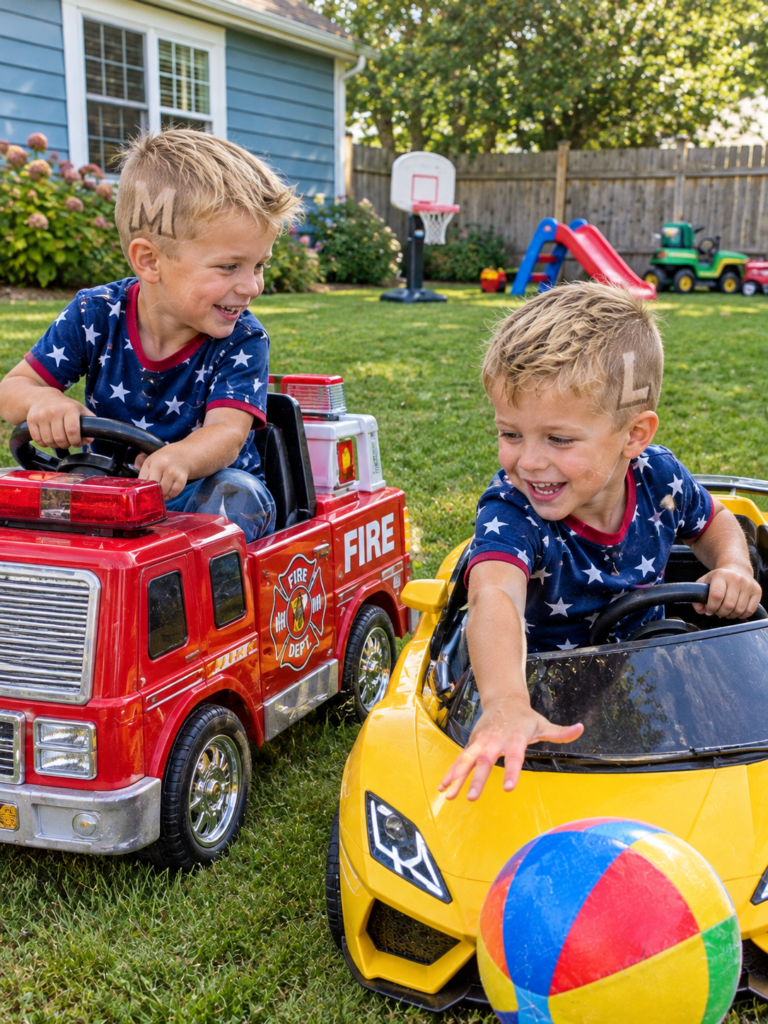
And on top of each head, Henry had left a big strip of longer hair, carefully shaped.
Into a letter.
M.
And L.
I stood in the doorway holding a gallon of milk.
“Henry!”
He came out of the kitchen with a dish towel over his shoulder.
He looked proud. He actually looked proud.
“Problem solved,” he said.
“Problem?”
“Nobody can mix them up now.”
I set the groceries down on the floor. A can of tomatoes rolled out of the bag and across the hallway. Nobody stopped it.
“You shaved letters into our children,” I said.
The boys started jumping up and down.
“I’m M!” Max yelled.
“I’m L!” Leo yelled.
They thought it was the greatest thing that had ever happened to them. They ran in circles around my legs.
I was furious.
“They had beautiful hair.”
“It grows,” Henry said.
“You didn’t even ask me.”
“Emma, they’re haircuts.”
“They are alphabet haircuts!”
Max laughed. “M is me!”
Leo spun in a circle so fast he fell over. “L is me!”
Henry shrugged and smiled.
“See?” he said. “Happy customers.”
I looked at the curls I’d been brushing every morning for four years. The ones I’d photographed in the bathtub. The ones Henry’s mother said made them look like little angels on a Christmas card.
All of them in a trash bag somewhere.
I was too angry to have the fight properly. Not with the boys right there, spinning around, so happy.
So I picked up the can of tomatoes and said, “We’re discussing this later.”
Henry’s smile disappeared.
“Fine,” he said.
The twins spent the whole evening admiring each other.
They stood in front of the hallway mirror and touched each other’s letters. They made their grandmother FaceTime them so she could see. Henry’s mom laughed so hard she had to put the phone down.
At dinner, Leo kept saying, “Pass the ketchup to L, please.”
During bath time, they kept reaching up and feeling the letters with their wet hands, like they were checking that they were still there.
“Mama,” Max said, sitting in the bubbles. “Can you tell it’s me?”
“I could always tell it’s you, baby,” I said.
He looked at me for a second. Something went across his face. Then he went back to splashing.
I didn’t think about it then.
I think about it now.
I put them to bed at eight-thirty.
Max beside the window. Leo beside the door. Same as always, for two years, since they moved out of their cribs.
Pickle with Max. Blue blanket with Leo.
I kissed them both on their strange new fuzzy heads.
“Good night, M,” I said. “Good night, L.”
“Good night, Mama,” they said, both at once. Then they giggled.
I turned off the light and went downstairs.
Henry was in the kitchen, loading the dishwasher. He didn’t look up.
We had the fight.
I’m not proud of it.
I stood by the counter with my arms crossed and said things like You never think before you do anything and I spent four years on that hair and What were you thinking?
He said things like It’s not a big deal and They love it and You’re overreacting.
And then I said the thing.
“It’s not that hard, Henry. You just look at them.”
He stopped loading the dishwasher.
He stood there with a plate in his hand for a second.
Then he put it in the rack very carefully and closed the dishwasher and walked out of the kitchen.
“I’m going to bed,” he said.
He went into our room and shut the door. Not slammed. Shut.
I stood in the kitchen and felt like I’d won.
That’s the worst part. I felt like I’d won something.
I went to bed around eleven. Henry was lying on his side with his back to me. Awake. I could tell by his breathing. I didn’t say anything. Neither did he.
I picked up the monitor. Old habit.
At 11:30, I checked it.
Both boys were sleeping. Two lumps under two blankets. Their heads were dark on the pillows. On the grainy screen, I couldn’t see anything else.
I was about to put it down.
Then Leo climbed out of bed.
I sat up a little.
He padded across the room in his pajamas. He shook Max’s shoulder. Max sat up.
They whispered. I couldn’t hear what. The monitor only picked up a soft hiss.
Then Max got up, carrying Pickle and his blanket, and climbed into Leo’s bed by the door.
And Leo climbed into Max’s bed by the window.
I watched, confused.
I thought they were playing some silly identity game. Because of the letters.
Then Leo turned his head and looked straight into the camera on the bookshelf. Right at me.
He put one finger to his lips.
“Shhh,” he whispered.
And then the bedroom door opened on the screen.
I looked over. Henry’s side of the bed was empty. I hadn’t even heard him get up.
On the monitor, my husband stepped into the boys’ room.
He bent down and picked something up off the floor.
When he straightened up, I saw the clippers in his hand.
So that’s how I ended up sitting on the edge of Leo’s bed, at almost midnight, learning that the letters had disappeared because my sons had heard something they were never supposed to hear.
I looked at Henry.
“What did they hear?” I said.
He leaned against the wall by the dresser. He set the clippers on top of it, carefully, way at the back. Then he put his hands in the pockets of his flannel pajama pants.
“After you left this afternoon,” he said, “I called my brother.”
“Tom?”
He nodded.
“Why?”
He looked embarrassed. Really embarrassed. Like a kid caught with a cookie.
“Because I knew you’d be mad,” he said. “About the haircuts.”
“Correct.”
“I’d already done it,” he said. “And I was standing in the bathroom looking at all that hair on the floor. And I thought, she’s going to kill me. So I called Tom. I wanted somebody to tell me it wasn’t as stupid as it looked.”
“Did he?”
“No.”
That almost made me smile. Almost.
Henry stared at the floor.
“He laughed for like two minutes,” he said.
“Appropriate.”
“Then I told him why I did it.”
The boys had been in the hallway.
Henry told me later he’d sent them to the playroom to watch a movie while he swept up. He thought they were downstairs. But they’d gotten bored, the way four-year-olds do, and come upstairs looking for him, and found him sitting on the edge of our bathtub with his phone.
And for once in their lives, they were quiet.
Quiet enough that Henry didn’t know they were there.
“I told Tom,” Henry said, “‘I know Emma thinks it’s funny. But I hate it. I hate that I can’t tell them apart.’”
I stopped smiling.
Henry kept going. He wasn’t looking at me. He was looking at a spot on the carpet near Max’s bed.
“I told him sometimes I look at them and I panic.”
“Why?” I said.
He hesitated.
“Because I’m their dad,” he said.
That wasn’t an answer. He knew it wasn’t.
“I should know which one is which,” he said.
“Henry—”
“No,” he said. “Let me finish. Please.”
He looked toward the boys.
They were both sitting up in bed now. Very still. Watching him.
“I know who they are,” Henry said.
His voice broke a little on the last word.
“I know Max likes dinosaurs. I know Leo hates getting water in his face in the bath, so you have to tip his head back. I know which one wants the blue cup and which one wants the green one. I know Max hums when he’s coloring. I know Leo sings the wrong words to every song on purpose.”
He looked back at me.
“But when they’re standing next to each other,” he said, “and neither one is talking? Sometimes I don’t know. I just don’t know, Em. I look at them and it’s like looking at the same picture twice.”
“They’re identical twins,” I said. It came out weak.
“I know.”
“Other people mix them up. Your mom mixes them up. Miss Darlene mixes them up.”
“I’m not other people,” Henry said.
There it was.
The thing he’d been carrying underneath all our jokes. All those years.
It wasn’t annoyance. It wasn’t laziness.
It was shame.
“I told Tom,” Henry said, quieter now, “that someday they’re going to figure out that their own dad has to guess. That every time I say a name, I’m guessing. And they’re going to wonder why. And they’re going to think it’s because I don’t care enough to learn.”
I felt something heavy settle in my chest.
Because I’d never understood. Not once, in four years, had I understood that it wasn’t funny to him.
He’d been laughing because everybody else was laughing.
Because I was.
“And then,” Henry said, “I said, ‘Maybe I’m just bad at this. Maybe I’m just a bad dad.’”
From across the room, in the bed by the door, Max whispered:
“Bad Daddy.”
He said it very softly. Not like an accusation. Like a question. Like he was trying the words out to see if they were true.
Henry crossed the room in two steps and crouched down beside the bed.
“No,” he said.
Max looked worried. His nose was wrinkling. The rabbit thing.
Henry reached out and touched his cheek.
“No, buddy,” he said. “That’s not what I meant. That’s not true.”
“But you said it,” Max said.
“I said something stupid,” Henry said. “Because I was upset. Grown-ups do that sometimes. We say stuff that isn’t true when we feel bad.”
Leo leaned over from the other bed.
“Then you made the M and the L,” he said.
Henry nodded.
“I did.”
“We didn’t like them,” Max said.
I stared at him.
“You two acted like you loved them,” I said. “You made Grandma look at them on the phone. You asked for ketchup as L.”
Leo shrugged.
“We liked them first,” he said.
“Then we heard Daddy,” Max said.
I looked from one to the other.
“So you shaved them off?”
Leo nodded. Very serious.
“Because Daddy knows us,” he said. “He doesn’t need letters.”
Henry looked down at the carpet.
I felt the tears coming. I couldn’t stop them. I didn’t really try.
These two little boys. Four years old. They’d heard their father say he was bad at being their daddy, and they’d spent the whole evening pretending to be happy about those letters. Admiring them in the mirror. Showing their grandmother.
And then they’d waited until the house was quiet. Until their parents were downstairs fighting. And they’d crept into our bathroom in the dark and taken his clippers and shaved off each other’s letters.
To prove something to him.
To prove he didn’t need them.
Max climbed out of bed.
He walked over and stood right in front of Henry, who was still crouched on the floor. They were almost eye to eye.
Max’s head was a mess. No M. No curls. Just a blond, fuzzy little skull with uneven patches all over it. A long strip behind one ear that Leo had missed.
He was wearing Leo’s pajamas. The ones with the rocket ships. I hadn’t even noticed. They’d switched those too.
“Who am I?” Max said.
Henry didn’t answer right away.
He looked at him. For a long time.
I held my breath.
Max grinned. Wide. Daring him.
“Who?” he said again.
Henry’s eyes moved over him. Slowly. Not over his face. Over the rest of him. His hands. His feet. The way he was standing.
Then he said, “Max.”
Max’s smile exploded across his whole face.
“How?”
Henry pointed.
“You’re holding Pickle.”
Max looked down. He’d forgotten. Pickle was tucked under his arm, one eye and all.
Max immediately threw the dinosaur onto Leo’s bed.
“Again!” he shouted.
Leo jumped out of bed.
“Close your eyes, Daddy! Turn around!”
“Guys,” I said. “It’s bedtime. It’s past bedtime. It’s almost midnight.”
Nobody listened.
Henry stood up and turned to face the wall. The boys scrambled around behind him, whispering, giggling, switching places. Somebody bumped the dresser. Somebody shushed somebody.
“Okay!” Leo yelled.
Henry turned around.
They were standing side by side in front of the window. Hands at their sides. Faces perfectly blank.
Henry looked at them.
He hesitated.
Then he pointed at the one on the right.
“Leo.”
Correct.
Leo cheered. “How?”
“You rub your ear when you’re excited,” Henry said. “You were doing it the second I turned around.”
Leo’s hand dropped away from his left ear like it was on fire.
“Again!” he yelled.
They switched again. Henry turned back around.
He guessed wrong.
The boys screamed with laughter. Max fell down on the carpet holding his stomach. Leo jumped up and down on the bed.
And then something happened that I’d never seen before.
Henry laughed too.
Not the embarrassed laugh. Not the polite laugh at Miss Darlene’s gate.
He really laughed. With his whole body. He threw his head back.
“Okay,” he said. “Okay. You got me.”
Max picked himself up off the floor.
“I’m Leo!” he announced.
“No, you’re not,” Henry said.
Max froze.
Henry smiled at him.
“You’re Max,” he said. “You just tricked me into saying Leo last time. You’re trying to trick me again.”
Max collapsed back onto the bed, laughing so hard he got the hiccups.
I sat on the edge of the bed and watched my husband.
His whole face had changed.
He wasn’t taking a test anymore.
That was it. That was the whole problem, right there. I could see it now, like a light coming on in a dark room.
We’d turned telling our children apart into a test.
A test he was always going to fail.
And every time he failed it, somebody laughed.
“I’m sorry,” I said.
Henry looked at me.
“For what?”
“For making jokes about it. For all of it.”
He shook his head.
“Emma, you don’t have to—”
“Yes,” I said. “I do.”
Because I did.
I remembered dozens of moments. Maybe hundreds. At playgrounds. At family dinners at his mom’s, with everybody watching. At the pediatrician’s office, when the nurse said “And which one is this?” and Henry looked at me first. Every time. He looked at me first, and I always answered for him, and I always made a little joke about it.
Don’t ask him, he’ll get it wrong.
I’d said that. Out loud. In front of nurses. In front of the boys.
“I didn’t know it bothered you,” I said.
“I should’ve told you,” Henry said.
“Yes,” I said. “You should have.”
He nodded.
“And you should not shave our children without asking me,” I said.
“Also yes.”
“Especially not initials.”
“Understood,” Henry said.
Then I looked at the boys’ heads.
They were disasters. Truly. Max had that stripe of longer hair behind his right ear, like a tiny ponytail that forgot to grow. Leo had a patch on top that looked like an island on a map.
I sighed.
“We’re going to have to even these out,” I said.
Henry picked up the clippers off the dresser.
“That was my plan,” he said.
“Tomorrow.”
“They’re going to look insane until then.”
“They already look insane.”
“Fair,” Henry said.
We put them back in their own beds.
This time, I checked.
Max by the window. Leo by the door.
Pickle with Max. Blue blanket with Leo.
I tucked them both in. I kissed their fuzzy heads again. The fuzz tickled my lips.
We were almost out the door when Max called, “Daddy?”
Henry turned around.
“What, bud?”
“If you get us wrong,” Max said, “it’s okay.”
Henry stood very still in the doorway.
I saw his throat move.
From the bed by the door, Leo added, “We get us wrong too.”
I laughed. I couldn’t help it.
Henry said, “You do?”
Leo nodded, very serious.
“In pictures,” he said.
That was true. Sometimes we’d sit on the couch and scroll through toddler photos on my phone, and they’d argue about which one was which. That’s me. No, that’s me. That’s me because I have the duck. Even they didn’t know half the time.
Henry smiled. It was a small smile. But it was real.
“Good night, boys,” he said.
“Good night, Daddy.”
We closed the door.
I heard them whispering through it for another five minutes. Then quiet.
I followed Henry downstairs. I thought he was going back to bed.
He went into the kitchen instead.
He sat down at the table in the dark. I turned on the light over the stove, the little one that doesn’t hurt your eyes at midnight. I poured two glasses of water and set one in front of him.
I thought the conversation was over. I thought we’d say something soft and go to bed.
It wasn’t.
Henry turned his water glass around and around on the table.
“There’s something else,” he said.
I looked at him.
And honestly, my first feeling was annoyance. Just for a second. What now? It was midnight. I’d been asleep. I’d cried in my children’s bedroom. I’d been yelled at by a four-year-old for being bad at bedtime.
“Okay,” I said.
He rubbed the back of his neck.
“I had an appointment last month,” he said.
“What kind of appointment?”
“Eye doctor.”
I frowned.
“You didn’t tell me.”
“Because it was nothing.”
“Was?”
He hesitated.
“I thought maybe there was something wrong with my vision,” he said.
That caught my attention. The annoyance went away.
“Because of the boys?”
“Partly.”
He took a drink of water. He set the glass down.
“Not just the boys,” he said.
And then he told me.
Things I’d never known. Things I’d been sleeping next to for seven years.
He had trouble with faces. Not just the twins. Everybody.
Not always. Not dramatically. He could recognize me. He could recognize his mom, his brother, the people he saw all the time.
But enough.
When he saw a coworker at the grocery store, outside of the office, he often didn’t know who they were until they said his name. He’d learned to smile at everybody, just in case. He’d learned to say “Hey, man!” with a lot of energy, because that worked for almost anyone.
He’d once walked right past his own boss in a restaurant.
He didn’t watch a lot of movies because he lost track of which character was which if they had similar haircuts.
“Remember that spy movie we tried to watch?” he said. “With all the guys in suits?”
“You fell asleep.”
“I didn’t fall asleep,” Henry said. “I just stopped being able to follow it. I closed my eyes so you wouldn’t ask me questions.”
I sat back in my chair.
“Henry,” I said. “How long?”
“Forever, I think,” he said. “I just thought everybody was like that. I thought everybody else was just better at faking it.”
He looked down at his glass.
“When I was in second grade,” he said, “my mom came to pick me up early for a dentist appointment. She was standing in the doorway of my classroom. And I didn’t know it was her. Not until she said my name. I just sat there. I thought she was somebody else’s mom.”
“What did she do?”
“She laughed,” Henry said. “She told the story at Thanksgiving for years. ‘Henry didn’t even know his own mother!’”
He smiled, a little. It wasn’t a happy smile.
“So I learned to laugh too,” he said.
I sat with that for a long time.
The refrigerator hummed. A car went by outside, its headlights sweeping across the kitchen ceiling.
“What did the eye doctor say?” I asked.
“My eyes are fine,” Henry said. “Perfect, actually. Twenty-fifteen. Better than you.”
“Don’t push it.”
He almost laughed.
“But after I explained it all to him,” Henry said, “he got kind of quiet. And then he said it might not be about my eyes at all. He said it might be about how my brain recognizes faces. He said there’s something called face recognition… difficulty, I guess. That some people’s brains just do it differently.”
“So you were diagnosed with something?”
“No,” Henry said. “Nothing like that. He’s an eye doctor. He just said if it was bothering me, if it was getting in the way of my life, I should talk to a specialist. He gave me a name.”
I looked at him.
“Is that why you panicked about the twins?”
Henry nodded slowly.
“They’re the hardest people in the world for me to tell apart,” he said.
“Because they have the same face.”
“Basically,” Henry said. “Most people, I can figure out by their hair. Or their voice. Their glasses. The way they walk. But the boys have the same hair. Same voice. Same walk, mostly. They even wear the same size shoes.” He spread his hands on the table. “So I had their curls. And the curls were the same too. So I thought, what if I just… gave myself something?”
“The letters.”
“The letters,” Henry said. “It seemed so smart at two in the afternoon.”
I put my head in my hands.
Then I started laughing.
Henry looked up.
“What?”
“Nothing,” I said. “It’s just. You’ve been dealing with this your whole life. Alone. And instead of telling me, you shaved our children’s heads into a spelling test.”
Henry stared at me for a second.
Then he laughed too.
We sat at the kitchen table at midnight, laughing until it turned into something else. Until Henry put his hand over his eyes and his shoulders shook.
I got up and went around the table and put my arms around him from behind.
“I’m sorry,” I said into his hair. “I’m so sorry I made it a joke.”
“It was a joke,” Henry said. “I made it a joke too.”
“But you didn’t think it was funny.”
“No,” Henry said. “Not really. Not for a long time.”
“You said the specialist,” I said. “Did you call?”
He nodded.
“January,” he said. “Second week. It was the earliest they had.”
“Can I come?”
He turned his head and looked up at me.
“If you’re comfortable,” I said. “If you want me there.”
He was quiet for a second.
“Yeah,” he said. “I want you there.”
The next morning, we evened out the boys’ hair.
We did it in the kitchen, the way my mother used to cut my hair when I was little. The boys sat on a stool one at a time, with a beach towel wrapped around their necks and fastened with a chip clip.
Henry did the clippers. I held the towel and the boys’ hands and supervised.
“Not too short,” I said.
“There’s no not too short left,” Henry said. “This is all the short there is.”
He went over Max’s head slowly and carefully, getting rid of the stripe behind his ear and the uneven tufts. Max sat absolutely still, his eyes squeezed shut, holding Pickle in his lap.
When Henry turned the clippers off, Max opened his eyes.
“Do I look like a baby bird?” he asked.
“A little,” I said.
“Cool,” Max said.
Leo went next. Leo did not sit still. Leo never sits still. He wiggled and talked the whole time and asked Henry nineteen questions about how the clippers worked and whether they could cut through wood.
When Henry was done, both boys stood side by side in the kitchen, with their identical, perfectly buzzed, completely letterless heads.
They looked exactly the same.
Exactly. Like two copies of the same peeled peach.
I looked at Henry.
He looked at them.
“Okay,” he said. “Moment of truth.”
Leo grabbed Max’s hand. They looked up at him. Waiting.
Henry crouched down.
He looked at their faces for a second. Then he looked lower. At their hands. At their feet. At how they were standing.
Leo’s free hand was creeping up toward his left ear.
Max was standing a half step behind his brother.
Henry smiled.
“Good morning, Max,” he said to the one in back. “Good morning, Leo.”
The boys looked at each other. Then they cheered.
And Henry didn’t look at me first.
I noticed that. He didn’t look at me at all.
Monday morning at preschool, Miss Darlene’s mouth fell open when the boys walked in.
“Oh my goodness,” she said. “What happened?”
“We gave ourselves haircuts,” Leo said proudly.
“With Daddy’s clippers,” Max added.
Miss Darlene looked at Henry over their heads.
“Well,” she said. “Now I’ll never tell them apart.”
She laughed. The same laugh. Like it was a joke between the two of them.
Henry didn’t laugh this time.
He knelt down and fixed Max’s backpack strap. Then he stood up.
“Max is the one who’ll stand by the door for a minute before he goes in,” he said. “Leo’s the one who’ll already be at the block table by the time you finish saying good morning. If you’re not sure, ask Max a question. He’ll think about it before he answers. Leo won’t.”
Miss Darlene blinked.
“Oh,” she said. “Okay. Thank you.”
And right on cue, Leo ran straight past her to the block table. And Max stood in the doorway, holding his backpack strap, looking around the room.
Miss Darlene watched them.
“Huh,” she said quietly.
Tom called that week. Henry put him on speaker while he was cooking dinner.
“Hey,” Tom said. “I wanted to say sorry. For laughing. On Saturday.”
“You were right to laugh,” Henry said. “It was ridiculous.”
“Yeah, but.” Tom paused. Tom is three years older than Henry and talks like everything costs a dollar. “You told me some stuff after that. About Mom. About second grade. I didn’t know any of that. I was in fifth grade. I just remember the Thanksgiving story.”
Henry stirred the pasta sauce.
“It’s fine, Tom.”
“It’s not, though,” Tom said. “I told Mom. After we hung up. About what you said.”
Henry stopped stirring.
“What’d she say?”
There was a long pause on the line.
“She cried,” Tom said. “She said she’s going to call you. She said she didn’t know. She said she always thought you were just a dreamy kid.”
Henry set the wooden spoon down on the counter.
“Okay,” he said quietly.
His mom called the next night. They talked for an hour. Henry took the phone out on the back porch, even though it was cold. I didn’t follow him.
When he came back in, his eyes were red. But he looked lighter. Like he’d put down a bag he’d been carrying so long he forgot it was there.
The specialist was a neuropsychologist named Dr. Abernathy, in a medical building downtown with a parking garage that took us fifteen minutes to get out of.
She was younger than I expected. Maybe forty. She had short dark hair and glasses on a chain and a very calm voice.
She spent most of a morning with Henry. I sat in the waiting room for the first part, reading the same page of a magazine over and over.
Then she called me back in.
Henry was sitting at a table with a laptop in front of him. There were photos on the screen. Faces. Cropped close, no hair, no clothes, nothing but faces.
“Henry said you might like to see some of this,” Dr. Abernathy said. “If that’s all right with you, Henry.”
“Yeah,” Henry said. “I want her to see.”
She showed me one of the tests.
A face would flash up on the screen. Then it would disappear. Then three faces would come up, and you had to pick which one you’d just seen.
I tried it. I got eight out of ten.
Henry had gotten four out of ten.
Then she showed me a different test. Famous people. Movie stars. Presidents. Faces you’d see a thousand times in your life.
Henry got some. Not many.
“He recognized the president because of the flag pin,” Dr. Abernathy said, smiling a little. “He said he figured anybody standing in front of that many flags was probably important.”
“That’s cheating,” I said.
“That’s adapting,” she said.
When she was done, she sat down across from both of us and folded her hands.
“Henry has traits consistent with something called developmental prosopagnosia,” she said. “Most people call it face blindness. Though I don’t love that term, because it sounds more dramatic than it is.”
I looked at Henry. He was looking at his hands.
“It’s not severe,” Dr. Abernathy said. “Some people can’t recognize their own reflection. That’s not Henry. He recognizes you. He recognizes his close family, the people he sees every day. But his brain doesn’t do the automatic thing most brains do with faces. It doesn’t just… snap into place. So he relies much more heavily on other things. Voices. Posture. The way people move. Hair. Clothes. Context.”
“Is it getting worse?” I asked.
“No,” she said. “It’s not a disease. It doesn’t progress. There’s no medication for it, because there’s nothing to treat. Henry’s brain is healthy. It just processes faces differently than yours does. He’s very likely been this way his whole life.”
She looked at Henry.
“And honestly,” she said, “he’s built some very good systems to work around it. Most people with this never get tested at all. They just think they’re bad with faces. Or they think something’s wrong with them.”
Henry’s jaw tightened a little.
“Yeah,” he said.
“Can I ask about my sons?” I said.
“Of course.”
“They’re identical twins. They’re four.”
Dr. Abernathy actually laughed. Not unkindly. More like oh, of course.
“Henry told me,” she said. “Identical twins are about the hardest thing there is for someone with prosopagnosia. You’ve taken away nearly every cue he has. Same face, same hair, same voice, same size.” She shook her head. “Honestly, identical four-year-olds with matching haircuts are the final boss.”
Henry snorted. He actually snorted.
“That’s what I’ve been saying,” he said.
In the parking garage, waiting in the long line of cars to get out, Henry was quiet.
“You okay?” I asked.
“Yeah,” he said. Then, “I don’t know. I feel weird.”
“Weird how?”
He tapped his fingers on the steering wheel.
“For thirty-six years, I thought I was just not trying hard enough,” he said. “I thought if I paid more attention. If I cared more. If I just looked harder.”
He looked over at me.
“And I’m sitting here, and she’s telling me it was never about trying,” he said. “I was trying the whole time. I was trying harder than anybody. I was just trying with a different set of tools.”
I reached over and put my hand on his knee.
“You were trying the whole time,” I said.
“Yeah,” Henry said. He blinked a few times. “Yeah.”
Then the car in front of us finally moved, and he laughed, and said, “Fifteen minutes to get out of a parking garage. This is what I get for being honest.”
After that, we stopped testing him.
That was the most important thing. More important than anything Dr. Abernathy said.
No more Which one is this? No more holding one up and waiting while he squinted. No more answering for him at the pediatrician’s.
When a nurse asked which one was which, I stopped answering. I let him.
Sometimes he got it wrong. When he did, one of the boys would say “I’m Max, Daddy,” and Henry would say “Sorry, bud,” and that was it. No laughing. No Don’t ask him, he’ll get it wrong.
Just a correction. The way you’d correct anybody.
The way the boys corrected each other in the toddler photos.
And something else happened. Something I didn’t expect.
Henry got better.
Not at faces. His brain was what it was. Dr. Abernathy said that wouldn’t change.
But he got better at noticing the things he’d always noticed anyway. He just started trusting them.
He’d already known so much. That was the thing. He’d known all of it. He just hadn’t believed it counted.
Max walked into rooms carefully. Like he was checking for traps.
Leo arrived like he’d been fired out of a cannon.
When Max laughed, he started with his mouth closed. A little hmm-hmm-hmm behind his lips. Then it would burst out.
Leo snorted. Every time. Like a little pig.
Max called sandwiches “sam-wishes.” He’d been doing it for two years. We’d stopped correcting him because it was too cute.
Leo said “sandwich” perfectly but refused to eat the crusts.
Max hummed when he colored. Leo sang, loud, and always with the wrong words.
Max put his shoes on the wrong feet about half the time and didn’t notice.
Leo noticed every time, and complained about it, and made me fix it.
There were hundreds of differences.
They just weren’t all on their faces.
The boys’ hair grew back over the winter.
It grew back straight at first, which was a shock, and then by March the curls started coming in again. Softer. Lighter. By summer they had full heads of curls again, the kind strangers stopped us in the grocery store to touch.
That summer, before kindergarten, we took them to a real barber. An old man named Sal with a red-and-white pole outside his shop and a big jar of lollipops on the counter.
Sal gave them each a normal haircut. A little shorter on the sides. Curls on top.
No initials. No numbers.
“Twins, huh?” Sal said, looking from one to the other. “How do you tell ’em apart?”
Henry pointed.
“That one’s sitting on his hands so he won’t touch the clippers,” he said. “That’s Max. That one’s already asked you three questions about the chair. That’s Leo.”
Sal laughed.
“Good dad,” he said.
Henry didn’t say anything. But I saw his ears go red.
The good kind of red.
When they started kindergarten in September, their teacher was a young woman named Ms. Patel, fresh out of school, with a big smile and a classroom full of paper sunflowers.
At the meet-the-teacher night, she crouched down to say hi to the boys. Then she stood up and looked at Henry and me.
“I have to ask,” she said, a little sheepish. “Is there an easy way to tell them apart?”
I opened my mouth.
Then I closed it.
I looked at Henry.
He didn’t look at me. He didn’t need to.
“Max likes green,” Henry said. “Leo likes blue. Max will probably have a green shirt on most days, and Leo will probably have blue.”
Ms. Patel smiled. “Great. That’s easy.”
“But don’t rely on clothes,” Henry said. “They’ll switch them. They think it’s hilarious.”
Behind him, both twins grinned. Identical grins.
Ms. Patel looked at them.
Then she looked worried.
Fair reaction.
“If you’re ever not sure,” Henry said, “ask them who has Pickle.”
“Who’s Pickle?”
“You’ll find out,” Henry said.
They still switch things.
They’re six now. They think identity confusion is the best comedy ever invented. They’ve switched lunchboxes, coats, backpacks, seats on the bus, and, once, entire school days. Ms. Patel didn’t figure it out until after recess, when “Leo” cried because there were strawberries in the snack.
She told us about it at pickup, half laughing, half horrified.
“I’m so sorry,” she said. “I had no idea.”
Henry shrugged.
“Happens to the best of us,” he said.
And he meant it.
Last Halloween, they dressed as each other.
That was the whole costume. Their idea. They worked on it for a week.
Max wore Leo’s favorite blue sweatshirt, the one with the shark on it. He messed up his curls on purpose to look like Leo’s, which are always a little messier. Leo wore Max’s green dinosaur hoodie and carried Pickle.
They walked into the living room together, where Henry was sitting on the couch with a bowl of candy.
Max stepped forward.
“I am Leo,” he announced.
Leo stepped forward.
“I am Max,” he said.
Henry looked at them.
He set the candy bowl down on the coffee table.
He leaned forward with his elbows on his knees.
Then he said, “Nice try.”
“How?” they both yelled.
Henry pointed at the one in the blue shark sweatshirt.
“You’re standing behind your brother,” he said, “because you’re waiting to see if this gets you in trouble.”
Max looked down at his feet. He was half a step behind Leo. He always was. He had been since the day he was born, three minutes before his brother, quiet, checking the place out.
Max looked offended.
Then he turned around and looked at me.
“Did Daddy cheat?” he demanded. “Did you tell him?”
“No,” I said. “I didn’t say a word.”
Henry leaned back on the couch with his arms crossed over his chest.
He looked absurdly proud.
He still gets them wrong sometimes.
So do I.
I want to be honest about that, because for years I acted like I never did. Like I had some special mother power that never failed.
Last spring, I yelled at Leo for three straight minutes about wet towels on the bathroom floor. Three straight minutes. I gave a whole speech. About responsibility. About mold. About how Mama is not a maid.
Leo sat on the edge of his bed and let me do it.
He didn’t say anything. He just sat there.
Finally, from the doorway, Max said, “Mom. That was me.”
I stopped.
I looked at Leo.
Leo was enjoying every single second.
I apologized. To both of them. Leo graciously accepted. Max picked up the towels.
Henry heard the whole thing from the hallway.
He did not let me forget it for weeks.
He’d walk into the kitchen and say, in a high, dramatic voice, “How can a mother not know her own children?”
He’d whisper it to me during movies.
He wrote it on a sticky note and put it on the bathroom mirror.
Finally, one night, I threw a wet towel at him. It hit him right in the face.
He deserved it.
He laughed so hard he had to sit down on the floor.
And the boys came running in to see what was so funny, and Leo said, “Did Mama throw a towel at Daddy?” and Max said, “Why?” and Henry said, “Because she doesn’t know which one of you leaves towels on the floor,” and they both collapsed laughing on top of him.
But I don’t make the old jokes anymore.
Not Which one is this? Not Don’t ask him, he’ll get it wrong.
Because I learned something from that ridiculous night.
When I came home and saw those letters, I thought Henry had shaved our sons’ heads because he was lazy. Because learning their differences was too much work, and a big M and a big L were easier.
The truth was almost the exact opposite.
He cared so much about getting it right that he’d convinced himself every mistake meant he was failing them. Every wrong name was proof. Every hesitation at the preschool gate. Every plate of cake he couldn’t hand over.
And instead of telling anybody that, he tried to fix it with a pair of hair clippers.
Terrible solution.
Very Henry.
But the twins understood something before either of us did.
They didn’t need their father to get their names right every single time.
They needed him to know them.
Those weren’t the same thing. They never had been.
A letter could tell Henry which boy was Max. Another letter could tell him which one was Leo.
But a letter couldn’t tell him who needed the green cup.
Who hated strawberries.
Who rubbed his left ear when he was about to lie.
Who slept with a one-eyed dinosaur named Pickle.
Who charged into a room.
Who waited at the door.
Henry already knew every bit of that. He’d known it all along.
Our boys just had to sneak into our bathroom in the dark and shave off two ridiculous letters before he finally believed it.