My neighbor blocked our driveway twenty-two mornings in a row, making my children late for school three times. When I finally begged her to stop, she rolled her eyes and said, “You’ll survive.” I didn’t argue anymore. Instead, I woke up at 5:30 the next morning, gathered three weeks of evidence, and made one phone call. By the time she opened her curtains, she wasn’t smiling anymore.
The person I had called was not a tow-truck driver.
I hadn’t called one of those companies people boast about online, the sort that promise to make somebody’s car disappear before breakfast.
I hadn’t called the police demanding that Denise be arrested.
I had simply called the council’s parking enforcement number.
The evening before, after Denise had shut the door in my face, I had finally looked up the proper procedure instead of relying on half-remembered advice from neighbors and angry internet comments.
I discovered that our street fell inside an area where obstruction of a dropped kerb could be dealt with by an enforcement officer, provided someone was available.
So I called.
I explained everything.
And, perhaps because I had expected nothing to happen, I was astonished when a small white council vehicle appeared at the end of the road forty minutes later.
It stopped behind Denise’s Corsa.
A man in a dark jacket got out.
I watched through the kitchen window, coffee cooling between my hands.
He walked slowly around Denise’s car.
Then around the entrance to our driveway.
Then back again.
He took photographs.
He checked something on a handheld device.
Finally, he slipped a bright yellow notice beneath Denise’s windscreen wiper.
That was all.
No dramatic tow truck.
No flashing lights.
No shouting.
Just a rectangle of yellow paper.
Yet somehow it felt more satisfying than anything dramatic could have been.
Because I hadn’t retaliated.
I hadn’t damaged anything.
I hadn’t inconvenienced anyone except the person who had spent three weeks deliberately inconveniencing us.
I had simply stopped protecting Denise from the consequences of her own choices.
The officer was returning to his vehicle when I stepped outside.
“Morning.”
He turned.
“You reported this?”
“Yes.”
I pointed toward our driveway. “It’s been happening constantly.”
He looked at the entrance again.
“You said you had photographs?”
“Twenty-two mornings.”
His eyebrows rose.
“Twenty-two?”
I nodded.
He gave a quiet whistle.
“I’d keep those.”
“Oh, I intend to.”
For the first time in weeks, I smiled.
The officer glanced toward number 14.
“Does she know she’s blocking you?”
“She definitely knows.”
He gave me a look suggesting he had heard that answer many times before.
Then he climbed into his vehicle and drove away.
Six minutes later, Denise opened her curtains.
I was still standing near the kitchen window.
Not deliberately waiting, I told myself.
Although, if I’m completely truthful, I was absolutely waiting.
Her face appeared behind the glass.
She looked toward her car.
Stopped.
Moved closer.
Her expression changed.
Even from across the road I could see her mouth tighten.
She disappeared.
Less than a minute later her front door opened.
Denise walked outside wearing slippers and a long grey cardigan over what appeared to be pajamas.
She marched toward the Corsa.
She stared at the yellow notice.
Then she looked directly at our house.
At me.
For several seconds neither of us moved.
Then Denise pulled the notice from her windscreen.
I expected her to come across the street.
She didn’t.
She unlocked her car, climbed inside and moved it onto her own driveway.
Her completely empty driveway.
Five minutes later, I drove my children to school.
Neither boy was late.
That should have been the end of it.
For the rest of the morning, I carried around a strange lightness.
It wasn’t triumph exactly.
It was relief.
I hadn’t realized how much tension had accumulated inside me until it disappeared.
Every morning for weeks, I had woken wondering whether our car would be trapped.
I had started checking the window before brushing my teeth.
I had adjusted breakfast times.
I had packed schoolbags the night before.
I had even begun leaving the house fifteen minutes earlier in anticipation of needing to knock on Denise’s door.
Now, suddenly, none of that seemed necessary.
“Mum?”
Ollie interrupted my thoughts as we stopped outside school.
“Yes?”
“Will the silver car be there tomorrow?”
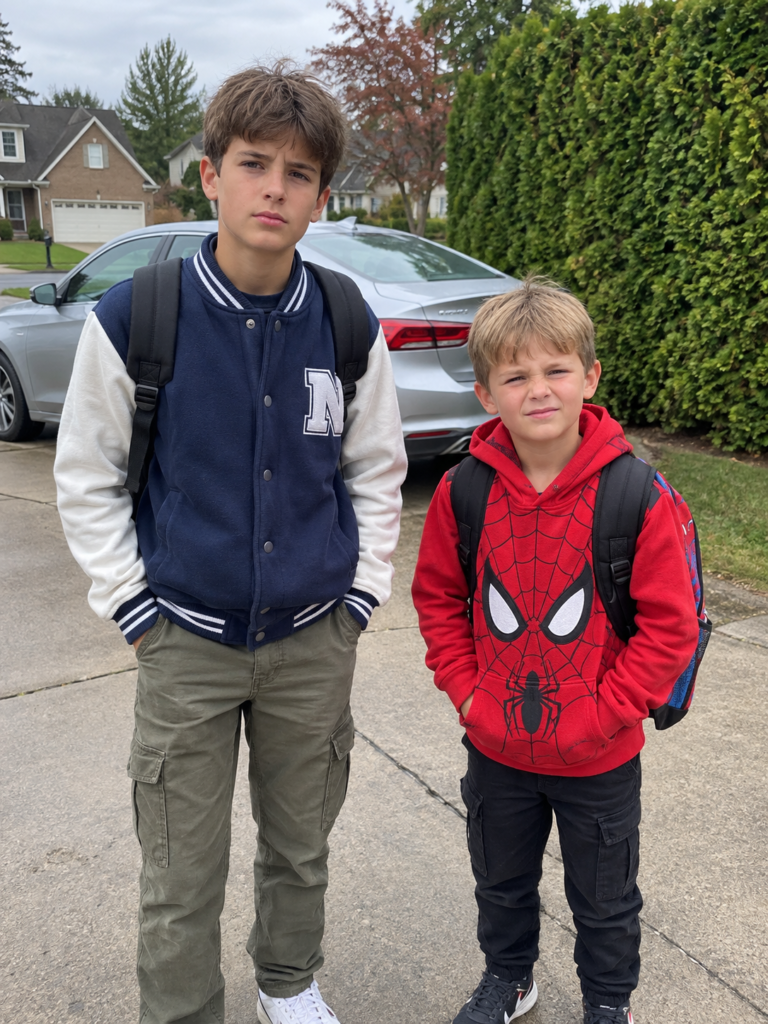
I looked at my six-year-old son.
There was no accusation in his voice.
Only genuine concern.
And that bothered me more than anger would have.
“No,” I said.
I hoped I was right.
He studied me.
“Promise?”
I hesitated.
Then I touched his cheek.
“I promise I’ll deal with it if it is.”
That seemed enough.
He grinned and hurried after his brother.
At work, I arrived seven minutes early.
My manager, Sheila, noticed.
She looked at the clock theatrically as I entered.
“Miracles do happen.”
I laughed.
“Apparently they come with yellow parking tickets.”
She looked confused.
I explained.
By the end, Sheila was shaking her head.
“Twenty-two times?”
“I counted.”
“And she knew you had children waiting?”
“Yes.”
“Some people are extraordinary.”
“I think stubborn is the word.”
Sheila considered that.
“Stubborn people are usually frightened people who’ve decided anger is easier.”
I looked at her.
“What makes you say that?”
“Twenty-six years managing staff.”
Then she took a folder from her desk.
“And three teenagers.”
I laughed again.
At the time, I dismissed the comment.
Later, I would remember it.
That evening, my husband Daniel came home just after six.
He loosened his tie while standing in the hallway.
“How was the school run?”
“Successful.”
“No blockade?”
“Not exactly.”
He paused.
I told him everything.
By the time I reached the part about the enforcement officer, Daniel was staring at me.
“You called the council at half past five?”
“Just after six.”
“You didn’t tell me.”
“You would’ve tried to talk me out of it.”
“I would not.”
I gave him a look.
“All right,” he admitted. “I might have suggested another conversation.”
“She shut the door in my face.”
“Fair point.”
He kissed my forehead.
“For what it’s worth, I think you did the right thing.”
“That’s comforting.”
“Why?”
“Because I already did it.”
He laughed.
For two days, Denise didn’t park across our driveway.
On Friday morning, I almost forgot to check.
Almost.
Her Corsa was sitting neatly on her own drive.
Saturday was the same.
Sunday too.
I began to believe the problem had finally ended.
Then, Sunday evening, someone knocked on our door.
Daniel was upstairs helping Max find his football kit.
I was in the kitchen packing lunches.
I wiped my hands on a tea towel and opened the front door.
Denise stood outside.
But she didn’t look angry.
That surprised me.
I had imagined this conversation several times.
In every version, Denise arrived furious about the fine.
Instead she stood there holding a large brown envelope against her chest.
Her hair was tied loosely behind her head.
She looked tired.
Not irritated.
Tired.
“Can we talk?”
My first instinct was no.
“No” had become an attractive word where Denise was concerned.
But something about the envelope stopped me.
“What about?”
She glanced toward our driveway.
Then back at me.
“The parking.”
“If you mean the ticket—”
“I deserved the ticket.”
That stopped me.
Denise looked down.
“I shouldn’t have said what I said to you.”
I waited.
“I was rude.”
“Yes.”
Her mouth twitched slightly.
“I suppose I deserved that too.”
Neither of us smiled.
She adjusted the envelope beneath her arm.
“I’m not asking you to withdraw anything. I’ve already paid the fine.”
“Then what is it?”
For several seconds she seemed unsure how to answer.
Finally she extended the envelope.
“Have you ever seen this?”
I didn’t take it.
“What is it?”
“Something I found after my mother died.”
“I’m sorry, but what does your mother have to do with my driveway?”
“More than you think.”
There was something in her voice that unsettled me.
Not anger.
Something closer to embarrassment.
Maybe fear.
I took the envelope.
Inside were several photocopied documents.
Most meant nothing to me.
Property diagrams.
Old planning applications.
A faded map of our street.
Then I found a photograph.
It had clearly been taken decades earlier.
Our house stood in the center.
The hedge was smaller.
The windows were different.
And the driveway beside the house was twice as wide as it was now.
I looked closer.
Two cars stood side by side.
One belonged to our house.
The other appeared to be entering the rear garden of number 14.
I looked at Denise.
“What am I looking at?”
“The access road.”
“What access road?”
She pointed to the photograph.
“That strip between our houses.”
“That’s our driveway.”
“Now it is.”
I felt irritation rising again.
“Denise—”
“Please. I know how this sounds.”
“Do you?”
“Yes.”
She reached into the envelope and removed a folded sheet.
“My mother lived in number 14 for thirty-eight years.”
I stared at her.
“You inherited the house?”
She nodded.
“I moved back in after probate finished.”
I had assumed she had simply bought it.
She continued.
“When I was a child, both houses used that drive to reach the garages at the back.”
“We don’t have rear garages.”
“Not anymore.”
She pointed toward our garden.
“There were two.”
That seemed impossible.
Our back garden contained a patio, a lawn, a shed and Max’s battered football goal.
“Where?”
“Under your extension.”
I laughed once, mostly because I didn’t know what else to do.
“Denise, what are you saying?”
“I’m saying there used to be a shared access agreement.”
I looked down at the documents.
“Used to be?”
“That’s the problem.”
She hesitated.
“I don’t know.”
The irritation inside me changed shape.
“What does any of this have to do with you blocking us?”
Denise closed her eyes briefly.
When she reopened them, she looked ashamed.
“A solicitor told me that if the old right of access still existed, it could affect the value of both properties.”
“So you blocked my driveway?”
“I thought if I kept using the entrance—”
“Using it?”
“I know.”
“You weren’t using anything. You were parking across it.”
“I know.”
“My children were late for school because you were trying to prove some property claim?”
“I got bad advice.”
“From a solicitor?”
Her silence answered for her.
“No,” I said slowly. “Where did you get this advice?”
Denise looked toward the pavement.
“An online property forum.”
For several seconds I simply stared at her.
Of all the explanations I had imagined, this had never entered my mind.
“You made my six-year-old worry about being punished at school because strangers on the internet told you to block my driveway?”
“When you put it like that—”
“How else should I put it?”
“I panicked.”
“About what?”
Her eyes lifted toward mine.
“Because I need to sell the house.”
There it was.
The first honest thing she had told me.
“Why?”
She looked across toward number 14.
“My sister owns half.”
I waited.
“And?”
“And she wants her money.”
Something in Denise’s voice made me lower mine.
“You don’t?”
“No.”
“Why not?”
“Because this was our mother’s house.”
“That still doesn’t explain twenty-two mornings.”
“No.”
She took a breath.
“There’s more.”
Of course there was.
I glanced toward the stairs behind me, wondering whether Daniel could hear.
“What?”
Denise reached inside the envelope again.
This time she withdrew a second photograph.
It showed our driveway from the rear.
Two brick garages stood where our garden now began.
Behind them was a narrow building I didn’t recognize.
On the back, someone had written a date.
September 1998.
Beneath it were six words.
Ask Arthur before they find it.
“Who’s Arthur?” I asked.
Denise looked at our house.
“The man who owned your home before you.”
A chill moved across my shoulders.
“And what were they supposed to find?”
Denise shook her head.
“I was hoping you knew.”
Then she pointed to something near the bottom of the photograph.
At first I thought it was a shadow beside the garage.
Then I saw the outline.
A small wooden door.
Not part of the garage.
Not part of either house.
A door apparently leading beneath the old outbuilding.
I looked up.
Denise spoke quietly.
“That door should be underneath your extension.”
I turned toward our hallway.
Our extension had been built years before we bought the house.
The floor beneath it was solid concrete.
Or at least I had always believed it was.
Denise continued.
“My mother kept that photograph hidden for nearly thirty years.”
“Why?”
“I don’t know.”
She stepped backward.
“But whatever she was worried about…”
Her eyes settled on the floor behind me.
“…it might still be under your house.”
Daniel thought the whole thing was ridiculous.
At least, that was his first reaction.
“There’s nothing under the extension.”
He stood barefoot in the kitchen holding Denise’s photograph beneath the ceiling light.
“There can’t be.”
“Why not?”
“Because we had the floor redone four years ago.”
“We replaced the tiles.”
“Exactly.”
“We didn’t dig through the concrete.”
Daniel looked at me.
“Laura.”
“What?”
“You’re starting to sound like Denise.”
“That’s unfair.”
“A mysterious door under the house?”
“I didn’t say there was treasure behind it.”
“Not yet.”
I folded my arms.
Daniel smiled.
I did not.
His smile disappeared.
“Fine.”
He studied the picture again.
“Where did she get this?”
“Her mother’s things.”
“And her mother wrote the message?”
“She doesn’t know.”
“That’s convenient.”
I understood his skepticism.
Part of me shared it.
After three weeks of being blocked inside my own driveway, trusting Denise felt absurd.
But the photograph was real.
Our house was unmistakable.
So was the extension.
Or rather, the absence of it.
Our current kitchen-dining room stretched several meters beyond the original back wall.
In 1998, that space had contained two garages and a squat brick structure behind them.
Daniel turned the photograph over again.
“Ask Arthur before they find it.”
He frowned.
“Who are ‘they’?”
“No idea.”
“And Arthur owned this house?”
“Apparently.”
“When?”
“Before the people we bought it from.”
Daniel lowered the picture.
“So why didn’t Denise just come and ask us about the property documents?”
“Pride?”
“That doesn’t cover twenty-two mornings.”
“No.”
Neither of us said anything.
Finally Daniel placed the photograph on the table.
“Tomorrow, we check the paperwork.”
We had bought the house nine years earlier.
Like most people, we had carefully read every important document during the purchase and then shoved the entire collection into a plastic storage box never to be touched again.
Finding it took twenty minutes.
Finding the relevant papers took considerably longer.
There were mortgage documents.
Insurance forms.
Survey reports.
Certificates for windows installed before we owned the house.
A planning approval for the extension.
That caught my attention.
“Daniel.”
He moved closer.
The extension application was dated 2001.
Applicant: Arthur Bell.
“Denise was right.”
“That proves Arthur existed.”
“It proves he built the extension.”
Daniel read further.
There were drawings of the old property layout.
And there, clearly marked, were two garages.
One associated with number 12.
One with number 14.
The access between the houses was labelled:
Shared vehicular access.
Daniel sat down.
“Well.”
I looked at him.
“You were saying?”
“I was saying nothing.”
“You were very definitely saying something.”
“I’ve revised my position.”
We kept reading.
The proposed development involved demolishing both garages, replacing our side with the extension and constructing a new private driveway entrance for number 14.
That explained Denise’s current driveway.
According to the plans, it had been created as part of the same project.
Which meant number 14 no longer needed the shared entrance.
“There,” Daniel said. “Problem solved.”
“Is it?”
“The old access was replaced.”
“But Denise said she doesn’t know whether the right was legally removed.”
“That’s a solicitor question.”
One I had no desire to pay someone hundreds of pounds to answer.
Yet by Monday afternoon, that was exactly what we were doing.
Not because of Denise.
At least that was what I told myself.
I wanted certainty.
If some twenty-five-year-old paperwork problem could affect our home, I wanted to know about it before it became serious.
Our conveyancing solicitor had retired, but his former firm still held archived records.
A woman named Priya called me back.
“I can see your file,” she said. “There’s no active vehicular easement listed on the title we reviewed when you purchased.”
I relaxed.
Then she added:
“But there is a reference to an earlier deed.”
My relief vanished.
“What does that mean?”
“It means I’d like to retrieve the historical documents before giving you a definite answer.”
“How long?”
“A few days.”
“Is our house at risk?”
“From what?”
“I don’t know. Denise?”
Priya laughed gently.
“No one is going to take your house, Mrs. Carter.”
“That’s reassuring.”
“But boundary and access rights can become complicated. Let me look properly.”
After we ended the call, I stood beside the kitchen window.
Denise’s Corsa was parked on her own driveway.
For the fifth consecutive day.
I should have been pleased.
Instead I found myself thinking about the photograph.
That evening I knocked on number 14.
Denise opened the door almost immediately.
She appeared surprised.
“Everything all right?”
“I found the planning application.”
Her expression changed.
“So the garages were real.”
“Yes.”
“And?”
“And the paperwork says your current driveway was created when ours was extended.”
She nodded slowly.
“That’s what I thought.”
“Then why were you worried?”
“Because of something my sister’s solicitor said.”
“Which was?”
“That Mum’s title still referred to an access right.”
I took a breath.
“Denise, why didn’t you just tell us?”
She leaned against the doorframe.
“I thought you already knew.”
“Why would we?”
“Arthur knew.”
“We never met Arthur.”
Her eyes narrowed.
“The Sellers didn’t tell you?”
“The people we bought from were named Crawford.”
Denise stared.
“No.”
“What?”
“Arthur sold this house to a couple named Sellers. That was their surname.”
“Oh.”
I felt foolish.
Denise almost smiled.
Almost.
“They only stayed about three years,” she continued. “Then the Crawfords bought it.”
“So there have been two owners between Arthur and us.”
“Yes.”
“And you thought we knew everything Arthur knew?”
“I wasn’t thinking clearly.”
That much was obvious.
Then I noticed several cardboard boxes stacked inside Denise’s hallway.
“You really are selling?”
She followed my gaze.
“My sister Rachel lives in Bristol. She wants the estate settled.”
“You said she owns half.”
“She does.”
“Can’t you buy her out?”
“If I had that kind of money, I wouldn’t be arguing over old driveways.”
There was no sharpness in the answer.
Only fatigue.
For the first time, Denise looked less like the woman who had rolled her eyes at me and more like someone carrying a weight she had hidden badly.
“Were you close to your mother?”
The question surprised both of us.
Denise looked behind her.
“We were complicated.”
“That means yes.”
“It means complicated.”
Fair enough.
I started to leave.
“Laura?”
I turned.
Denise held out another piece of paper.
“I found this today.”
It was a handwritten list.
Dates.
Measurements.
Names.
At the bottom:
Arthur – 12
Margaret – 14
Leon Patel – witness
“Margaret was your mother?”
Denise nodded.
“Who’s Leon Patel?”
“The man from number 10.”
“Mr. Patel?”
“You know him?”
“Of course I know him. He gives the boys sweets every Halloween.”
Denise looked almost amused.
“He was here when all this happened.”
Mr. Patel had lived two doors away since long before we arrived.
He was seventy-six now and spent most mornings tending roses in his front garden.
The following afternoon, I found him trimming a hedge.
“Mr. Patel?”
He glanced up.
“Laura. Your footballer broke another window?”
“Not this week.”
“Give him time.”
I smiled.
“Can I ask you something about our house?”
His scissors stopped.
“That sounds dangerous.”
“Do you remember Arthur Bell?”
The humor vanished from his expression.
He lowered the shears.
“Why?”
I showed him the photograph.
Mr. Patel stared at it for a long time.
Then he looked toward number 14.
“Denise gave you this?”
“Yes.”
He sighed.
“I wondered when that box would surface.”
“What box?”
He seemed to realize his mistake immediately.
“The documents.”
“You said box.”
Mr. Patel looked toward my house.
Then toward Denise’s.
Finally he removed his gardening gloves.
“You’d better come inside.”
His living room smelled faintly of tea and furniture polish.
He disappeared into the hallway and returned carrying a small metal cash box.
He placed it on the table.
“You’ve kept this since 2001?”
“Not this exact box.”
“What’s inside?”
“Copies.”
“Of what?”
He opened it.
Inside were photographs, letters and a cassette tape.
A cassette tape.
I stared.
Mr. Patel picked it up.
On its paper label, faded blue ink read:
Arthur + Margaret. 17 March 2001.
“What is this?”
“A recording.”
“Of them?”
“Yes.”
“Why would you record my former owner and Denise’s mother?”
“Because they asked me to.”
I felt a strange tightening beneath my ribs.
“Why?”
Mr. Patel sat opposite me.
“They had been arguing for months about the garages.”
“The access?”
“No.”
He shook his head.
“That was never the real argument.”
“Then what was?”
He looked toward the window.
“The land underneath them.”
My thoughts returned immediately to the small wooden door in Denise’s photograph.
“What’s under the garages?”
Mr. Patel hesitated.
“I never saw it myself.”
“But Arthur did?”
“Yes.”
“And Margaret?”
“Yes.”
I leaned forward.
“What did they find?”
Mr. Patel rested his hand on the cassette.
“They found something that belonged to neither of them.”
He looked directly at me.
“And they agreed that whatever happened, the next owners were never supposed to inherit the argument with it.”
I stared at the cassette between us.
“Then why make a recording?”
Mr. Patel’s expression became strangely sad.
“Because Arthur was frightened one of them would change their mind.”
“One of who?”
“Arthur.”
He paused.
“And Margaret.”
Outside, a car door closed.
We both looked toward the window.
Denise was crossing the road.
And when she saw the cassette in Mr. Patel’s hand, she stopped dead.
Denise entered Mr. Patel’s house without knocking.
“What are you doing?”
Her voice wasn’t angry.
It was frightened.
Mr. Patel remained seated.
“Showing Laura what should probably have been shown years ago.”
Denise stared at the cassette.
“You told me there was nothing else.”
“I told your mother there was nothing else.”
“My mother is dead.”
“I know.”
“Then why keep it?”
“Because she asked me to.”
Denise went silent.
Mr. Patel sighed.
“She asked me not to give it to you while she was alive.”
The words struck Denise harder than any raised voice could have.
“She specifically said me?”
“Yes.”
“Why?”
“I think you know.”
For several seconds Denise stood perfectly still.
Then she sat.
I suddenly felt like an intruder.
“I can go.”
“No.”
Denise looked at me.
“This is your house too.”
Something had changed in her since the parking ticket.
Her defenses seemed thinner.
Not gone.
But cracked.
Mr. Patel disappeared upstairs and returned carrying an old portable cassette player.
“I keep this for music,” he explained.
Neither of us questioned it.
He inserted the tape.
Pressed play.
Static filled the room.
Then a man’s voice.
“Seventeenth of March, two thousand and one. Arthur Bell speaking.”
A woman interrupted.
“This is ridiculous.”
Arthur laughed nervously.
“That is Margaret Price.”
“I can say my own name, Arthur.”
Denise closed her eyes.
“My mother,” she whispered.
The recording continued.
Arthur explained that the garages behind numbers 12 and 14 had been built sometime before the Second World War.
During demolition work, builders discovered a narrow storage chamber beneath them.
Not a secret tunnel.
Not treasure.
Nothing sensational.
A reinforced utility cellar.
Inside were old tools, broken furniture and dozens of boxes containing records from a small engineering company that had once operated nearby.
The company had belonged to Margaret’s father.
Denise’s grandfather.
The real discovery had been financial records.
Letters.
Employee documents.
And one envelope showing that Margaret’s father had quietly lent Arthur’s father enough money to prevent number 12 from being repossessed during a difficult period in the 1970s.
The debt had never been repaid.
Arthur wanted to repay it.
Margaret refused.
Then came the reason for their dispute.
The amount, adjusted in Arthur’s mind over decades, had become substantial.
Margaret worried accepting money would tear apart both families.
Arthur believed keeping silent was dishonest.
For months they argued.
Finally they reached an agreement.
Arthur would pay for the new driveway at number 14.
He would cover legal expenses.
And Margaret would formally release the shared access right, allowing Arthur to build his extension.
No one would owe anyone anything.
Simple.
Except the paperwork apparently hadn’t been completed properly.
The recording ended with Margaret laughing.
“Promise me our children never argue about this stupid strip of concrete.”
Arthur replied:
“After listening to us? They’d have to be idiots.”
The tape clicked off.
Nobody spoke.
Finally Mr. Patel said softly:
“Arthur always had a sense of humor.”
Denise covered her face.
To my surprise, she began laughing.
Not happily.
Not entirely.
But genuinely.
After a moment I laughed too.
Three weeks of obstruction.
Twenty-two mornings.
One parking ticket.
Solicitors.
Old photographs.
And behind it all were two long-dead neighbors specifically hoping that we would never do exactly what we had done.
Denise wiped her eyes.
“My mother would be furious.”
“With me?”
“With both of us.”
“Mostly you.”
She looked at me.
Then laughed again.
“Fair.”
Later, Denise and I walked home together.
At our driveways we stopped.
“I owe you a proper apology,” she said.
“Yes.”
“I’m sorry.”
I waited.
“For the parking. For what I said. For making your children late.”
Her voice dropped.
“Especially that.”
I believed her.
That did not mean everything instantly disappeared.
“Why did you keep doing it?”
She looked toward number 14.
“Rachel said if the access issue made the house harder to sell, I needed to fix it.”
“So you decided to establish some kind of claim?”
“I’d read that unused access rights can sometimes become complicated.”
“And blocking me seemed sensible?”
“No.”
She gave a humorless smile.
“It seemed like something I could control.”
That sentence stayed with me.
“You could have talked to me.”
“I know.”
“Why didn’t you?”
Her expression changed.
“Because talking hadn’t gone well lately.”
“With Rachel?”
“With anyone.”
She rubbed her arms against the evening chill.
“Mum was ill for almost three years. Rachel visited, but she has children and a job two hours away. I was here.”
“You cared for her.”
Denise nodded.
“After Mum died, Rachel wanted the house sold immediately.”
“And you didn’t.”
“I kept thinking…”
She stopped.
“What?”
“That if I sold it, then that was it.”
I understood.
Not completely.
But enough.
Buildings can hold grief strangely.
Sometimes a room is only a room until the person who sat in it is gone.
Then suddenly a chair matters.
A chipped mug matters.
A mark on a doorframe becomes sacred because someone measured a child’s height there thirty years earlier.
“You weren’t fighting over the driveway,” I said.
Denise looked at me.
“No.”
“Neither were Arthur and your mother.”
A faint smile appeared.
“Apparently nobody on this street knows what they’re actually arguing about.”
A week later, Priya called.
The historical deed had been located.
The access right had indeed been formally released in 2001.
There was no legal uncertainty.
No threat to either property.
No reason for Denise’s solicitor to worry.
The reference in her title was simply an outdated note that could be corrected.
When I told Denise, she sat down on our front step.
“So I did all that for nothing.”
“Not entirely.”
She looked up.
“You got a parking ticket.”
She laughed.
“I deserved that.”
Over the following month, things became surprisingly ordinary.
Denise remained Denise.
She wasn’t suddenly charming.
She still complained about recycling collections.
She still trimmed her hedge with almost military precision.
She still had a habit of expressing opinions nobody had requested.
But her car stayed on her driveway.
Occasionally she spoke to the boys.
Ollie was suspicious at first.
Then she repaired a broken wheel on his scooter.
That helped.
One afternoon I came home to find Max standing beside Denise while she demonstrated how to check the pressure in a bicycle tyre.
“Your son attempted to ride on a completely flat wheel,” she announced.
“I survived.”
Max grinned.
Denise looked at me.
I looked at her.
Neither of us needed to explain the joke.
Then Rachel arrived.
I knew who she was immediately.
She had Denise’s eyes but wore her hair shorter.
She pulled up outside number 14 on a rainy Saturday morning.
Within fifteen minutes, raised voices carried through the wall of our houses.
I tried not to listen.
I failed.
“You promised this would be sorted!”
“It is sorted!”
“Then call the agent!”
“I’m not ready!”
“You’re never ready, Denise!”
A door slammed.
Ten minutes later Rachel appeared on our front path.
I opened the door.
“Are you Laura?”
“Yes.”
“I’m Rachel Price.”
“I guessed.”
Her mouth tightened.
“I understand my sister has been causing trouble.”
“That’s between us.”
“It affected the property.”
“It’s resolved.”
Rachel stared toward our driveway.
“Did she tell you why she really moved back?”
“She said after your mother died.”
“That’s when.”
Rachel paused.
“Not why.”
I felt that familiar sensation again.
The sense of a door opening where I had thought there was a wall.
“What do you mean?”
Rachel lowered her voice.
“Denise didn’t move into number 14 because she couldn’t bear to sell Mum’s house.”
I said nothing.
“She moved in because Mum left her something.”
“What?”
“That’s the problem.”
Rachel looked toward her sister’s house.
“We don’t know.”
The rain pattered softly on the porch roof.
“She left Denise a letter?”
“No.”
Rachel swallowed.
“She left her a key.”
I stared.
“A key to what?”
Rachel looked toward my extension.
Then back at me.
“The cellar.”
The room supposedly emptied and sealed beneath our two former garages twenty-five years ago.
My stomach dropped.
“Rachel…”
She stepped closer.
“Whatever Arthur and Mum said on that recording, they didn’t tell Leon everything.”
“How do you know?”
“Because two days before she died, Mum told me something.”
“What?”
Rachel’s expression had lost all irritation.
Now she looked afraid.
“She said Arthur never emptied the cellar.”
I did not tell Daniel immediately.
Not because I intended to hide it.
I simply wanted ten quiet minutes during which nobody said the words secret cellar beneath our kitchen.
I did not get them.
Rachel followed me inside.
Denise appeared thirty seconds later.
“What did you tell her?”
Rachel removed her coat.
“The truth.”
“What truth?”
“The key.”
Denise went pale.
I turned toward her.
“You have it?”
She said nothing.
“Denise.”
“Yes.”
“How long?”
“Since Mum died.”
“And you never mentioned it?”
“I didn’t know what it opened.”
“Your sister apparently did.”
Rachel shook her head.
“I guessed.”
“How?”
“Mum talked about the cellar near the end.”
Denise glared at her.
“You never told me that.”
“You never answered my calls.”
The sisters fell silent.
There it was again.
The driveway.
The house.
The inheritance.
All of it sitting on top of another argument.
Daniel came downstairs halfway through the explanation.
When I finished, he stared at the three of us.
“No.”
Rachel blinked.
“No?”
“We are not digging up my kitchen because somebody’s mother left behind a mysterious key.”
Nobody spoke.
Daniel sighed.
“I’m apparently the only person here who has watched enough bad television to understand where this is going.”
Despite myself, I smiled.
Then Denise reached into her handbag.
The key was small.
Old brass.
A paper label had been tied to it.
On the label:
A.B.
Arthur Bell.
Daniel stopped smiling.
Two days later a building surveyor inspected the extension.
Not a midnight excavation.
Not crowbars and torches.
We did it properly.
The surveyor used the original plans and scanning equipment to identify a void beneath part of the former garage footprint.
There really was a cellar.
More surprisingly, there was still an exterior access point beneath a removable section of paving near the boundary.
Arthur had not buried it.
He had concealed it.
A rectangular paving slab behind our shed lifted to reveal a metal hatch.
Denise stood beside me.
“So much for your mysterious wooden door.”
“That was thirty years ago.”
“I preferred the door.”
Daniel looked at both of us.
“Nobody is going down there until the surveyor says it’s safe.”
It was safe.
Mostly.
The cellar smelled of damp concrete and old timber.
Four of us descended.
Daniel.
Denise.
Rachel.
Me.
Mr. Patel remained above.
“I’m seventy-six,” he announced. “I’ve survived this street long enough.”
The cellar contained no treasure.
No bodies.
No dark revelation.
What it held was somehow more moving.
Boxes.
Hundreds of letters.
Business records.
Photographs.
Tools.
And family belongings.
Margaret had known.
So had Arthur.
They had never cleared everything because neither could decide what deserved keeping.
Denise opened a wooden trunk.
Inside were childhood drawings.
School reports.
Christmas cards.
Photographs of Denise and Rachel as children.
Rachel sat down on an overturned crate.
“Oh my God.”
She lifted a photograph.
Two girls stood beneath a sprinkler.
Their mother sat laughing in the background.
Denise looked away.
Rachel handed it to her.
Neither sister spoke.
Then Denise began crying.
Very quietly.
Rachel moved beside her.
For a moment, they remained stiff.
Then Rachel rested her head against Denise’s shoulder.
The argument about the house ended there.
Not legally.
Not completely.
But emotionally.
Sometimes the things people fight about are simply safer versions of what they’re afraid to say.
Rachel wasn’t desperate for money.
She was afraid the house would become a monument nobody could leave.
Denise wasn’t trying to deny Rachel her inheritance.
She was terrified that selling the house meant admitting their mother was never coming home.
They had turned grief into paperwork because paperwork was easier.
Arthur and Margaret had apparently done something similar.
At the back of the cellar we found a metal filing cabinet.
Inside was the original deed releasing the access rights.
Properly signed.
Properly witnessed.
Properly completed.
There was also a letter from Arthur.
Not to Denise.
Not to Margaret.
To whoever eventually owned both houses.
Daniel read aloud.
“If you are reading this, then Margaret and I failed to throw things away again.”
Denise laughed through her tears.
Arthur explained the cellar.
He asked future owners to divide personal belongings fairly.
Then came a paragraph that changed the mood.
There is one file Margaret asked me not to destroy. It concerns the houses rather than either family. Whoever finds it should speak to the council before doing anything to the land behind numbers 12 and 14.
Daniel lowered the letter.
“What file?”
We searched.
Nothing.
For twenty minutes, nothing.
Then Rachel found an envelope wedged behind the bottom drawer.
Inside was a map.
Not of the driveways.
Of the entire rear boundary.
A line ran behind numbers 10, 12, 14 and 16.
Alongside it were two words.
Service passage.
Mr. Patel was waiting when we emerged.
I showed him.
He looked at the map.
Then sighed.
“Oh.”
All four of us stared at him.
“What?” I asked.
He scratched his chin.
“I may remember that.”
Daniel closed his eyes.
“Of course you do.”
Mr. Patel pointed toward the rear gardens.
“When I first came here, there was a passage running behind the houses.”
“A road?”
“No. Barely wide enough for a wheelbarrow.”
“What happened?”
“Everyone extended their gardens.”
“Legally?”
Mr. Patel made a face.
“In the seventies, people had a relaxed relationship with paperwork.”
The council confirmed the passage existed on historic maps but had not functioned for decades.
It was not a public road.
It did not threaten anyone’s house.
However, a shared drainage pipe ran beneath roughly the same route.
That mattered.
Our beautiful patio sat partially above it.
So did Denise’s garden.
So did Mr. Patel’s roses.
The council engineer was remarkably calm.
“There’s nothing to panic about.”
“I’m beginning to dislike sentences that start like that,” Daniel replied.
The pipe needed inspection.
Nothing more.
We arranged access.
Life continued.
And somewhere during those strange weeks, Denise became less of a problem next door and more of a person.
Not a friend.
Not yet.
But a person.
That distinction mattered.
One Friday morning, I opened the curtains at 7:10.
Denise’s Corsa was gone.
For a split second my body reacted before my brain did.
Where was it?
Then I remembered.
She had driven Rachel to an early train.
The driveway was empty.
The road was quiet.
The boys came downstairs arguing about cereal.
Normal.
Wonderful normal.
When Denise returned, she knocked.
“I brought these.”
She handed me two chocolate croissants.
“What for?”
“The boys.”
“They’re at school.”
“You can save them.”
I looked at her.
She sighed.
“Fine. They’re for you.”
“Thank you.”
She started toward home.
“Denise?”
She turned.
“Why did you say ‘you’ll survive’?”
She froze.
I hadn’t planned to ask.
But I wanted to know.
“Was it just because you were angry?”
For several seconds she stared toward the pavement.
Then she said:
“My mother used to say that.”
My irritation softened.
“When?”
“Whenever I complained.”
She smiled faintly.
“Fell off my bicycle? You’ll survive. Failed an exam? You’ll survive. First boyfriend dumped me? You’ll survive.”
Her smile disappeared.
“The last time she said it was in hospital.”
I understood without asking.
“I hated hearing it after she died.”
“Then why say it to me?”
Denise shook her head.
“Sometimes we become our parents at exactly the wrong moment.”
She left.
I stood there holding two croissants.
That evening, Daniel opened a letter from the council.
He read it twice.
Then handed it to me.
“What?”
“Drain survey.”
“Is something wrong?”
“Not exactly.”
I read the page.
The inspection had discovered an underground junction beneath the rear boundary.
Old.
Unmapped.
Still functioning.
The engineers wanted permission to investigate further.
I reached the final paragraph.
Then stopped.
The junction did not serve four houses.
It served seven.
Numbers 8 through 20.
And according to the council’s oldest surviving plan, the main inspection point was located somewhere beneath number 14.
Denise’s house.
I looked through the window.
Across the street, Denise was standing in her garden reading an identical letter.
Slowly, she looked up.
Our eyes met.
She lifted the page.
I lifted mine.
Even from that distance I could tell exactly what she was thinking.
Not again.
Three months earlier, a council letter involving underground drains would have filled me with dread.
Now I laughed.
Daniel thought I had lost my mind.
“It’s under Denise’s house.”
“Garden,” he corrected.
“It says number 14.”
“It probably means the property.”
“I’m choosing house.”
“Why?”
“Because she blocked our driveway twenty-two times.”
“That feels slightly vindictive.”
“I contain multitudes.”
The drain problem turned out to be considerably less dramatic than our imaginations suggested.
The inspection chamber lay beneath a flowerbed beside Denise’s shed.
The council needed access for half a day.
A contractor lifted several paving stones, inspected the junction, replaced an old cover and left.
No houses collapsed.
No hidden tunnel appeared.
No neighborhood legal battle erupted.
The most serious casualty was a lavender plant.
Denise mourned it extravagantly.
“That lavender was eight years old.”
“You nearly trapped my children at home for a month.”
“Twenty-two mornings.”
“I’m pleased you remember.”
“I’ve been reminded.”
Rachel had decided not to force an immediate sale.
Instead the sisters agreed Denise would remain at number 14 for one year while they sorted their mother’s belongings properly.
Afterward they would decide together.
Not through angry texts.
Not through solicitors.
Together.
The cellar took six weekends to clear.
We found nothing financially valuable.
But value turned out to be an inadequate word for what was down there.
There were photographs of the street covered in snow in 1963.
A handwritten recipe book belonging to Denise’s grandmother.
Arthur Bell’s old gardening diary.
Children’s toys.
A bundle of letters written during military service.
An invoice showing Mr. Patel had once paid £4.75 to have a garden wall repaired.
He found this deeply offensive.
“I was robbed.”
“It was 1979,” Daniel said.
“Exactly.”
The boys loved the cellar.
We did not allow them down unsupervised, despite Max presenting a detailed argument that at ten years old he possessed “excellent cave instincts.”
“You don’t live in a cave,” I told him.
“You don’t know everything I do at school.”
Ollie simply asked whether pirates had ever lived there.
“No.”
“Are you sure?”
“No.”
That answer satisfied him.
The parking problem vanished.
Completely.
Denise never once blocked us again.
In fact, she became almost excessively careful.
If a visitor parked within a meter of our entrance, Denise appeared like a neighborhood traffic officer.
“You’re close to the dropped kerb.”
One afternoon I overheard her telling Rachel:
“Move forward six inches.”
Rachel replied:
“You have become unbearable.”
From my garden, I called:
“She always was.”
Denise shouted back:
“I can hear you.”
“I know.”
By winter, we had reached something that resembled friendship.
An odd friendship.
A cautious one.
One built from poor beginnings.
Perhaps that made it stronger.
Neither of us pretended the first weeks hadn’t happened.
That mattered to me.
Forgiveness, I discovered, was not the same thing as pretending something had been acceptable.
Denise had behaved badly.
She knew it.
I had every right to call enforcement.
She knew that too.
Nobody had to become innocent for the conflict to end.
Sometimes people merely had to become honest.
One afternoon in December, Denise knocked on our door carrying a large cardboard box.
“What now?”
She looked offended.
“That’s a lovely greeting.”
“I’ve learned caution.”
“This is yours.”
She handed me the box.
Inside were Arthur Bell’s photographs of our house.
Dozens of them.
The extension being built.
The old garage.
The gardens.
The street during summer.
In one photograph, Arthur stood beside Margaret.
They were both covered in dust.
Margaret held a hammer.
Arthur held a handwritten sign.
NEVER AGAIN.
I laughed.
“What was happening?”
Denise smiled.
“That was the day they finished arguing about the driveway.”
I turned the photograph over.
Arthur had written:
17 August 2001. Margaret says if our daughters ever fight about this, she’ll haunt them.
I showed Denise.
She groaned.
“Wonderful.”
“Any unexplained noises at night?”
“Don’t.”
“You’ll survive.”
She pointed at me.
“That joke is getting old.”
“It has several years left.”
We framed the photograph.
Daniel hung it in the hallway.
Not because Arthur and Margaret were family.
They weren’t.
But the picture belonged to the house.
Sometimes houses inherit stories just as people do.
The following spring, Denise invited us to dinner.
Six months earlier I would have preferred dental surgery.
Instead we walked across at seven.
Rachel came from Bristol.
Mr. Patel joined us.
The boys ate too much dessert.
Nobody mentioned the parking incident until Mr. Patel raised his glass.
“To neighbors.”
Daniel lifted his.
“To clear driveways.”
Denise groaned.
Everyone laughed.
Later, after the boys were asleep, I remained at Denise’s table while Daniel and Mr. Patel argued cheerfully about football.
Rachel was washing glasses.
Denise looked around the room.
“Mum would have liked this.”
Rachel stopped.
“She would.”
Denise rubbed the edge of her wineglass.
“I spent months thinking keeping this house exactly the way she left it would keep something of her here.”
Rachel dried her hands.
“And?”
“It doesn’t.”
Rachel sat beside her.
“What does?”
Denise looked toward the framed photograph of their mother above the fireplace.
“Remembering her.”
The sisters exchanged a look.
A simple one.
The kind that takes decades to understand.
By May, exactly one year after Denise moved into number 14, an estate agent’s sign appeared outside.
FOR SALE.
I expected to feel relieved.
Instead I felt unexpectedly sad.
“You’re definitely going?”
We stood between our houses.
Denise nodded.
“Rachel and I decided.”
“Where?”
“Somewhere smaller.”
“How small?”
“Far enough away that I can’t park across your driveway.”
“That’s a considerable radius.”
She smiled.
“There’s a flat near the high street.”
“That’s twelve minutes away.”
“I measured.”
“Of course you did.”
The house sold quickly.
A young couple bought it.
Sam and Lucy.
They had a three-year-old daughter named Grace and another baby on the way.
The first time I met them, Sam pointed at the driveway.
“I hope parking isn’t difficult here.”
Denise and I looked at each other.
“No,” I said.
“Not anymore.”
On moving day Denise stood beside her silver Corsa.
The same car that had started everything.
Boxes filled the boot.
Rachel was inside doing a final check.
Mr. Patel watched from his garden.
Daniel held a roll of packing tape nobody needed.
The boys had made Denise a card.
Ollie handed it to her.
She opened it.
On the front, he had drawn two houses and an enormous silver car parked between them.
Underneath he had written:
PLEASE PARK GOOD AT YOUR NEW HOUSE.
Denise laughed so hard she had to wipe her eyes.
“I will.”
Max looked embarrassed on his brother’s behalf.
“You mean park well.”
“I like ‘park good,’” Denise said.
She hugged them both.
Then she hugged me.
That surprised me.
“You know,” she said quietly, “I really am sorry.”
“I know.”
“For all of it.”
“I know.”
She pulled away.
“You could say you forgive me.”
“I could.”
“Laura.”
I smiled.
“I forgave you months ago.”
Her expression softened.
Then she climbed into the Corsa.
For one final moment the car stopped near the entrance to our driveway.
Denise lowered her window.
“Am I blocking you?”
“Yes.”
Her eyes widened.
Then she realized I was joking.
“You’re terrible.”
“I learned from the best.”
She drove away.
The silver Corsa disappeared around the corner.
And that was that.
Almost.
That summer was peaceful.
Sam and Lucy settled into number 14.
Grace became fascinated by Max and followed him whenever he kicked a football outside.
The drain behaved itself.
The cellar was professionally sealed but documented properly this time.
The council corrected its maps.
Our solicitor updated our property file.
Every loose end seemed tied.
Then, one Tuesday in September, almost exactly a year after the morning I first photographed Denise’s car, a letter dropped through our door.
There was no return address.
My name was handwritten on the envelope.
Laura Carter.
Inside was a single photograph.
Old.
Black and white.
It showed the street sometime in the 1950s.
Our house.
Number 14.
Mr. Patel’s house before Mr. Patel had lived there.
Behind them stretched the narrow service passage we had discovered on the map.
Seven houses.
Seven gardens.
Seven gates.
On the back, someone had written:
You found Arthur’s cellar.
My hands went cold.
Below that:
But did you find Margaret’s?
I read the sentence twice.
Then a third time.
There was no signature.
No explanation.
Only one additional line.
Ask Leon about number 16.
I looked through the window.
Mr. Patel was outside pruning his roses.
Peacefully.
Casually.
As though he had absolutely no secrets left.
I walked outside holding the photograph.
He saw me approaching.
Saw what I was carrying.
And stopped pruning.
His shoulders dropped.
“Oh,” he said.
I stared at him.
“Leon.”
He looked toward number 16.
Then toward me.
“You’d better put the kettle on.”
“Why?”
Mr. Patel removed his gardening gloves.
“Because the story Arthur told you was true.”
I waited.
He glanced once more toward the neighboring houses.
“But it wasn’t the whole story.”