The Walls Keep Secrets
“Well, congratulations, Layla. You’ve officially found the dumbest way to waste money.”
My husband was standing in our kitchen with his arms crossed. He was still wearing his work lanyard. HART — FINANCIAL ANALYST — BRIGHTWATER CAPITAL. He hadn’t even taken his shoes off.
I’d just told him.
I’d been rehearsing it all day. In the car. At my desk. In the bathroom at work, looking at myself in the mirror. I bought Grandma’s house. I used the inheritance. I know it’s a lot. Please just listen.
I didn’t get past the first sentence.
“You did what?” Declan said.
“I bought Grandma Bea’s house,” I said again. “In Saluda. The closing was this morning.”
Ezoic
“With what money?”
“With the money she left me.”
He stared at me.
“All of it?”
“Eighty-seven thousand,” I said. “Out of a hundred and twelve.”
He laughed. Not a real laugh. The kind of laugh people make when they can’t believe what they just heard.
“Eighty-seven thousand dollars,” he said. “For a house nobody’s lived in for eight years. In a town with one stoplight. Two hours from where we live.”
Ezoic
“I know it sounds crazy.”
“It doesn’t sound crazy, Layla. It is crazy.” He threw his keys on the counter. “Do you know what I could’ve done with that money? Do you have any idea? Index funds. A down payment on a rental property in Charlotte. Paying off the car. Twenty years of compound interest. That was our retirement. That was our future.”
“It was my grandmother’s money.”
“And now it’s a pile of rotting wood in the mountains,” Declan said.
My name is Layla Hart. I’m thirty-eight years old.
I’m a second-grade teacher at Piedmont Elementary in Charlotte, North Carolina. I’ve taught for fourteen years. I make forty-nine thousand dollars a year. I drive a Honda with a hundred and sixty thousand miles on it and a dent in the back bumper from a parking lot at Target.
Ezoic
I’ve been married to Declan Hart for eleven years.
We met at a friend’s barbecue in Raleigh. He was the guy standing by the grill explaining the Roth IRA to somebody’s uncle who clearly didn’t want to hear about it. I thought he was the most serious man I’d ever met.
Then he burned a hot dog to a crisp while explaining compound interest, and he laughed so hard at himself he had to sit down.
I married him two years later.
He’s a financial analyst. He’s careful. He’s good with money. He’s always been good with money. He has a spreadsheet for everything. Our groceries. Our gas. Our electric bill. The exact amount we need to save every month to retire at sixty-two.
Ezoic
I used to think it was sweet.
Lately, I’m not so sure.
I know the place is a wreck.
I’m not stupid. I drove up and saw it before I made the offer.
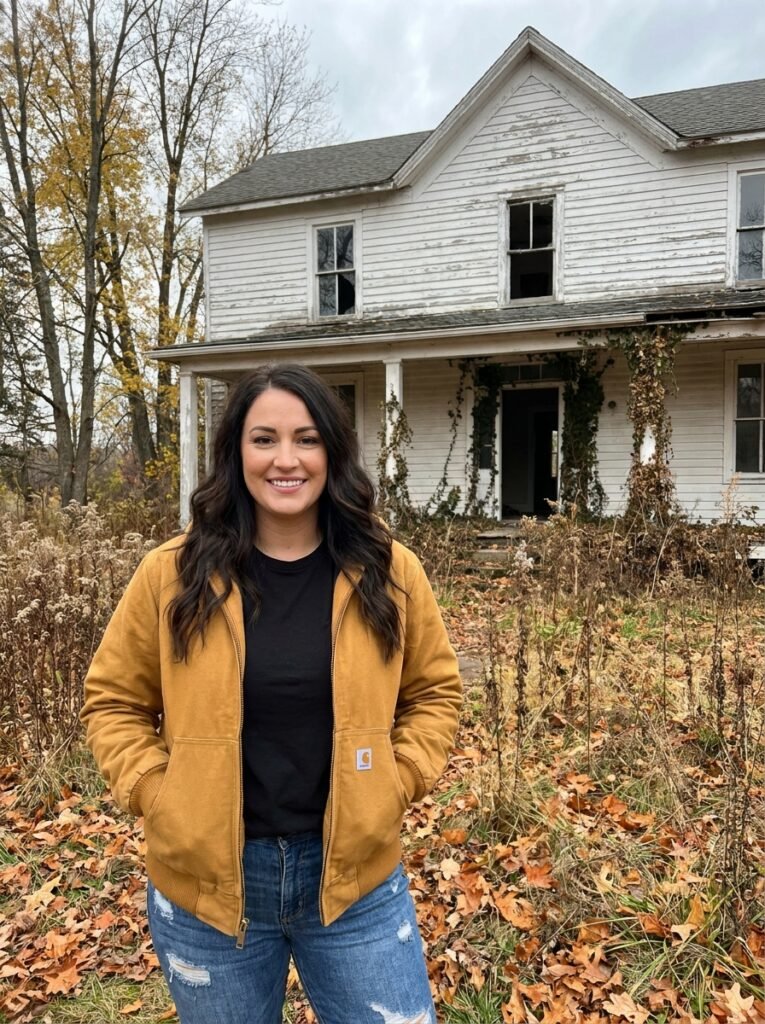
Peeling paint. Broken windows. Two of them in the front, boarded over with plywood that’s turned gray and soft from the rain. Weeds everywhere. Waist-high in the front yard. Growing up through the cracks in the front walk. Kudzu climbing the side of the house like it’s trying to swallow it.
The front porch sags in the middle. The gutters are hanging off on one side. There’s a tree branch on the roof from some storm that nobody ever cleared.
Ezoic
But God, I loved that house.
It sits at the end of a gravel road on the edge of Saluda, North Carolina. A tiny mountain town about forty miles south of Asheville. Population six hundred. One stoplight. A general store. A diner. A railroad track running right through the middle of Main Street.
The house is small. White clapboard. Two bedrooms. One bathroom with a clawfoot tub. A tiny kitchen with a window over the sink that looks out at the Blue Ridge Mountains.
And a front porch with a swing.
I spent every summer there growing up.
From the time I was four until I was seventeen. My mom would drive me up the first week of June and pick me up the last week of August.
Ezoic
I didn’t understand it then. I thought it was just what kids did. Went to Grandma’s for the summer.
I understand it now.
My parents divorced when I was three. My mother worked two jobs. My father disappeared to Florida with a woman named Crystal. Our apartment in Charlotte had roaches and a neighbor who screamed at his wife through the wall every night.
Saluda was the only place I ever felt safe.
Grandma Bea was my mother’s mother. Beatrice Moran. She was five foot one and wore her white hair in a bun and had hands that were always covered in flour.
Ezoic
She’d been widowed young. My grandfather, Walter, died in a sawmill accident in 1971 when my mother was eight. Grandma Bea raised my mother alone in that little white house. She worked as a cook at the Saluda school cafeteria for thirty-two years.
She taught me to bake in that tiny kitchen.
Biscuits first. When I was five. Standing on a wooden step stool so I could reach the counter. She’d let me cut them out with an upside-down juice glass.
Then pie crust. When I was seven. Cold butter, Layla. Cold hands. Don’t overwork it. Treat it gentle, like it’s sleeping.
Ezoic
Then her blackberry cobbler. When I was ten. We’d pick the blackberries ourselves from the bushes along the railroad tracks. We’d come home with purple fingers and scratched-up arms.
Then her pound cake. When I was twelve. A recipe she’d never written down. She made me memorize it.
A pound of butter. A pound of sugar. A pound of flour. A pound of eggs. And a pound of patience.
Ezoic
We’d sit on the porch for hours.
On that swing. In the evenings. After supper. With glasses of sweet tea and the screen door creaking behind us.
We talked about everything. My mom. My dad. School. Boys. God. Death. Whether there are really bears in the mountains. Whether it’s okay to be scared of thunder when you’re twelve.
She listened to every single word I said. Like it mattered.
Ezoic
Nobody else in my life did that.
Some of my happiest memories are from that house.
Maybe all of them.
Grandma Bea died eight years ago. In March. She was eighty-seven. A stroke. In her sleep. In her own bed. In the little white house.
My mother’s brother, my Uncle Gary, was the executor. He lived in Atlanta. He hadn’t been to Saluda in fifteen years.
He sold the house four months after the funeral.
He didn’t tell me until it was done.
“It’s a shack, Layla,” he said on the phone. “In the middle of nowhere. Nobody’s going to live there. I got sixty-one thousand for it. That’s more than it’s worth. Some developer bought it. A flipper. He’s going to fix it up and rent it to tourists.”
Ezoic
“Uncle Gary, I would have bought it. I would’ve found the money.”
“With what?” he said. “You’re a teacher.”
I hung up on him.
I cried for three days.
The flipper never fixed it up.
I found out later. He went bankrupt the next year. The house sat empty. For eight years. Nobody living there. Nobody fixing it. The bank that held the flipper’s loan owned it, but they didn’t care about a tiny house in a tiny mountain town.
It just sat there. Rotting.
Then Grandma Bea’s lawyer called me in May.
A man named Mr. Pruitt. Old. Southern. He’d been Grandma’s lawyer for forty years.
Ezoic
“Ms. Hart,” he said, “I’m calling about a matter concerning your grandmother’s estate.”
“Her estate was settled eight years ago.”
“Most of it,” he said. “But there’s an account. A savings account at the First Bank of Saluda. It was in a trust. Your grandmother set it up in 2015. With very specific instructions.”
“What instructions?”
He cleared his throat.
“She asked that the account be given to you eight years after her death,” he said. “Not before. She was quite specific about that. Eight years. She said you’d need it then more than you’d need it sooner.”
Ezoic
I didn’t say anything.
“The account holds one hundred and twelve thousand, four hundred dollars,” Mr. Pruitt said. “She saved it from her cafeteria pension. And her Social Security. Over thirty years. Twenty dollars at a time, mostly.”
I sat down on my kitchen floor.
“Eight years,” I said. “Why eight years?”
“She didn’t say,” Mr. Pruitt said. “She just said you’d understand when the time came.”
I didn’t understand.
Not then.
But two weeks later, I was scrolling through real estate listings on my phone late at night. I don’t know why. I do it sometimes. When I can’t sleep. Looking at houses we’ll never buy.
Ezoic
And I saw it.
A foreclosure listing. In Saluda.
A photo of a white clapboard house at the end of a gravel road. Weeds waist-high. Plywood on the windows. A porch with a swing.
Bank-owned. Sold as-is. Needs major work. $87,000.
I stared at it for an hour.
The house had been sold out from under me once.
I couldn’t bear losing it twice.
I made an offer the next morning.
Full asking price. Cash. No inspection. No contingencies.
The bank accepted it in two hours.
I didn’t tell Declan.
I knew what he’d say.
“Layla, do you have any idea how much repairs will cost?” Declan snapped.
Ezoic
We were still standing in the kitchen. Our nice kitchen. In our nice townhouse in Ballantyne. With the granite countertops and the stainless steel appliances and the backsplash Declan picked out because it had the best resale value.
“I know it’ll take time,” I said. “But I have savings. The twenty-five thousand that’s left. And I’ll do a lot of the work myself. I’m not asking you to pay for anything.”
He laughed.
“A roof alone is fifteen thousand,” he said. “Minimum. The windows are another eight. The foundation’s probably cracked. Houses that old always have foundation problems. And the plumbing. And the electrical. It’s probably still knob-and-tube wiring. That’s a fire hazard. You’ll have to rewire the whole thing. That’s another twenty.”
Ezoic
“I’ll figure it out.”
“You’ll figure it out.” He shook his head. “You’re a second-grade teacher, Layla. You can’t fix a foundation.”
“Grandma Bea did,” I said. “In 1983. With two neighbors and a car jack.”
He stared at me.
“That’s the worst decision you’ve ever made,” he said. “Don’t come crying to me when you realize it.”
Ezoic
Honestly, that hurt.
After eleven years of marriage, I’d hoped he’d understand.
I’d told him about Grandma Bea a hundred times. About the summers. About the biscuits and the pie crust and the porch swing. About how she was the only person who ever listened to me.
He’d met her. Once. The summer before she died. We drove up for a weekend. He fixed her porch step. He was nice to her.
He’d seen me cry at her funeral.
I thought he’d understand.
Instead, he spent the next two days reminding me what a terrible investment I’d made.
Ezoic
He made a spreadsheet. Of course he made a spreadsheet. Saluda Property — Projected Costs. Roof. Windows. Foundation. Plumbing. Electrical. HVAC. Permits. Property taxes. Insurance.
He printed it out and left it on the kitchen counter.
TOTAL ESTIMATED REPAIRS: $94,000–$127,000.
ESTIMATED MARKET VALUE AFTER REPAIRS: $140,000.
NET RETURN: NEGATIVE.
He’d highlighted NEGATIVE in yellow.
Every time I mentioned fixing something, he’d roll his eyes.
Ezoic
“I’m going to look for a roofer,” I said Tuesday night.
He rolled his eyes.
“I found a guy in Hendersonville who does old windows,” I said Wednesday morning.
He rolled his eyes.
“I’m wasting my time,” I said Wednesday night. “Is that what you’re going to say?”
Ezoic
“I didn’t say it,” Declan said. “You did.”
By the third day, I’d had enough.
Thursday morning. I was packing my lunch for school. He was drinking his coffee at the counter reading the Wall Street Journal on his iPad.
“I’m going up to Saluda this weekend,” I said. “Saturday. I’m going to start cleaning the place up.”
He didn’t look up from his iPad.
“With or without your help,” I said.
He set the iPad down.
“Fine,” he said. “But don’t expect me to get involved.”
Ezoic
I went to school.
I taught twenty-four seven-year-olds about the water cycle. I ate my sandwich at my desk. I graded spelling tests.
At three-forty that afternoon, my phone rang.
I was in my classroom. Cleaning paint off a table. The kids were gone.
It was Declan.
Declan never calls me at work. He texts. Short texts. Running late. Pick up milk. He thinks phone calls during the workday are inefficient.
Ezoic
I answered.
“Hey—”
“Layla.”
Something about his voice immediately worried me.
It was quiet. Strange. Thick. Like he’d been crying. Or was about to.
“Declan? What’s wrong?”
“I’m at your grandma’s house.”
I stopped scrubbing the table.
“Wait. What? Why did you go there?”
He didn’t answer right away. I could hear something in the background. Wind. Birds. The creak of a screen door.
The creak of that screen door. I’d know it anywhere.
Ezoic
“I took the afternoon off,” he said. “I drove up. I wanted to see it. I wanted to look at the foundation. And the roof. I was going to…” He stopped. “I was going to take pictures. Of all the damage. And bring them home and show you.”
“To prove you were right,” I said quietly.
He didn’t deny it.
“Layla,” he said. “I found something.”
My stomach dropped.
“I don’t even know what to say,” he said.
“Declan. What’s going on? What did you find? Is it the foundation? Is the house falling down? Is it mold? Is somebody living there?”
There was a long pause.
So long I thought the call had dropped.
Then he said:
“Get in the car. You need to see this.”
I tried asking more questions.
He wouldn’t explain.
“Just come,” he kept saying. “Please. Just get in the car and come.”
Ezoic
“Declan, it’s two hours.”
“I know,” he said. “I’ll wait.”
I rushed over.
I left my classroom without finishing the table. I told the front office I had a family emergency. I drove up I-26 with my hands shaking on the steering wheel.
Charlotte. Gastonia. Spartanburg. Then up into the mountains. The road getting steeper and curvier. The trees closing in. The air getting cooler.
I didn’t turn on the radio. I didn’t call anybody.
Ezoic
I just drove. And thought about every terrible thing it could be.
I pulled into the gravel driveway at 5:52.
The sun was going down behind the mountains. Everything was gold and orange.
Declan’s silver Audi was parked in the weeds. Looking ridiculous. Like a tuxedo at a pig roast.
Ezoic
And Declan was standing outside.
On the front walk. Between the cracks and the weeds. In his work clothes. His khakis and his blue button-down. His sleeves rolled up to his elbows. His tie gone.
His shirt was covered in dust. White dust. Plaster dust. All down the front.
His hands were filthy.
And his face was pale.
I got out of the car.
“Declan?”
He didn’t say anything.
He just looked at me. His eyes were red.
He’d been crying.
My husband. Who doesn’t cry. Who didn’t cry at our wedding. Who didn’t cry at his own father’s funeral.
Ezoic
He’d been crying.
He barely said a word as we went inside.
He walked up the porch steps ahead of me. Careful. Stepping over the soft spot in the middle where the wood was rotted.
Except he didn’t step on the third step.
He stepped over it. Like he knew.
He opened the screen door. It creaked. That same creak. I almost started crying right there.
He held it open for me.
I stepped through the doorway.
And I froze.
I grabbed the doorframe to steady myself.
The front room was the living room.
When I was a kid, it had wallpaper. Faded yellow wallpaper with little blue flowers. Grandma Bea put it up in 1979, she told me once. She said she picked it because it reminded her of her mother’s kitchen in Tennessee.
Ezoic
The wallpaper was gone.
Not all of it. Most of it. One whole wall. The long wall, across from the fireplace. Twelve feet wide. Floor to ceiling.
Declan had stripped it.
Long strips of yellow wallpaper lay curled on the floor at the bottom of the wall. Piles of them. Like shed skin.
And underneath, on the bare plaster, there was writing.
Everywhere.
Every inch of the wall. Floor to ceiling. Corner to corner.
Ezoic
Pencil. Faded gray pencil. Some of it dark. Some of it so faint you could barely see it. Small, careful, slanted handwriting.
Grandma Bea’s handwriting.
I’d know it anywhere. I’d seen it on a thousand recipe cards. On every birthday card I ever got. On the grocery list taped to her refrigerator every summer of my childhood.
Dates. Names. Sentences. Paragraphs.
And down the left side of the wall, near the doorway, a column of short horizontal lines. With dates written next to each one.
Ezoic
Pencil lines. Climbing up the wall.
From about three feet off the floor to about five foot six.
My height marks.
I couldn’t move.
I stood in the doorway holding onto the frame.
Declan came up behind me. He didn’t touch me. He just stood there.
“I didn’t mean to,” he said quietly. “I wasn’t trying to find anything. I came up to look for damage. To prove you wrong.”
Ezoic
His voice cracked.
“The wallpaper was peeling in the corner,” he said. “I thought there was mold behind it. Water damage. I pulled the corner. To take a picture. To show you.”
He swallowed.
“And there was writing underneath,” he said. “So I pulled a little more. And there was more writing. And then I couldn’t stop.”
He looked at the wall.
“It took me three hours,” he said. “I did it with my hands. And a butter knife from the kitchen drawer. I was so scared I’d tear something.”
Ezoic
I walked into the room.
Slowly. Like I was walking into a church.
I stopped in front of the wall.
I read the first thing I saw. At eye level. In the middle.
June 9, 1989.
Layla came today. She’s four. Her mother dropped her off and drove away fast and didn’t look back. Layla stood at the screen door and watched the car go until it turned the corner. She didn’t cry. She just stood there. Four years old and she didn’t cry. Somebody taught her not to.
I’m going to teach her she can.
I put my hand over my mouth.
I read the next one. Just below it.
June 22, 1989.
She cried today. Finally. She skinned her knee on the porch steps and I picked her up and she cried for twenty minutes in my lap on the swing. Then she fell asleep. I didn’t move for two hours. My leg went numb. I didn’t care.
I moved to the left.
July 4, 1990.
Biscuits today. Her first ones. She cut them with the juice glass. They were lopsided. She was so proud. She wanted to save one for her mother. I wrapped it in wax paper and put it in the freezer. Her mother never came to get it.
August 3, 1992.
She asked me today if her daddy loved her. She’s seven. I told her I didn’t know what was in her daddy’s heart. But I knew what was in mine. She said, “What’s in yours, Grandma?” And I said, “You. Just you. All of it.” And she said, “That’s a lot of room.” And I said, “Yes, baby. It’s a lot of room.”
I couldn’t breathe.
I put my hand flat on the wall. On the plaster. On the pencil.
It was cold.
There were hundreds of them.
Every summer. Every year. From 1989 to 2006. Some summers had ten entries. Some had thirty.
Pie crust today. Cold butter. Cold hands. She overworked it. We’ll try again tomorrow.
She’s scared of thunder. Sat with her in the bathtub during the storm. Told her it’s just the angels moving furniture.
She asked me about God. I told her I didn’t know much. But I knew He made blackberries, so He can’t be all bad.
First time she rode her bike all the way to the general store by herself. I watched from the porch the whole way. My heart was in my throat.
She got her period. She was so scared. We sat on the bathroom floor. I told her about my first one in 1945. We laughed until we cried.
Ezoic
She told me about a boy. Jeremy something. He’s in her class in Charlotte. She says he’s the cutest boy in the world. She’s eleven. Lord help us.
Pound cake today. A pound of butter. A pound of sugar. A pound of flour. A pound of eggs. And a pound of patience. She has the first four. Working on the fifth.
I went down the wall slowly. Reading.
Declan followed behind me. Silent.
Every few feet, I had to stop. I had to put my hand on the wall and close my eyes. Then I’d keep reading.
June 14, 1999.
She’s fourteen. Her mother’s drinking again. Layla told me tonight on the porch. She didn’t cry when she told me. She was so matter-of-fact. Like she was telling me about the weather. I asked her how long. She said since Christmas.
Six months. Six months she’s been taking care of her mother. A fourteen-year-old. Making dinner. Hiding bottles. Getting herself to school.
She never told me. On the phone. Every Sunday. “I’m fine, Grandma. Everything’s fine.”
I’m going to call Gary tomorrow. Something has to change.
June 15, 1999.
Gary won’t help. He says it’s not his business. He says Linda’s a grown woman.
So I’ll do it myself.
August 28, 1999.
I drove to Charlotte today. First time on the interstate in eleven years. I was terrified. I went to Linda’s apartment. I sat at her kitchen table. I told her if she didn’t go to the treatment place in Asheville, I’d go to the courthouse and ask for Layla.
She cried. She threw a glass at the wall. Then she went.
Layla doesn’t know. I’m not going to tell her. She’ll think it’s her fault. It’s not her fault. It was never her fault.
I sat down on the floor.
Right there. In the middle of the living room. In the plaster dust and the curled strips of yellow wallpaper.
My mother went to treatment in the fall of 1999. In Asheville. Ninety days. She came home sober. She’s been sober for twenty-six years now.
I always thought she decided on her own.
I never knew.
I never knew Grandma Bea drove to Charlotte.
She was seventy-one. She was terrified of the interstate. She drove anyway.
For me.
Declan sat down on the floor next to me.
He didn’t say anything for a long time.
“There’s more,” he said finally. Quietly. “On the right side. Near the window. The later ones.”
He helped me up.
The entries on the right side of the wall were different.
The handwriting was shakier. Older. The pencil was lighter. Like she’d been pressing less hard.
They started in 2007. After I stopped coming every summer. After college. After I got my first teaching job.
Ezoic
June 2007.
No Layla this summer. She’s teaching summer school in Charlotte. She called. She said she’s sorry. I told her not to be sorry. I told her this is what I raised her for. To go.
The house is so quiet.
June 2009.
No Layla again. She has a new apartment. A new job. A life. Good.
I made biscuits today anyway. I cut them with the juice glass. I made too many. I gave them to the Hendersons next door.
June 2012.
She’s getting married! In October. To a man named Declan. She called last night and told me all about him. He works with money. He’s very serious. She said he burned a hot dog explaining compound interest and laughed so hard he had to sit down.
She laughed when she told me. I haven’t heard her laugh like that in years.
I already like him.
Declan made a sound next to me. I looked over at him. He was staring at the wall with his hand over his mouth.
July 2015.
Layla brought Declan up for the weekend. First time I’ve met him. He’s tall. Quiet. He doesn’t say much. He holds her hand when they walk.
He fixed my porch step. The third one. It’s been loose for two years. I didn’t ask him. He just noticed. He went out to his car and got a toolbox. A brand-new toolbox. Like he’s never used it. He spent all afternoon on that step. He measured it four times.
Layla said, “Declan, you don’t have to do that.” And he said, “Yes, I do.”
Ezoic
I turned and looked at my husband.
He was crying.
Standing in my grandmother’s living room in his dusty work clothes. Tears running down his face. Looking at the wall.
“Keep reading,” he whispered.
July 2015, later.
Declan and I talked tonight. On the porch. After Layla went to bed. Just the two of us.
He told me about his father. About a house. In Gastonia. When he was twelve. His father bought an old farmhouse. A fixer-upper. His father’s dream. He put everything into it. Every penny. Borrowed against everything. Said it was going to be their forever home.
Ezoic
It wasn’t. The foundation was cracked. The roof leaked. The money ran out. The bank took it when Declan was fourteen. His father left a month later. Declan said he never saw him again.
He said he’s been afraid of houses ever since. Afraid of wanting something too much. Afraid of losing it.
He said, “I make spreadsheets so nothing can ever surprise me.”
I told him some of the best things in life are surprises.
He didn’t believe me. I could tell.
I looked at Declan.
He’d sat back down on the floor. With his knees pulled up. Staring at the wall.
“You never told me,” I whispered. “About your dad. The farmhouse. You told me he left. You never told me why.”
Ezoic
“I never told anybody,” Declan said. “Except her. That one night. On the porch.”
He wiped his face with the back of his dusty hand.
“I don’t know why I told her,” he said. “I’d known her for one day. She just sat there. On the swing. And listened. Like it mattered.”
“She did that,” I said.
“I know,” Declan said. “I know she did.”
There was one more entry.
At the very end. On the far right side of the wall. Near the window. Lower than the others. The handwriting was so shaky it was hard to read.
The pencil was barely there.
I had to kneel down to see it.
October 2016.
I’m going to paper over this wall. One more time. Before I’m gone. My hands aren’t so good anymore. It’ll take me a while.
I’ve been writing on these walls since 1971. Since Walter died. I couldn’t talk to anybody about it. So I talked to the walls. And then I papered over them so nobody would see. A new layer every few years.
Ezoic
This is the last layer.
I don’t know who’ll find this. Gary will sell the house when I’m gone. I know he will. He thinks it’s a shack. Maybe someday somebody will strip this paper and find all of it. Some stranger. They’ll think I was a crazy old woman writing on her walls.
But if it’s Layla, if somehow it’s my Layla, I want her to know:
This wall is every summer. Every single one. Every biscuit and every skinned knee and every thunderstorm. I wrote it all down so I’d never forget.
Ezoic
And I wrote it down so you’d know.
You were never too much, baby. You were never a burden. You were never a reason anybody left.
You were the reason I stayed.
— Grandma
P.S. Declan, if you’re reading this too: Check under the step you fixed. I left something for both of you.
I didn’t move.
I knelt there on the floor in front of the wall with my hand pressed flat over the last words.
You were the reason I stayed.
I cried. I don’t know how long. Declan sat next to me on the floor and didn’t say anything. He didn’t try to stop me. He just sat there. Close. With his shoulder touching mine.
When I finally stopped, the sun had gone down. The room was dark. Just a little gray light coming in through the window.
“Did you look?” I asked. “Under the step?”
Declan shook his head.
“I saw it about an hour before I called you,” he said. “That last line. I almost went. I stood on the porch for ten minutes looking at it.” He swallowed. “I couldn’t. It wasn’t mine to open. Not without you.”
He went out to his car and got a flashlight. And the toolbox.
The same toolbox. Red. Craftsman. I’d seen it in our garage for eleven years. He used it maybe twice a year. To hang pictures. To fix the garbage disposal.
Ezoic
He carried it out to the porch.
Ezoic
He knelt down in front of the third step.
He looked at it for a long time. Running his hand over the wood.
“I remember this board,” he said quietly. “I picked it out at the lumber store in Hendersonville. Pressure-treated pine. I cut it myself. I measured it four times. I was so scared I’d mess it up in front of her.”
He looked up at me.
“It’s the only step that’s not rotted,” he said.
I looked at the porch. He was right. Every other step was soft and gray and crumbling. The third one was solid. Still level.
Nine years later.
He pried it up.
Carefully. With a flat bar. Slowly. Like he was afraid he’d hurt it.
The board came up with a long, low creak.
Underneath, in the dark space below the step, there was a box.
A cookie tin. Round. Blue. With a picture of a snowy Christmas village on the lid. Faded and rusted at the edges.
I knew it.
Ezoic
Grandma Bea kept her buttons in it. When I was little. Hundreds of buttons. I used to dump them out on the kitchen table and sort them by color.
Ezoic
Declan lifted it out. He handed it to me.
I sat down on the porch swing.
The chains creaked. That same creak.
I opened the tin.
There were no buttons.
There was a stack of index cards. Tied with kitchen twine.
Her recipes.
Every one. The biscuits. The pie crust. The blackberry cobbler. The pound cake. Written out in her careful handwriting. Every one I knew by heart. And dozens I didn’t.
On top of the stack was one that said POUND CAKE across the top. Underneath, in parentheses:
(Layla already knows this one. But in case she forgets the fifth pound.)
Under the recipes, there was a small velvet bag.
Ezoic
Inside it was a ring. Thin gold band. Worn almost flat on one side.
Ezoic
Her wedding ring. From my grandfather. Walter. 1961.
She wore it every day for fifty-five years. Even after he died. Even when her knuckles got so swollen she could barely get it off.
I thought it was buried with her.
And under the ring, at the bottom of the tin, there was an envelope.
Cream-colored. Sealed.
On the front, in her handwriting:
For Layla and Declan.
Open together.
I looked at Declan.
He sat down on the swing next to me.
I opened the envelope.
I read it out loud. On the porch. In the dark. With Declan holding the flashlight.
Ezoic
My dear Layla and Declan,
Ezoic
If you’re reading this, you found the wall. And the step. And this tin.
Which means one of you came back.
I don’t know how. Gary will sell the house. I know he will. I’ve told him not to, but he won’t listen. He thinks it’s a shack. Maybe it is.
But I asked Mr. Pruitt to hold onto some money for Layla. Eight years. I told him to wait eight years. Because I figure that’s about how long it’ll take for whoever buys this place to give up on it. People always give up on old houses. They see the cracks and the leaks and the weeds and they quit.
I’m hoping that when the money comes, Layla, it’ll be about the time this house is for sale again.
I’m an old woman. I’m probably wrong. But I’m hoping.
I stopped reading.
I couldn’t see the paper.
Declan took it gently out of my hand. He held the flashlight in one hand and the letter in the other.
He kept reading. Out loud. His voice was shaking.
Declan.
Ezoic
I know you’re scared of houses. You told me on this porch. About your father. About the farmhouse in Gastonia. About the bank.
Ezoic
I want you to know something.
Your father didn’t lose that house because he loved it too much. He lost it because he tried to do it alone. He didn’t ask for help. He didn’t let anybody in. He was too proud. Or too scared. Or both.
Houses don’t fall down because people love them. They fall down because people stop showing up.
I fixed the foundation of this house in 1983 with two neighbors and a car jack. I fixed the roof in 1991 with my church friends. I fixed the plumbing in 2002 with a boy from the high school shop class. I never did a single big thing alone. Not once. Not in forty-five years.
If Layla buys this house back, she’s going to need help. More than she’ll admit. She’s like me. She doesn’t ask.
So I’m asking for her.
Please help her, Declan.
Not with money. I left her money. She doesn’t need your money.
Help her with your hands. The way you fixed my step. You measured it four times. You were so careful. You were so scared to get it wrong.
That’s exactly the kind of man this house needs.
You fixed one step in an afternoon. I bet you could fix the whole porch.
Declan stopped.
Ezoic
He couldn’t keep going.
Ezoic
He sat on the swing with the letter in his hand and the flashlight pointing at the floor and cried.
Not quiet crying. Not the kind where you wipe your eyes and pretend it’s allergies.
The kind that shakes your whole body.
I took the letter from him.
I read the last part myself.
One more thing. And then I’ll let you go.
Layla, honey. I know you two have been trying for a baby. You told me last Christmas on the phone. You said it hasn’t happened. You said you don’t know if it will.
I don’t know either. I’m not God. I just know about blackberries.
But I know this. I wasn’t Layla’s mother. I was her grandmother. I didn’t give birth to her. She came to me at four years old standing at a screen door, watching a car drive away, too scared to cry.
And I loved her more than anything I’ve ever loved in my life.
You don’t have to make a child to love one. Sometimes they just show up at your door. Sometimes they need a porch and a swing and somebody to sit with them during the thunder.
This house has two bedrooms.
Ezoic
Think about it.
Ezoic
I love you both. All the room there is.
— Grandma Bea
We sat on the porch swing in the dark for a long time.
The chains creaking. The crickets singing in the weeds. Somewhere down the mountain, a train going through Saluda. Its whistle long and low.
Neither of us said anything.
Then Declan said it.
“I’m sorry.”
I looked at him.
“I’m so sorry, Layla,” he said. “For what I said. The dumbest way to waste money. The worst decision you’ve ever made. The spreadsheet. The yellow highlighter.” He shook his head. “I highlighted NEGATIVE in yellow. Like you were a bad stock.”
“You were scared,” I said.
“I was terrified,” he said. “When you told me. In the kitchen. I heard old house and fixer-upper and all the money, and I was fourteen years old again. Standing in the driveway in Gastonia watching the bank put a padlock on the front door. Watching my dad’s truck drive away.”
He wiped his face.
Ezoic
“I didn’t hear you,” he said. “I didn’t hear Grandma Bea. I didn’t hear summers. I didn’t hear biscuits and porch swing. I just heard foreclosure.”
Ezoic
“Why didn’t you ever tell me?” I said. “About the farmhouse? Eleven years, Declan.”
He was quiet for a long time.
“Because I was ashamed,” he said finally. “Because I thought if you knew where I came from, you’d look at me differently. The poor kid whose dad lost everything and ran.” He laughed bitterly. “So I became the guy with the spreadsheets. The guy who’s never surprised by anything. The guy who knows exactly what everything costs.”
He looked out at the dark yard. At the weeds. At the shapes of the mountains against the sky.
“I know what everything costs,” he said quietly. “I just forgot what anything’s worth.”
We slept there that night.
In the house. On the living room floor. In front of the wall.
We didn’t plan to. It was too late to drive back to Charlotte. And neither of us wanted to leave.
Declan went to the Dollar General on Highway 176 and bought two sleeping bags and a lantern and a bag of beef jerky and two bottles of water. We lay on the floor in our sleeping bags with the lantern between us.
We read the wall.
All of it. Every entry. From 1989 to 2016. Out loud. Taking turns.
When we got to the end, Declan turned off the lantern.
Ezoic
We lay there in the dark. In my grandmother’s living room.
Ezoic
“Layla,” he said.
“Yeah?”
“Can I help?”
I turned my head. I could barely see him in the dark.
“With the house,” he said. “Can I help fix it?”
I didn’t answer right away.
“Not because of the letter,” he said. “Not because she asked me to. Because I want to.” He swallowed. “Because I fixed one step nine years ago and it’s the only thing on this porch that’s still standing. And I want to find out if I can do more.”
I reached over in the dark. I found his hand.
“Yes,” I said.
It took us fourteen months.
I won’t pretend it was easy. Declan’s spreadsheet wasn’t wrong. The roof was fifteen thousand. The windows were nine. The wiring was knob-and-tube, just like he said. That was another eighteen.
Ezoic
The foundation wasn’t cracked, though.
Ezoic
When the inspector came out, he crawled under the house with a flashlight. He was down there for twenty minutes. When he came out, he was laughing.
“Somebody jacked this foundation up and poured new footings by hand,” he said. “Years ago. Looks like the eighties. Not a professional job. But by God, it’s solid. Better than half the new construction I see.”
With two neighbors and a car jack.
We drove up every weekend.
Friday night after school and work. Back to Charlotte late Sunday.
Declan learned everything. YouTube videos. Library books. He bought a used truck. A real one. A 2009 Ford F-150 with a hundred and ninety thousand miles on it. He sold his Audi to pay for it.
“The Audi doesn’t fit a sheet of drywall,” he said.
He measured everything four times.
He learned to hang drywall. He learned to replace windows. He learned to tear out rotted floor joists and sister new ones. He learned to replace the porch.
All of it. Except the third step.
He left that one exactly where it was.
Ezoic
And we didn’t do it alone.
Ezoic
That was the thing. That was the thing Grandma Bea knew and we didn’t.
People came.
The first weekend, a woman knocked on the screen door. Seventy-something. White hair. Overalls.
“You’re Bea’s granddaughter,” she said. It wasn’t a question. “The little one. With the bike.”
“Yes, ma’am.”
“I’m Dottie Henderson,” she said. “From next door. I used to get your biscuits. The extra ones.” She looked past me at the wall. At the writing. Her face changed. “Oh,” she whispered. “Oh, Bea.”
She came back the next day with her son. He’s a plumber. He redid the bathroom. He wouldn’t take a dime.
“Your grandma fed me lunch every day for four years in the school cafeteria,” he said. “When my daddy was out of work. She’d slide an extra roll on my tray and wink. Every single day. I’m not taking your money.”
Then the pastor from Saluda First Baptist came. With six men from the church. They did the roof in two Saturdays.
“Bea taught Sunday school for thirty years,” the pastor said. “Fourth grade. Every kid in this town learned the books of the Bible from her. With a song she made up.”
Then a man from the volunteer fire department came. He helped Declan with the wiring. He’d been an electrician for forty years.
Ezoic
“She sat with my wife,” he said. “When my wife was dying. In 2004. Every Tuesday. For six months. Brought her pound cake. Sat by the bed and read to her.” He looked at the wall. “I never knew she wrote on her walls. But it makes sense. She listened to everybody. She had to put it all somewhere.”
Ezoic
They kept coming.
All fourteen months. Every weekend. People from Saluda. People who remembered her.
The woman from the diner who brought us lunch every Saturday. The man from the general store who gave us lumber at cost. The high school shop teacher who brought his class up on a field trip to help Declan build new kitchen cabinets.
“Bea did this for us in 2002,” the shop teacher said. “Let my class redo her plumbing. As a project. She fed us cobbler the whole time.”
Every single one of them stood in front of the wall.
Every single one of them read it.
Some of them found their own names.
Dottie Henderson found hers.
July 1994. Dottie’s husband passed this morning. I took her biscuits. We sat on her porch and didn’t say anything. Sometimes that’s the only thing to say.
She stood in front of the wall with her hand over her mouth for a long time.
Ezoic
“I didn’t know she wrote that down,” she whispered. “I didn’t know she remembered.”
Ezoic
“She remembered everything,” I said.
We kept the wall.
Of course we kept the wall.
Declan built a frame around it. A big wooden frame. Twelve feet wide. Hand-carved. He spent two months on it.
He covered it with a sheet of museum glass. Special UV-filtering glass. So the pencil wouldn’t fade. It cost four thousand dollars. He didn’t put it on a spreadsheet.
The wall is still there. In the living room. Across from the fireplace. Every word. Every summer. Every height mark.
And at the bottom right corner, near the window, under the glass, the last entry.
You were the reason I stayed.
We finished in November.
Fourteen months. Ninety-one thousand dollars. Declan kept track. He couldn’t help it.
He showed me the spreadsheet on the day we finished. Sitting on the porch swing. On the new porch. With the old third step.
Ezoic
SALUDA PROPERTY — FINAL COSTS.
Ezoic
TOTAL: $91,342.
ESTIMATED MARKET VALUE: $165,000.
NET RETURN: POSITIVE.
He’d highlighted POSITIVE in yellow.
Then underneath, in a new row, he’d typed something else.
ACTUAL VALUE: (cannot be calculated)
We put our townhouse in Charlotte on the market in January.
I transferred to the elementary school in Saluda. They needed a second-grade teacher. There are fourteen kids in my class.
Declan works remotely now. Three days a week. For a smaller firm. Less money. He says he doesn’t care. He spends the other two days building things in the garage he built behind the house. Furniture, mostly. He sells it at the craft fair in Hendersonville. He’s surprisingly good at it.
He measures everything four times.
And in April, we did the thing Grandma Bea told us to think about.
Ezoic
We’d been trying for a baby for six years. It never happened. We did the tests. The doctors. One round of IVF that cost eighteen thousand dollars and didn’t work.
Ezoic
I’d stopped talking about it. Declan had stopped asking.
Then, one night in December, sitting on the porch swing with the new Christmas lights on, Declan said, “The letter. The last part. About the two bedrooms.”
I didn’t say anything.
“I’ve been thinking about it,” he said. “For a year. Every time I walk past that wall. Every time I see the height marks.”
“Me too,” I said.
He took my hand.
“Do you think we could?” he said. “Do you think we’d be any good at it?”
I looked at the wall through the front window. Glowing in the lamplight.
I’m going to teach her she can.
“I think,” I said, “Grandma Bea already showed us how.”
We did the classes. The home study. The background checks. The fingerprints. The CPR certification. The inspections.
The social worker came to the house in March. Her name was Toni. She walked through every room. She opened every closet. She tested the smoke detectors.
Ezoic
She stopped in the living room.
Ezoic
She stood in front of the wall for twenty minutes.
When she turned around, her eyes were wet.
“I’ve done two hundred home studies,” she said. “I’ve never seen anything like this.”
“It’s my grandmother’s,” I said.
Toni nodded slowly.
“I can tell,” she said.
Her name is Tilly.
She came in May. On a Thursday. Toni drove her up from Asheville.
She’s nine years old. Skinny. Freckles. Brown hair in a ponytail that won’t stay. She’s been in four foster homes in two years. Her mother’s in prison in Raleigh. Her father’s unknown.
She had one bag. A purple backpack. Everything she owned was in it.
Toni parked in the driveway. Tilly got out of the car. She stood in the gravel and looked at the house. At the white clapboard. The green shutters. The porch swing.
She didn’t say anything.
She didn’t cry.
Ezoic
She just stood there. Holding her backpack. Looking at the house the way you look at something you already know you’re going to lose.
Ezoic
Toni walked her up to the porch. Declan and I were standing at the top of the steps.
Tilly looked at us. Then at the steps.
Then she walked up them.
When she got to the third step, she stopped.
She looked down at it.
“This one’s different,” she said. It was the first thing she said. “It’s a different color.”
Declan knelt down so he was eye level with her.
“That’s right,” he said. “That’s the oldest one. I fixed it a long time ago. For a lady who used to live here. She was very special.”
Tilly looked at the step. Then at Declan.
“Why didn’t you replace it like the others?” she asked.
Declan thought about it.
“Because some things are worth keeping,” he said. “Even when everything around them is new.”
That first night, Tilly didn’t eat dinner.
Ezoic
She sat at the kitchen table and pushed her mac and cheese around her plate and didn’t say anything.
Ezoic
After dinner, she went to her room. The second bedroom. The one that used to be mine every summer. We painted it yellow. She chose the color from a paint chip at the hardware store in Hendersonville. Sunshine Morning.
She closed the door.
At ten o’clock, a storm came over the mountain.
A big one. Thunder so loud it shook the windows.
I heard her door open.
I went into the hallway.
Tilly was standing there. In her pajamas. Holding her purple backpack against her chest. Her face was white.
She wasn’t crying.
She was trying so hard not to.
I knelt down.
“Are you scared of thunder?” I asked.
She nodded. Just barely.
“Me too,” I said. “When I was your age. In this house. Right in this hallway.”
Ezoic
She looked at me.
Ezoic
“What did you do?” she whispered.
I took her hand.
I walked her into the bathroom. The one with the clawfoot tub. The one Dottie Henderson’s son replumbed.
I climbed into the tub. In my pajamas. I sat down.
I held out my arms.
Tilly looked at me for a long time.
Then she climbed in.
She sat in my lap. In the bathtub. With her backpack still clutched to her chest.
The thunder cracked. She flinched.
“It’s just the angels,” I said. “Moving furniture.”
She looked up at me.
“Really?”
“That’s what my grandma told me,” I said. “In this exact bathtub. When I was seven.”
Tilly didn’t say anything.
The thunder rolled again. Farther away now.
Ezoic
And then, very quietly, sitting in my lap in my grandmother’s clawfoot tub in the middle of a mountain thunderstorm, she started to cry.
Ezoic
She cried for twenty minutes.
Then she fell asleep.
I didn’t move for two hours. My leg went numb.
I didn’t care.
Declan found us there at midnight.
He stood in the bathroom doorway. He looked at us. Tilly asleep in my lap. Her backpack finally fallen on the floor of the tub. Her face wet.
He didn’t say anything.
He just went and got a blanket. He tucked it around both of us.
Then he sat down on the bathroom floor next to the tub.
And stayed.
The next morning, I made biscuits.
I stood Tilly on the wooden step stool so she could reach the counter. I gave her an upside-down juice glass.
Ezoic
“Cut them out,” I said. “As many as you can.”
Ezoic
She cut them. They were lopsided. All of them.
She was so proud.
That night, after Tilly went to bed, I went into the living room with a pencil.
Not to the big wall. That one’s under glass. It’s finished.
To the doorframe. The one between the living room and the hall. The one I grabbed when I first walked in and saw the wall. Declan had replaced the trim. Fresh white paint. Clean.
I knelt down.
I made a small horizontal line on the doorframe. At about four foot two.
And next to it, in pencil, I wrote:
Tilly. May 2026.
Then I took a piece of paper and the roll of yellow wallpaper with little blue flowers that Declan found online. A reproduction. The same pattern Grandma Bea put up in 1979.
We’d been saving it.
I went into the hallway. To the long blank wall between the bedrooms. Fresh plaster. Declan put it up in October.
I wrote on the bare plaster. In pencil. In small, careful handwriting.
May 15, 2026.
Tilly came today. She’s nine. She stood in the driveway with her backpack and looked at the house like she already knew she’d have to leave it.
She didn’t cry.
Somebody taught her not to.
I’m going to teach her she can.
Then I cut a strip of the yellow wallpaper with the little blue flowers.
And I papered over it.
People ask me sometimes about the house.
Our friends from Charlotte. Teachers I used to work with. Declan’s old coworkers from Brightwater. They come up to visit and they stand in the living room and look at the wall under the glass and ask how we found it.
I tell them the truth.
My husband went up to my grandmother’s house to prove I’d made the worst decision of my life.
He stripped the wallpaper looking for mold. For water damage. For proof of everything that was wrong.
And underneath, he found everything that was right.
Grandma Bea knew something that took me thirty-eight years and eighty-seven thousand dollars to learn.
The value of a house isn’t the roof or the foundation or the wiring or the windows.
Ezoic
It’s what’s written on the walls.
Ezoic
The biscuits and the skinned knees and the thunderstorms. The summers. The person who sat with you on the swing and listened like it mattered. The person who drove to Charlotte on the interstate at seventy-one years old even though she was terrified.
The person who fixed one step and measured it four times.
You can’t put that on a spreadsheet.
Declan tried.
He finally gave up.
The house is full now.
Tilly’s room is yellow. Sunshine Morning. She has a bookshelf Declan built and a quilt Dottie Henderson made and a jar of buttons on her windowsill. I gave her Grandma Bea’s blue cookie tin. She sorts the buttons by color on the kitchen table. Hundreds of them. I bought them at a flea market in Asheville.
She’s ten now. She calls us Layla and Declan. Most days.
Some days, when she’s tired or scared or half asleep, she calls me Mom.
I don’t correct her.
Last week, she came home from school and found Declan on the porch.
Ezoic
He was on his knees in front of the third step. With his red toolbox. The old one. Measuring.
Ezoic
“What are you doing?” she asked.
“The step’s getting a little loose,” Declan said. “After ten years. I’m going to tighten it.”
“Can I help?”
Declan looked up at her.
He held out the tape measure.
“You’ve got to measure it four times,” he said. “That’s the rule.”
“Why four?”
Declan thought about it.
“Because some things are worth getting exactly right,” he said.
Tilly knelt down next to him. On the porch. In her school clothes.
She measured the step.
Four times.
And sometimes, at night, after everybody’s asleep, I go into the hallway with a pencil.
I peel back the corner of the yellow wallpaper with the little blue flowers.
Ezoic
And I write.
Ezoic
She rode her bike to the general store by herself today. I watched from the porch the whole way.
She asked me if her mom loved her. I told her I didn’t know what was in her mom’s heart. But I knew what was in mine.
She said, “What’s in yours?”
And I said, “You. Just you. All of it.”
And she said, “That’s a lot of room.”
And I said, “Yes, baby. It’s a lot of room.”
Then I smooth the wallpaper back down.
And I go to bed.
And the house holds it.
The way it held everything else.
For somebody to find someday.