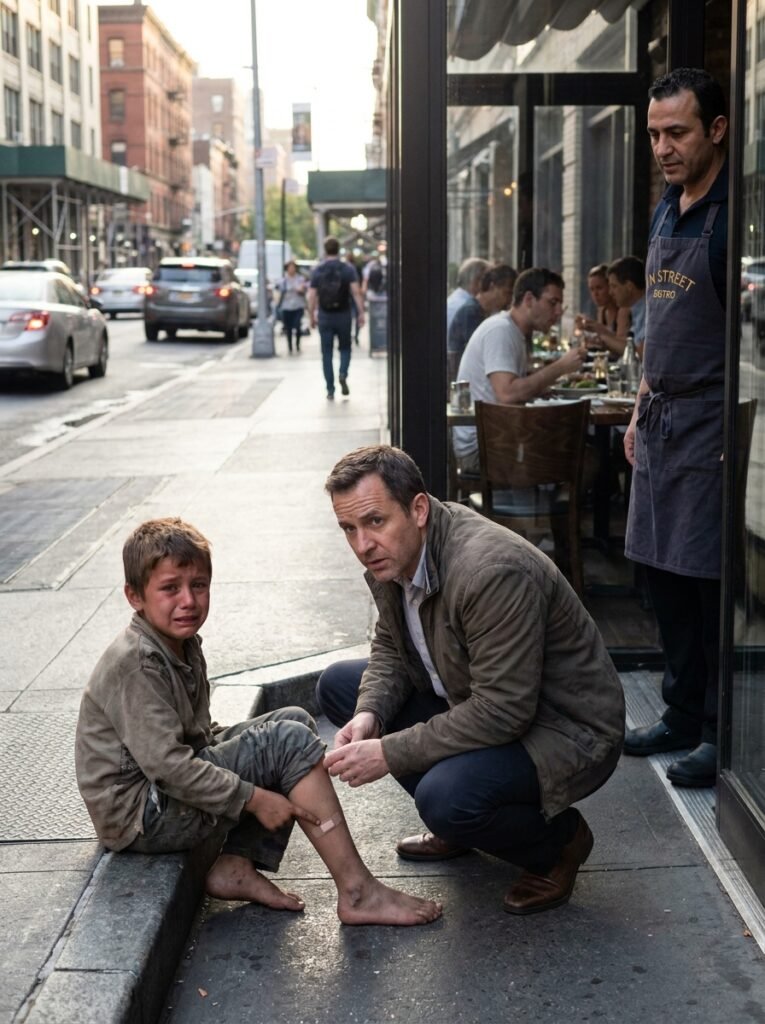
The boy stepped back toward the restaurant table with one thing on his mind: getting his shoes back. After standing outside barefoot while his family continued eating, he walked through the doorway carrying the weight of a moment no child should have experienced. His father had already seen the small cut on his heel, the dirt near the injury, and the way his son tried to act like everything was fine.
The evening had started as a family dinner, the kind of gathering where everyone was supposed to sit together, share food, and enjoy time away from everyday stress. Plates were filled, drinks sat on the table, and conversations moved around the room. But a simple problem with a pair of muddy shoes turned into something much bigger.
His sister had decided the shoes were embarrassing. She believed the dirt made the family look bad in front of others at the restaurant. Instead of helping the child clean them, she removed the shoes from the situation entirely and sent him outside.
No one at the table followed him.
No one checked if he was okay.
When his father arrived and found him outside, the first thing he noticed was not the argument. It was his son standing barefoot on the sidewalk, carefully keeping pressure away from his injured heel.
The child immediately tried to reassure him.
“Dad, I’m okay.”
But a parent can often tell when those words are meant to protect them instead of describe the truth.
The restaurant owner was the person who opened the door next. He recognized the child because the reservation had included a photograph. That small detail suddenly made the situation even clearer. This was not a stranger wandering outside. This was the child who was supposed to be part of the dinner inside.
The owner looked from the boy to the dining room and asked the question nobody else had asked.
Why was he out there?
The father did not answer immediately because he was still trying to understand how the people sitting at the table had accepted what happened.
When they walked back inside together, the family finally saw the reality of the moment. Food was still untouched. Glasses still sat on napkins. The evening had continued as if nothing serious had happened.
His sister explained that she only wanted the boy to return once his shoes were clean. She insisted she was not trying to hurt him. She said it was a nice restaurant and people were noticing.
But the restaurant owner had noticed something else.
He had noticed a child standing alone outside.
The father did not need to raise his voice to make the point. The situation was already visible. His son had been removed from the family meal because his appearance did not meet someone else’s standard for the evening.
When he asked where the shoes were, his sister pointed beneath her chair. They had been placed inside a paper takeout bag to keep the mud away from the dining area.
Then the truth became even harder to ignore.
The shoes were not ruined.
They were barely dirty.
A small mark along the sole and some dried dirt near the heel were the only evidence of the problem that had caused a child to be sent outside. It was something that could have been handled in moments with a napkin and a little patience.
Instead, a child had been made to feel like the problem.
His father cleaned his foot, helped him put the shoes back on, and tied them carefully so the injury would not become more painful. He did not ask his son to defend himself. He did not make him explain why the shoes got dirty.
He simply cared for him.
That was what made the moment difficult for everyone watching.
The issue was never really about mud.
It was about what happened when a child became inconvenient.
The father told his sister that helping a child clean his shoes was one thing. Sending him away from the table was another. A family meal was not supposed to be a place where someone had to earn the right to sit down.
His son listened quietly through the conversation. He watched the adults discuss whether the situation was serious enough to matter.
Then his father asked him the question that mattered most.
Did he want to stay and eat?
The boy looked around the table. He looked at the people who had stayed inside while he stood outside. He looked at the doorway where everything had changed.
Then he answered simply.
He wanted his shoes.
That answer carried more weight than any argument could have. He was not asking for revenge. He was not asking for a public apology. He wanted the one thing that represented returning to himself after being treated like he did not belong.
His sister finally stopped arguing.
She reached under the table, took out the bag, and handed the shoes over.
But the moment was not finished there.
Because after his father cleaned the dirt away and helped him get ready to leave, the boy turned back toward the restaurant instead of walking away.
He still had something he wanted to say.
And when he reached his sister’s chair again, the entire family had to pay attention to what he chose to do next.