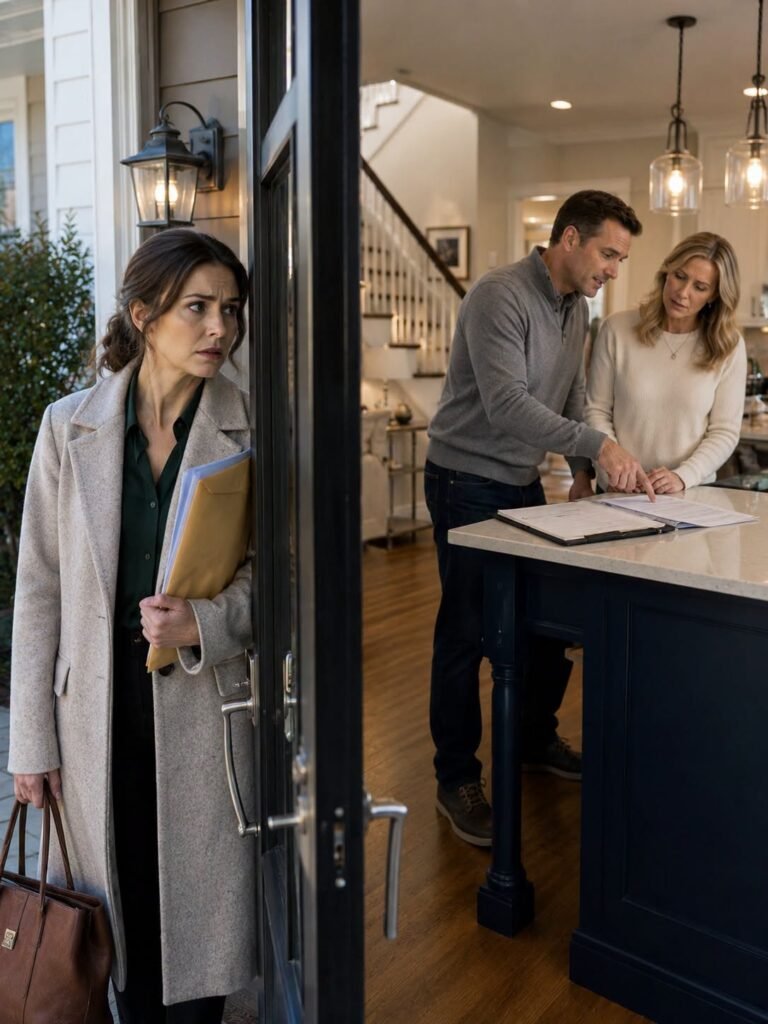
My Son Called Me “Basically Stupid” While Planning to Put Me in a Nursing Home and Take My House.
The Next Afternoon, He Was Pounding on My Door—Because Every Document He Needed Had Been Changed.
My Son Called Me “Basically Stupid” While Planning to Put Me in a Nursing Home and Take My House.
The Next Afternoon, He Was Pounding on My Door—Because Every Document He Needed Had Been Changed.
At sixty-eight years old, I walked out of an estate attorney’s office holding papers worth more than everything I had earned in my entire life.
Twenty minutes later, I stood outside my own house and listened to my only son discuss how cheaply he could put me in a nursing home.
That was the afternoon I stopped confusing sacrifice with love.
My brother Arthur had died six weeks earlier.
Arthur never married, never had children, and spent most of his adult life running a five-hundred-acre farm two hours outside the city.
We were close.
But Arthur was private.
Very private.
I assumed the farm would be sold and whatever remained would disappear into taxes, creditors, and distant relatives neither of us particularly liked.
Instead, his attorney pushed his glasses higher on his nose and slid a folder toward me.
“Mrs. Brooks, your brother left you the farm, the farmhouse, all associated land rights, and the contents of his primary investment account.”
I stared at him.
“How much is in the account?”
He turned one page around.
$850,000.
I read it twice.
Then a third time.
“You’re sure the decimal point is where it belongs?”
The attorney almost smiled.
“It is.”
Eight hundred and fifty thousand dollars.
For forty years, I had measured money in groceries, electric bills, overdue medical bills, and whether another winter could be squeezed out of an old set of tires.
Suddenly, I owned five hundred acres and had $850,000 sitting in an account.
And the first person I thought about was my son.
Mason.
Of course I did.
Mason was four when his father died.
A truck ran a stop sign and hit the driver’s side of his car.
There was no great insurance settlement waiting for us.
No trust fund.
No miracle.
There was me.
A mortgage.
A four-year-old boy.
And a refrigerator that did not care that I had become a widow.
So I worked.
Before sunrise, I cleaned houses.
During the day, I worked retail.
At night, I altered dresses at my kitchen table.
I replaced zippers.
Hemmed bridesmaid gowns.
Fixed uniforms.
For years, four hours of sleep counted as a good night.
Mason never knew how many dinners I skipped because there was enough chicken for one plate, not two.
He never knew I sold my mother’s jewelry to help cover his college tuition.
I never told him.
I wanted him to feel loved.
Not indebted.
That decision looked very different to me later.
When Mason married Harper seven years ago, I paid more toward the wedding than I should have.
When they needed help with their first apartment, I wrote a check.
When Mason wanted photography equipment for his “business,” I put a camera lens on my credit card and spent eleven months paying it off.
Three years ago, when both of their careers supposedly “hit a rough patch,” they arrived at my front door with suitcases and two maxed-out credit cards.
I opened the door.
“Stay until you’re stable.”
No rent.
No utilities.
No deadline.
I cooked.
I cleaned.
I paid the internet bill Harper complained was too slow.
I bought the coffee pods Mason liked because regular coffee had apparently become beneath him.
And on the drive home from Arthur’s attorney, I was thinking about helping them again.
That is the part that embarrasses me now.
A down payment.
Maybe a reliable SUV.
Perhaps enough startup money to turn Mason’s photography hobby into something real.
I even thought about paying for the Napa trip Harper had mentioned approximately seventy-four times.
I pulled into my driveway at 4:55 that afternoon.
The living-room window was open.
I was halfway to the porch when I heard Harper.
“I cannot keep pretending I like living with that woman.”
I stopped.
The manila folder remained tucked beneath my arm.
“Three years, Mason.
I’m sick of hearing how hard she worked and how much she sacrificed.
We get it.
Congratulations.
She survived motherhood.”
Then my son laughed.
That laugh hurt more than her words.
“I know.”
Harper continued.
“Her ceramic figurines are everywhere.
Those crochet things on the furniture.
Everything she owns smells like mothballs.”
“Just hang on,” Mason said.
“It’s not forever.”
“Meaning?”
“She’s sixty-eight.”
A pause.
“This house eventually comes to me.”
Eventually.
Harper laughed.
“Eventually? Your mother could live to ninety.”
My fingers tightened around Arthur’s folder.
Inside it sat $850,000.
They were twelve feet away discussing how inconvenient it would be if I stayed alive too long.
Then Mason said:
“There are options.”
“What options?”
“Nursing home.”
Harper became quiet.
Then:
“You’ve looked?”
“There’s one outside town for about two grand a month.”
“You’re serious?”
“We tell her we’re worried about her safety.
Once we’re both working regularly, we start saying she’s alone too much.
She could fall.
Leave the stove on.”
“But she doesn’t leave the stove on.”
“She doesn’t have to.”
That sentence changed everything.
She doesn’t have to.
I was no longer hearing two frustrated adults complain about an older relative.
I was hearing a plan.
Mason continued.
“We start pointing things out.
Tell her she repeated herself.
Ask if she forgot appointmenTS. Move something and tell her she misplaced it.
Make her question herself.”
Harper laughed softly.
“That is vicious.”
“It’s practical.”
Practical.
My son wanted to manufacture signs of dementia because throwing me out of my own house while I was perfectly competent might look bad.
Harper asked, “And her Social Security?”
“About twelve hundred.”
“Can we use it?”
“To help pay the facility.”
“So basically we get the house, and her own money helps warehouse her?”
“Pretty much.”
I looked down at Arthur’s folder.
That morning, I had been wondering whether giving them $100,000 all at once would be too much.
Now they were calculating the cheapest way to erase me from my own life.
Harper sighed.
“What if she gets seriously sick first?”
Mason answered without hesitation.
“She’s lived her life.
I’m not draining money into some massive medical bill at this point.”
Nobody shouted.
Nobody sounded angry.
That was the worst part.
They discussed me the way people discuss switching cable providers.
Then Harper said:
“Fine.
What are we doing for dinner?”
“I figured she’d cook when she gets back.”
“Good.
She should earn her keep.”
They laughed.
Something inside me became very quiet.
Not forgiving.
Quiet.
I walked back to my Toyota and slid Arthur’s folder beneath an old grocery tote.
Then I checked my face in the mirror.
I looked like a woman who had just heard her child planning to erase her.
I splashed bottled water beneath my eyes.
Waited.
Then walked inside.
“I’m home!”
Mason smiled.
“Hey, Mom.
How’d everything go?”
He hugged me.
I let him.
“Fine.”
Harper kissed my cheek.
“We were just talking about dinner.”
Of course you were.
“What sounds good?”
Mason grinned.
“Your chicken parmesan?”
“Sure.”
I made it.
Nobody asked what Arthur’s attorney had told me.
Nobody remembered why I had gone.
After dinner, I washed their plates while they watched television in my living room.
At eleven, I locked my bedroom door and opened Arthur’s folder.
Inside was a handwritten letter.
Eleanor,
You were the only person who never treated me like I owed them something.
You showed up because you cared.
Use this to finally do something for yourself.
Arthur.
I sat on the edge of my bed.
“For myself,” I whispered.
The words felt unfamiliar.
The next three days were educational.
Once I knew what Mason and Harper thought of me, their performances became embarrassingly obvious.
“Mom, didn’t you already tell me that?”
“No.”
“Huh.
Could’ve sworn you did.”
The next morning:
“Mom, you were up three times last night.”
“No, I wasn’t.”
“You sure?”
“Very.”
His smile slipped.
Harper suddenly became affectionate.
“Want me to make you tea?”
“I can boil water.”
“I’m only trying to help.”
How generous.
By the fourth day, I needed to know how far they intended to go.
At six, I grabbed my purse.
“I’m visiting Linda.
Don’t wait up.”
Harper practically glowed.
“Have fun!”
I drove around the block.
Parked on a side street.
Then walked back through my rear gate.
The kitchen door had a broken lock Mason had promised to fix for eight monThS.
For once, his laziness helped me.
Fifteen minutes later, Harper spoke from the living room.
“Thank God.”
Mason laughed.
“She’s barely gone.”
“My face hurts from fake smiling.”
Then Mason said:
“Couple more weeks and we move to phase two.”
I stood behind the kitchen wall.
“You found a lawyer?” Harper asked.
“Yeah.
He drafted the power of attorney.”
My hand tightened around the counter.
“I tell her it’s so I can help with banking and paperwork.
Once she signs, I control the house.”
“And you can sell it?”
“Yep.”
“Without telling her?”
“If the document is broad enough.”
Harper whistled.
“You’re scary.”
“She trusts me.”
“She worships you.”
“Exactly.”
Then he said the sentence I would remember for the rest of my life.
“She’s too good for her own good.
Basically stupid.”
Stupid.
For buying his first car.
Stupid.
For helping with college.
Stupid.
For letting two healthy adults live in my home rent-free.
Harper asked:
“What if she won’t sign?”
“Then guardianship.”
“What?”
“I claim she’s becoming senile.
Get witnesses.
Document memory problems.
Petition the court.”
“You can do that?”
“It’s harder.”
Then Harper said:
“Wouldn’t it just be easier if she died?”
Silence.
For one brief second, I thought maybe my son still had a line he would not cross.
“Don’t say that,” Mason said.
Then:
“But yeah.
It would simplify everything.”
I walked out exactly the way I had come in.
No confrontation.
No screaming.
No dramatic reveal.
I sat inside my Toyota around the corner for ten minutes.
Then I called Arthur’s attorney.
“I need to change my will.”
By noon the next day, I had done considerably more than that.
My attorney, Margaret Sloan, brought in an elder-law specialist.
Arthur’s farm and investment account went directly into a protected trust under my control.
My house went into a separate trust with explicit restrictions against Mason ever acting as trustee, agent, guardian, or beneficiary while I was alive.
My old will, which left almost everything to Mason, was revoked.
My medical directive was replaced.
My financial power of attorney named Linda and a professional fiduciary.
I signed a statement documenting that I was mentally competent and acting voluntarily.
A physician examined me that same morning.
Perfectly competent.
Perfectly oriented.
Perfectly capable of managing my own life.
Then we prepared notices revoking any document Mason might attempt to present as authorization.
At 3:37 the following afternoon, someone began pounding on my front door.
I was sitting at my kitchen table with Margaret.
Boom.
Boom.
Boom.
“Mom!”
Mason.
Another pounding blow.
“What did you do?”
Harper’s voice joined his.
“Eleanor, open this door!”
Margaret looked at me.
“Would you like me to answer?”
I lifted my coffee.
“No.”
Outside, Mason shouted again.
“I talked to the lawyer! He said you changed everything!”
I looked toward the front hallway.
For sixty-eight years, I had believed love meant opening the door whenever my child needed me.
That afternoon, for the first time, I understood something else.
Sometimes love ends at the boundary where someone begins planning your disappearance.
And my son had just reached mine.
Mason kept pounding.
“Mom! Open the door!”
Margaret remained seated across from me.
She was sixty-one, silver-haired, and possessed the unsettling calm of a woman who had spent thirty-five years watching angry relatives discover that paperwork did not care about their feelings.
“Do they live here?” she asked.
“Yes.”
“Have they established residence?”
“Three years.”
“Then we handle removal properly.
No shortcuTS.”
I nodded.
That mattered to me.
I wanted them out.
I did not want to become dishonest merely because they had.
Margaret stood and opened the inner door but kept the storm door locked.
“Mason Brooks?”
He stopped.
“Who are you?”
“Margaret Sloan.
Your mother’s attorney.”
His eyes moved past her and found me.
“Mom, what the hell is going on?”
Harper stood behind him.
Her face was red.
I walked into the hallway.
“What did your lawyer tell you?”
“That you revoked the power of attorney.”
“The one I never signed?”
His face changed.
Margaret noticed.
“So there was one prepared?”
Mason recovered quickly.
“It was just estate planning.”
“No,” I said.
“It was intended to give you control of my property.”
Harper scoffed.
“You’re being paranoid.”
I almost smiled.
Four days earlier, that sentence might have worked.
Now it sounded rehearsed.
Margaret handed Mason an envelope through the narrow opening.
“What’s this?”
“Formal notice that your mother does not authorize you to act on her behalf in any financial, medical, legal, or property matter.”
His eyes widened.
“And formal notice regarding your continued occupancy.”
Harper stepped forward.
“You’re kicking us out?”
“I’m ending an arrangement that should have ended long ago.”
“This is insane!”
Mason looked genuinely bewildered.
“Mom, where is this coming from?”
I studied him.
There are lies people tell other people.
Then there are lies they tell themselves so often they become offended when reality interrupTS.
“Would you like to know exactly where?”
He hesitated.
I repeated his own words.
“She’s too good for her own good.
Basically stupid.”
All color left his face.
Harper stopped moving.
I continued.
“Phase two.
Power of attorney.
Guardianship.
Manufactured memory problems.
Two-thousand-dollar nursing home.”
Mason’s mouth opened.
Nothing came out.
“And if I died,” I added quietly, “it would simplify everything.”
Harper whispered:
“Oh my God.”
Not remorse.
Recognition.
They knew exactly what I had heard.
Mason grabbed the porch railing.
“Mom, you misunderstood.”
“No.”
“You heard one conversation.”
“Two.”
That finished him.
I saw the second he remembered the kitchen door.
Harper turned toward him.
“You said she went to Linda’s.”
I almost laughed.
Margaret didn’t.
“Mrs. Brooks has documented what she heard and completed an independent competency evaluation.”
Mason stared at me.
“You went to a doctor?”
“Yes.”
“Why?”
“So when you claimed I was confused, there would already be dated medical evidence saying otherwise.”
His face crumpled.
For the first time, the plan did not look clever to him.
It looked exactly like what it was.
A plan that had failed.
Chapter 3
They were given the legally required time to leave.
Harper spent the first week furious.
Mason spent it negotiating.
He tried guilt first.
“You’re really making your son homeless?”
“No.
I’m requiring two employed adults to find housing.”
Then he tried history.
“After everything we’ve been through?”
“Yes, Mason.
After everything we’ve been through.”
Then concern.
“This lawyer is manipulating you.”
That one almost impressed me.
The people planning to manipulate me had suddenly discovered a deep concern about manipulation.
Margaret advised me not to discuss the inheritance.
So I did not.
Mason still had no idea Arthur had left me anything.
That changed eleven days later.
A certified letter from Arthur’s estate arrived while Mason was in the kitchen.
He picked it up from the counter.
“Arthur’s farm?”
I took the envelope from him.
“Yes.”
“Is it being sold?”
“No.”
He frowned.
“You inherited it?”
I said nothing.
His eyes sharpened.
“How much?”
There it was.
Not I’m sorry about Uncle Arthur.
Not Are you okay managing five hundred acres?
How much?
“Enough.”
“Mom.”
I walked away.
By dinner, Harper knew.
The next morning, she made pancakes.
From scratch.
In three years, Harper had never made pancakes.
“Eleanor,” she said warmly, “I’ve been thinking.
Maybe we all got emotional.”
“We?”
“Mason said things he didn’t mean.”
Mason sat beside her looking miserable.
“Harper—”
“No, I’m trying to fix this.”
She turned to me.
“We’re family.”
I stared at the pancakes.
Four days earlier, I had been a mothball-smelling obstacle.
Now I had an inheritance.
Suddenly, family had returned.
“How much did Arthur leave you?” she asked.
Mason closed his eyes.
I put down my fork.
“Eight hundred and fifty thousand dollars in his investment account.”
Harper inhaled.
“And the farm?”
“Also mine.”
Nobody spoke.
I watched the arithmetic happen behind their eyes.
Land.
Farmhouse.
Investment account.
My existing home.
They had not planned to remove a poor old widow.
They had accidentally planned to remove a millionaire.
That fact should not have mattered.
But to them, it changed everything.
Mason whispered:
“You were going to tell us?”
“Yes.”
“When?”
“The day I overheard you.”
His face collapsed.
I continued.
“I drove home thinking about giving you a down payment.”
Harper stared at me.
“How much?”
I looked at her.
“That question is exactly why you will never know.”
Mason pushed his plate away.
“Mom, please.”
“No.”
“You really would have helped us?”
“I had already decided to.”
His eyes filled.
“Then why didn’t you?”
I held his gaze.
“Because you told me what my love was worth to you before I had the chance.”
He cried then.
I did not.
Chapter 4
The day they moved out was strangely quiet.
No police.
No screaming.
No dramatic suitcase thrown across the lawn.
Just boxes.
A rented truck.
Harper barely looked at me.
Mason moved slowly through the house.
At one point he stopped beside the little hallway where I had marked his height every birthday until he was twelve.
Pencil lines.
Dates.
MASON — 8.
MASON — 9.
He touched one mark.
I almost broke.
That is the uncomfortable truth.
You can know someone has betrayed you and still remember tying his shoes.
You can hear your adult son plan to put you in a nursing home and still remember the fever he had at six.
Love does not disappear simply because trust does.
That is what makes betrayal painful.
If you stopped loving instantly, betrayal would be easy.
Before leaving, Mason placed his old house key on the kitchen counter.
“Are you really changing the will?”
“It is changed.”
He swallowed.
“So I get nothing?”
“I did not say that.”
He looked up.
“What does that mean?”
“It means you no longer get to organize your life around my death.”
His face reddened.
“That isn’t fair.”
I almost laughed.
Then he heard himself.
He sat down.
“No.”
He rubbed his face.
“That sounded exactly like…”
“Yes.”
He nodded.
“God.”
Harper called from outside.
“Mason!”
He looked toward the door.
Then back at me.
“Did you ever think I would become this?”
“No.”
“Neither did I.”
That was perhaps the first honest thing he had said in weeks.
After they left, I walked through every room.
The house sounded different.
Empty.
But not lonely.
There is a difference.
I opened windows.
Washed the guest-room sheeTS.
Threw away Harper’s coffee pods.
Then I drove to Arthur’s farm.
The farmhouse sat beneath two enormous sycamores.
His boots were still beside the mudroom door.
His coffee mug sat upside down in the drying rack.
For the first time since his funeral, I cried properly.
Not for Mason.
For Arthur.
For the brother who had understood me more clearly than my own child had.
I found another note in his desk.
Shorter than the first.
El,
Do not spend your last good years making other adults comfortable.
I laughed through tears.
“Bossy even from the grave.”
Then I spent my first night alone at the farm.
And slept eight uninterrupted hours.
Chapter 5
Mason contacted me three weeks later.
Not by phone.
By letter.
That surprised me enough to read it.
Mom,
I have written six versions of this and all of them sound like excuses.
I was selfish.
I was lazy.
I let myself believe that because you always helped me, your life existed to make mine easier.
Harper did not create that in me.
She encouraged it, but it was already there.
I signed papers I should never have considered.
I talked about your life like it belonged to me later, so your choices now did not matter.
I do not know how to apologize for that.
I am sorry.
Mason.
There was no request for money.
No request to come home.
No question about the will.
I put the letter in Arthur’s desk drawer.
A month later, another came.
Then another.
He had taken a full-time job at a commercial photography studio.
Not glamorous.
Not his dream.
A job.
Harper started working at a dental office.
They rented a small apartment.
For the first time in three years, neither of them was living on me.
Then something unexpected happened.
They separated.
Mason told me only after the papers were filed.
I did not ask why.
Eventually he told me.
Harper remained furious about the inheritance.
She believed he should fight my trust.
Challenge my competency.
Argue that Margaret had influenced me.
Mason refused.
“She said if I loved my family, I’d fight for what was supposed to be ours.”
I looked at him across a diner table.
“What did you say?”
“That it was never ours.”
I let that sit.
Then:
“Good.”
He nodded.
“I should have known that without losing everything first.”
“Yes.”
“I know.”
We were not reconciled.
Not then.
But for the first time, he had begun living without calculating what I might give him.
That mattered.
Meanwhile, I changed my life.
I hired a farm manager.
Leased part of Arthur’s acreage to a neighboring family.
Sold some old equipment.
Kept the farmhouse.
I also funded a small scholarship in Arthur’s name for students from farming families.
Nothing enormous.
Just enough each year to matter to someone.
The first recipient sent me a thank-you card.
I cried harder over that card than I had over the $850,000.
Arthur had told me to do something for myself.
Oddly enough, choosing where my money went was part of that.
Not because giving made me useful.
Because choosing made me free.
Chapter 6
A year passed before Mason came back to my house.
He called first.
Then waited until I said yes.
That alone told me something had changed.
When I opened the door, he stood on the porch holding nothing.
No flowers.
No gift.
No manipulation disguised as thoughtfulness.
“Hi, Mom.”
“Hello, Mason.”
We sat in the living room.
He looked around.
“Same ceramic figurines.”
“Yes.”
He smiled sadly.
“I was an idiot.”
“You were cruel.”
His smile disappeared.
“You’re right.”
That mattered too.
No minimizing.
No asking me to soften the word so he could tolerate hearing it.
He looked toward the kitchen.
“Do you still make chicken parmesan?”
“Yes.”
“I miss it.”
“You can learn.”
He laughed.
“I actually did.”
That surprised me.
“Is it any good?”
“No.”
For the first time in a year, I laughed with my son.
Not because everything was fixed.
Because one normal moment had managed to survive.
Later, he became serious.
“I don’t want to know what’s in the will.”
I studied him.
“Why tell me that?”
“Because I used to think about it.”
“I know.”
“I don’t anymore.”
“That may take me time to believe.”
“I understand.”
Then he asked:
“Are you ever going to forgive me?”
I had thought about that question many times.
“I think forgiveness and access are different things.”
He nodded slowly.
“I love you.
I do not wake up every morning hating you.”
His eyes watered.
“But trust is not restored because you’re sorry.”
“I know.”
“You have to become someone I can trust.”
“I’m trying.”
“Yes.”
That was the first time I acknowledged it.
His shoulders dropped.
Not in relief.
Something quieter.
Hope, perhaps.
Before leaving, Mason stood in the doorway.
“Mom?”
“Yes?”
“The nursing-home thing…”
My stomach tightened.
He continued.
“I visited one.”
“Why?”
“To see what I was actually talking about.”
I said nothing.
“It was clean.
The staff seemed nice.
That almost made it worse.”
“How?”
“Because I realized I had turned real people into storage problems.
You.
Everyone there.
I was thinking about beds and monthly costs instead of lives.”
He looked ashamed.
“I needed to see that.”
I nodded once.
Then he left.
I locked the door behind him.
Not because I was afraid.
Because it was my door.
And I liked deciding when it opened.
Chapter 7
Three years after Arthur died, I turned seventy-one.
I still own my house.
I still own the farm.
The investment account is smaller because I have actually used some of it.
Arthur would approve.
I traveled to Ireland with Linda.
I replaced the roof on my house.
Bought a new Toyota without financing it.
That felt almost scandalous.
I funded more scholarships.
And yes, I still clip coupons.
Eight hundred and fifty thousand dollars does not make thirty years of habit disappear.
Mason visits twice a month.
He knocks.
Always.
His photography work has become steady.
He no longer asks me to invest.
Harper moved to another state after their divorce.
We do not speak.
I wish her no harm.
I also do not miss her.
My estate plan changed again last year.
Not back to what it was.
That version of me no longer exisTS.
Arthur’s farm will eventually support a charitable trust and several agricultural scholarships.
My house may eventually go to Mason.
May.
Under conditions established by me.
The decision is mine.
That is the point.
One Sunday, Mason and I were sitting on the porch when he asked:
“Do you regret hearing us?”
I thought about it.
“No.”
His face tightened.
“Even though it ruined everything?”
“It ruined something that was already rotten.”
He absorbed that.
“If I hadn’t heard you, I might have given you a hundred thousand dollars.”
He stared at me.
“I know.”
“How?”
“You told me later.”
“No.
I mean, do you understand what that means?”
He looked toward the yard.
“It means you were still thinking about taking care of me while I was thinking about taking control of you.”
“Yes.”
His eyes filled.
“I’m sorry.”
“I know.”
This time, the words felt different.
Not sufficient.
But real.
We sat quietly.
Then he said:
“I used to think you were too good for your own good.”
I smiled faintly.
“I remember.”
“I was wrong.”
“Yes.”
“You weren’t stupid.”
“No.”
“You were generous.”
“Yes.”
“And I treated generosity like weakness.”
I looked at my son.
“That is a mistake people make when they have never had to earn the kindness they receive.”
He nodded.
“I earned that.”
“Yes.”
He laughed softly.
“You really don’t make these conversations easy.”
“I spent forty years making your life easy.”
I leaned back in my chair.
“I’m retired.”
He laughed.
So did I.
Chapter 8
I still have Arthur’s original letter.
It sits inside the top drawer of my desk at the farm.
Sometimes I read it.
You were the only person who never treated me like I owed them something.
Use this to finally do something for yourself.
For most of my life, “for myself” sounded selfish.
Mothers of my generation were trained differently.
Feed everyone first.
Take the smallest piece.
Keep the peace.
Give the child another chance.
Then another.
Then another.
We called it love.
Sometimes it was.
Sometimes it was fear of disappointing people who had become comfortable disappointing us.
Mason taught me that distinction.
Not intentionally.
But thoroughly.
I did eventually forgive him.
That does not mean I forgot.
It does not mean the power of attorney appeared in my imagination.
It does not mean he never discussed manufacturing dementia symptoms.
It does not mean hearing my own son call me “basically stupid” stopped hurting.
Forgiveness did not rewrite history.
It simply stopped history from owning every room in my future.
Trust came back differently.
Smaller.
More carefully.
Healthier.
When Mason visits now, he washes his own plate.
Sometimes mine too.
The first time he did that, I almost laughed.
Such a ridiculous thing.
A grown man washing a plate.
But after years of him expecting me to clean up everything—dishes, debts, mistakes, consequences—it felt symbolic.
Last month, we drove to Arthur’s farm together.
Mason had not been there since the funeral.
We walked the edge of the west field.
The sun was low.
Arthur’s old barn cast a long shadow across the grass.
Mason asked:
“Do you think Uncle Arthur knew I was taking advantage of you?”
“Probably.”
“Why didn’t he say anything?”
“Arthur believed people hear truth only when they are ready.”
“That sounds convenient.”
“It also sounds like Arthur.”
Mason smiled.
Then he asked:
“Are you happy?”
I looked across five hundred acres my brother had worked his entire life to preserve.
Three years earlier, I would have answered automatically.
Of course.
Fine.
Don’t worry about me.
That is what mothers say when they are accustomed to disappearing behind everyone else’s needs.
Now I actually considered it.
“Yes.”
Mason looked at me.
“Really?”
“Really.”
I had lost an illusion about my son.
That hurt.
But I gained something I had surrendered piece by piece for decades.
Authority over my own life.
The afternoon I overheard Mason, I thought I was carrying an $850,000 inheritance.
I was wrong.
Arthur had left me something more valuable.
A reason to finally look at my life and ask whether the people benefiting from my sacrifices were also respecting the person making them.
For a while, the answer was no.
So I changed it.
Not with revenge.
Not with screaming.
With documenTS.
Boundaries.
A locked door.
And one decision I should have made years earlier.
My life belongs to me while I am still here to live it.
That is not selfish.
That is not confusion.
And it certainly is not stupidity.